Short answer: fishing sinkers fall into four groups by job. Holding sinkers (pyramid, sputnik, bank, coin, flat no-roll) keep bait in place on the bottom. Sliding sinkers (egg, bullet, drop shot) let the line move so fish feel less weight. Casting sinkers (bass casting, tear drop, ball) are shaped for distance. Trolling and deep-water weights (torpedo, downrigger, deep drop) take bait down to a set depth. A tackle range that covers all four groups serves most freshwater and saltwater anglers.
Below, each type is explained with the rigs it suits and the sizes we produce. All sinkers are lead, supplied raw or vinyl-dipped on request.
Fishing sinker types compared
| Sinker | Main job | Typical use | Sizes we make |
|---|---|---|---|
| Pyramid | Holding | Surf and sandy or muddy bottoms in current | 1.5–8 oz |
| Sputnik | Holding | Surf, pier and deep saltwater in strong current | 4, 5, 6, 7, 8 oz |
| Bank | Holding | Bottom fishing over rocks; resists snagging | 1–8 oz |
| Coin / disc | Holding | Rivers, tidal flats; does not roll | 1–8 oz |
| Flat no-roll | Holding | Bottom rigs in current; low profile | 1–8 oz |
| Egg | Sliding | Carolina and fish-finder rigs, fresh and salt | 1 oz to 6 oz+ |
| Bullet | Sliding | Texas and Carolina rigs for bass | 1/16–1 oz |
| Drop shot pencil | Sliding / finesse | Drop shot rigs; slides through structure | 1/16–10 oz |
| Split shot | Fine-tuning | Pinched on the line for float and light rigs | BB to 3/0 |
| Bass casting | Casting | Bottom and casting rigs for bass and catfish | 1/4 oz–10 lb |
| Tear drop | Casting | Long casts, drift and bottom fishing | 1/8–2 oz |
| Ball | Casting / depth | General purpose, fresh and salt | 1.5–8 oz |
| Torpedo trolling | Trolling | In-line trolling; rings at both ends | 1–16 oz |
| Downrigger ball | Trolling | Downrigger cable, stable depth | 4–12 lb |
| Downrigger fish | Trolling | Downriggers for salmon, trout, tuna | 4–15 lb |
| Deep drop | Deep water | Swordfish, tilefish, grouper in deep water | 3–15 lb |
| Cast net | Net weight | Sinks cast nets evenly | Custom |
Holding sinkers: keep bait on the bottom
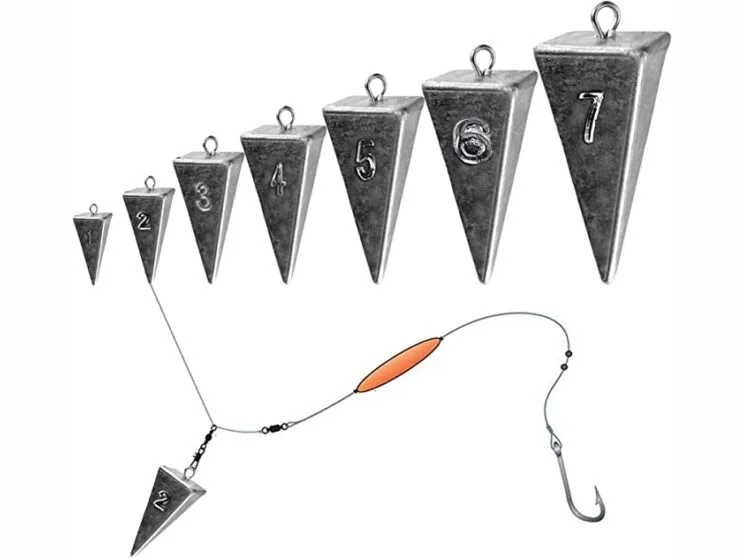
Pyramid sinkers dig into sand and mud, which makes them the standard surf weight in the US and Australia. Sputnik sinkers add wire arms that grip the seabed and fold back on the retrieve; they sell to surf and pier anglers fishing heavy current. Bank sinkers have a rounded, six-sided body that slides over rocks instead of wedging, so they are a staple for bottom fishing from boats and banks. Coin and flat no-roll sinkers have a low, flat profile that stays put in rivers and tidal water.
Sliding sinkers: let the line run
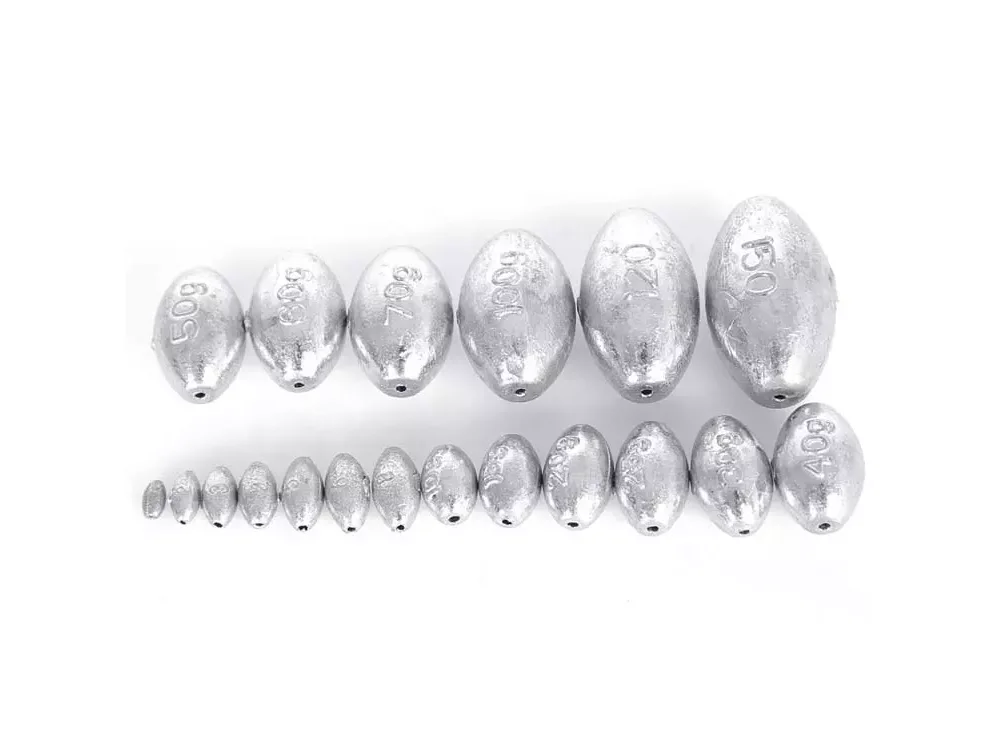
Egg sinkers have a hole through the middle, so the line passes freely and the fish feels little resistance. They are used on Carolina and fish-finder rigs in both fresh and salt water. Bullet sinkers are the bass angler’s weight for Texas and Carolina rigs; the pointed nose comes through weeds and cover. Drop shot pencil sinkers sit at the end of a drop shot rig and slip through rocks without snagging.
For a side-by-side comparison of the two most common sliders, see egg sinkers vs. bullet sinkers.
Casting sinkers: built for distance
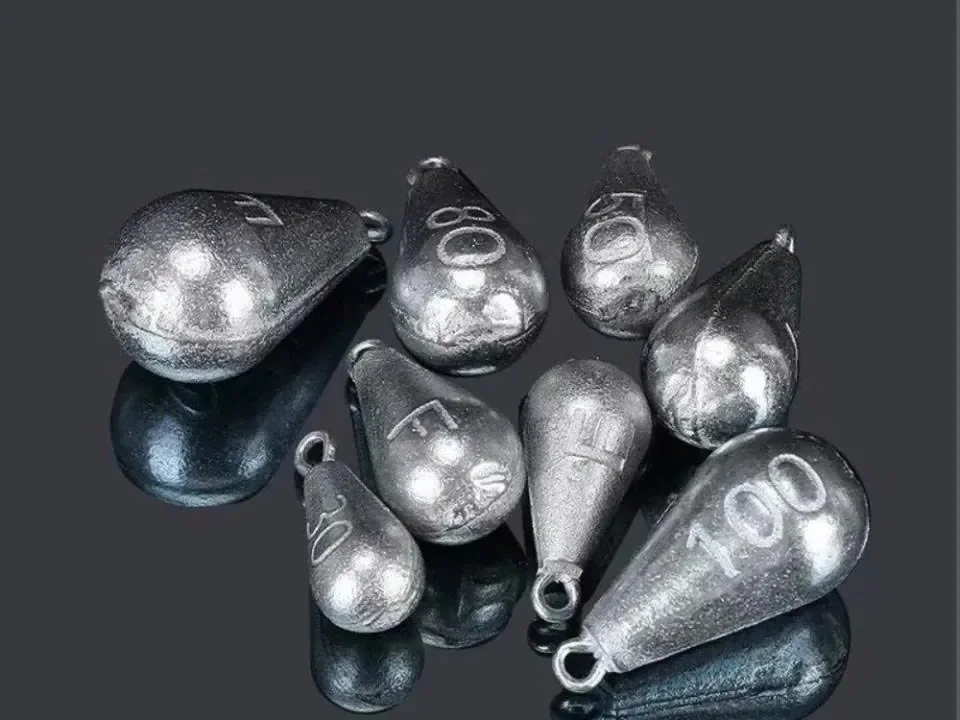
Bass casting, tear drop and ball sinkers have smooth, compact shapes that fly well and sink fast. They cover a wide weight range and suit general bottom and casting rigs, which makes them reliable volume sellers.
Trolling and deep-water weights
Torpedo sinkers run in-line behind the boat. Downrigger ball and fish-shaped downrigger weights clip onto a downrigger cable to hold lures at an exact depth for salmon, trout and tuna. Deep drop weights (3–15 lb) get baits down to deep-water species such as swordfish and tilefish. These heavy weights are often packed individually with a barcode.
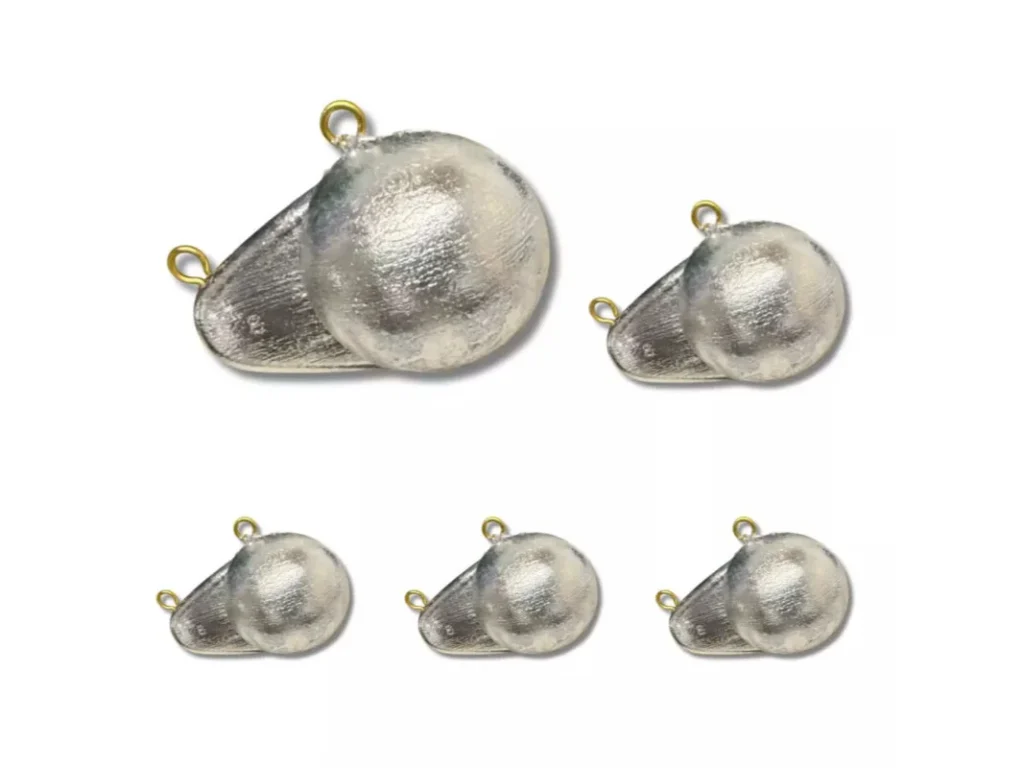
Split shot and cast net sinkers
Split shot pinches onto the line by hand for fine weight adjustments under a float. Cast net sinkers are made to the size and spacing of your net.
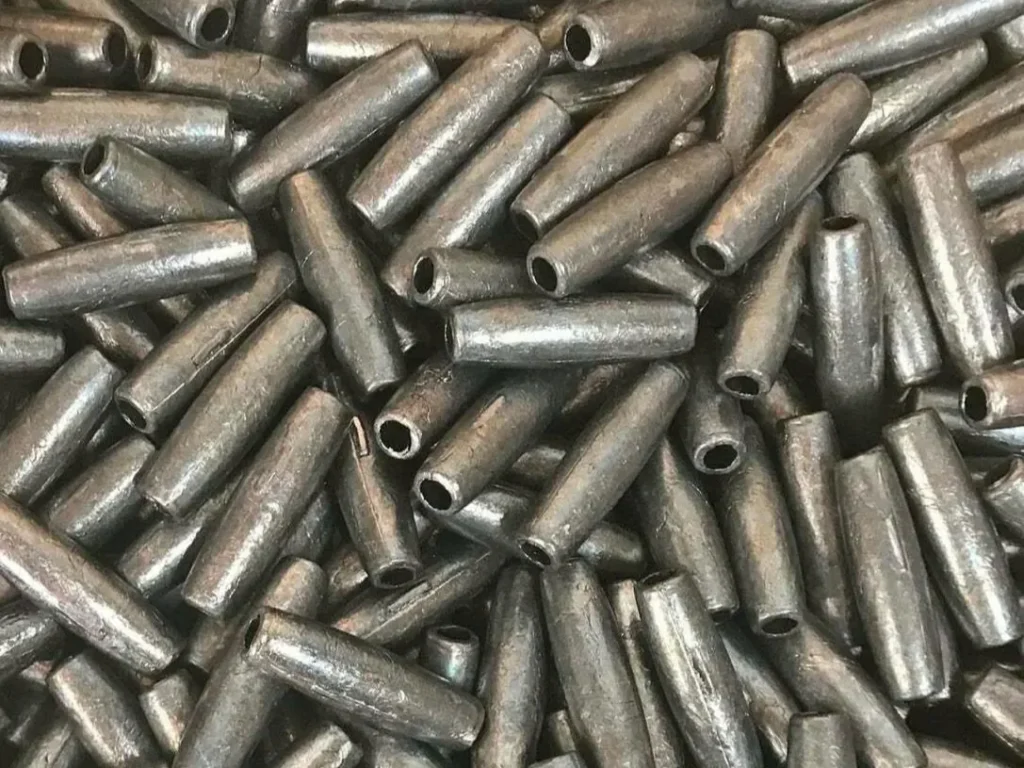
How to choose a sinker range for your market
- Surf and pier markets (US East and Gulf coasts, Australia, New Zealand): pyramid, sputnik, bank and egg sinkers in 2–8 oz.
- Freshwater bass markets (US, Canada, Mexico): bullet, drop shot and split shot in 1/16–1 oz.
- Trolling markets (Great Lakes, Pacific Northwest, Canada): downrigger and torpedo weights.
- Offshore: deep drop weights and heavy bank sinkers.
Most buyers start with a few fast-selling shapes and add more on reorder. Because our minimum is set by weight (3,000 lbs for sinkers), you can build the first order around your bestsellers. Each sinker has its size stamped on it, and we can pack under your brand.
Raw lead or vinyl-dipped?
All shapes are available in raw lead. Vinyl dip adds color and a softer surface that is kinder to boats and gear. It is popular for retail packs and for color-coded sizes.
Every shape on this list is cast, size-stamped and weight-checked the same way. See how fishing sinkers are made for the full process with factory photos.
To see how each sinker is tied on, read how to rig a sinker: 6 essential bottom rigs.
Need a shape that is not listed here? See custom sinker manufacturing in Vietnam.
FAQ
What is the most common type of fishing sinker?
For saltwater bottom fishing, pyramid, bank and egg sinkers sell in the highest volume. For freshwater bass, bullet sinkers and split shot lead.
Which sinker holds best in strong current?
Sputnik sinkers hold best because their wire arms grip the bottom. Pyramid sinkers are the next choice on sand and mud.
What is the difference between a bank sinker and a pyramid sinker?
A pyramid sinker digs into sand to hold position. A bank sinker has a rounded six-sided body that slides over rocks without snagging.
Can I order sinkers in sizes not listed?
Yes. Send a sample, photo or drawing with the weight you need and we will confirm in the quote.
Are your sinkers made of lead?
Yes. All Fides Fishing sinkers are lead, supplied raw or vinyl-dipped on request.
Fides Fishing casts all of these shapes in our own molds in Vietnam. Browse all fishing sinkers or request a quote for your size list.