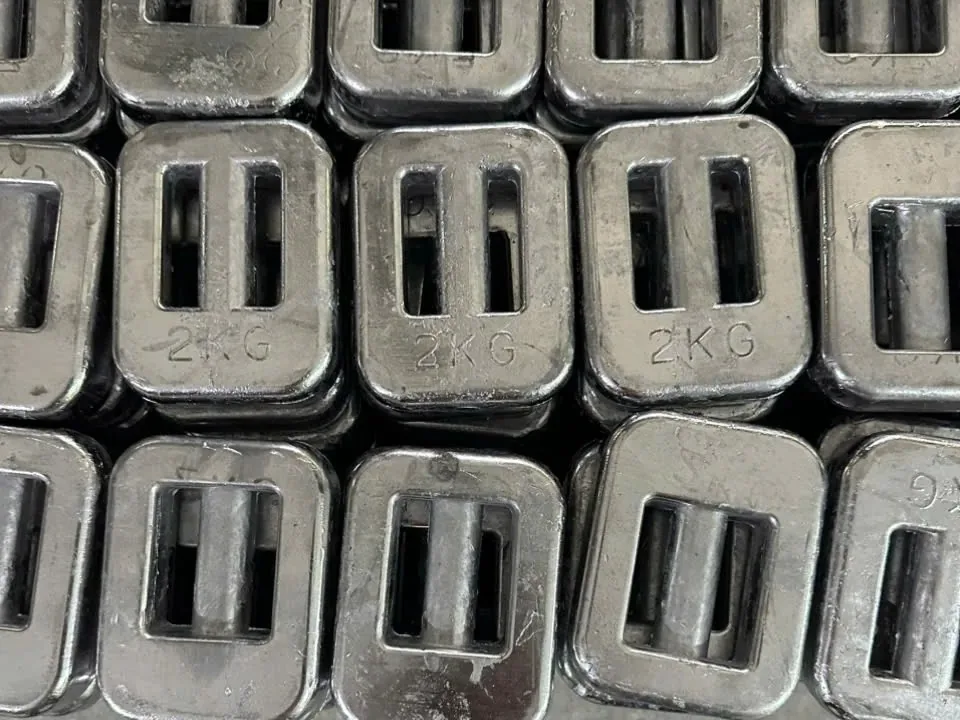
Short answer: there are three common ways to mark a lead sinker. Cast-in marking is part of the mold, so every piece comes out marked. Stamping presses the mark into the lead after casting. Printing or labels go on a coated surface. Weight marks are usually cast in or stamped. Brand logos usually go on the packaging, or on a label over a vinyl coating, because a logo on the lead itself needs its own mold. At Fides Fishing the weight is marked on every sinker, and your logo goes on the pack.
Why marking matters
- Anglers pick by size. A loose sinker in a tackle box is only useful if the angler can read its weight.
- It prevents mix-ups. In the factory, in your warehouse and in the shop, a marked sinker is less likely to end up in the wrong pack.
- It builds trust. A clear, correct mark tells the buyer the weight has been checked. A wrong mark does the opposite, so the mark must match the scale.
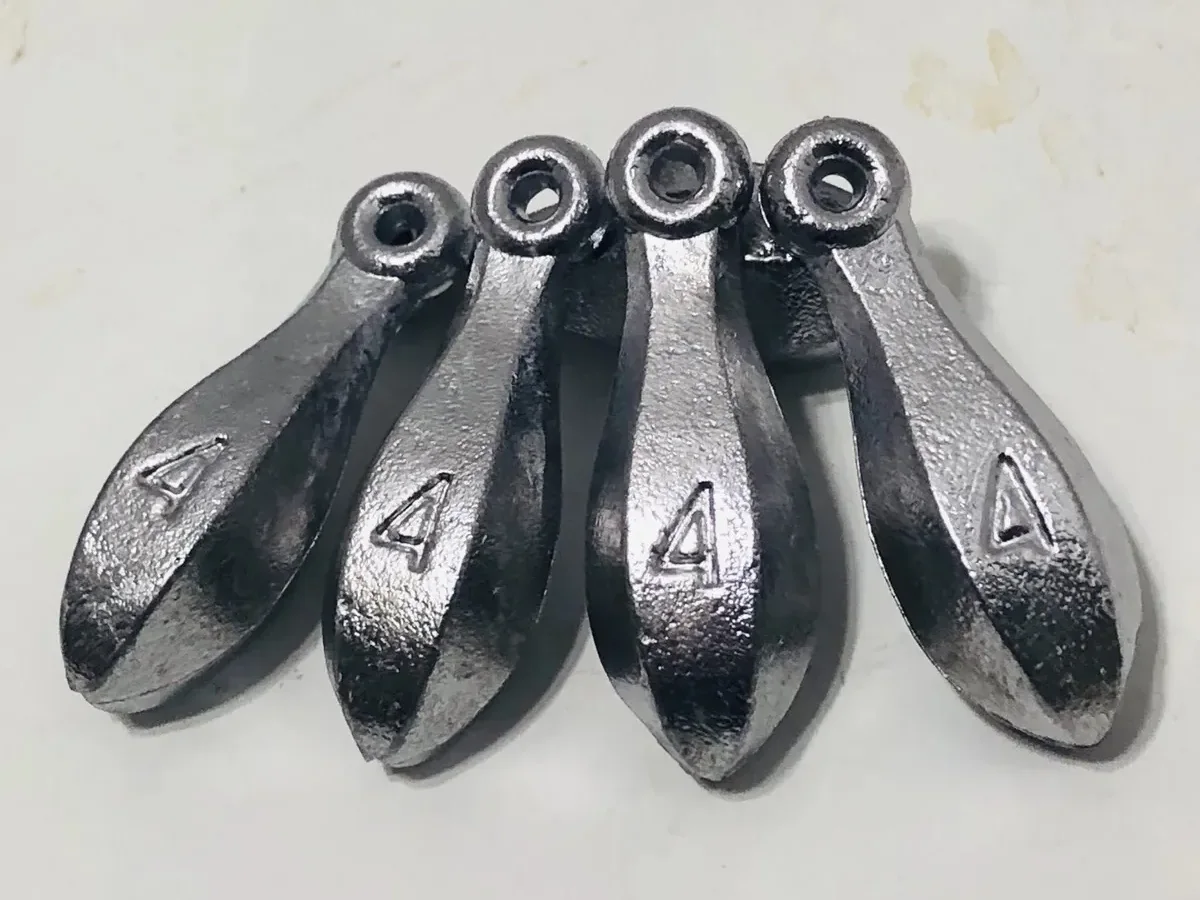
The three marking methods
| Cast-in | Stamped | Printed or label | |
|---|---|---|---|
| How it works | Raised or recessed characters are cut into the mold | A die presses the mark into the soft lead after casting | Ink or a label is applied to a coated surface |
| Best for | Weight marks on standard shapes | Weights and short codes, changing sizes on one mold | Logos and colors on vinyl-coated weights |
| Durability | Permanent, part of the lead | Permanent, pressed into the lead | Depends on the coating and use |
| Change cost | Needs a mold change | Needs a new die | New artwork only |
| Readability | Good on flat faces, harder on small sizes | Sharp on flat faces | Clear, can use colors |
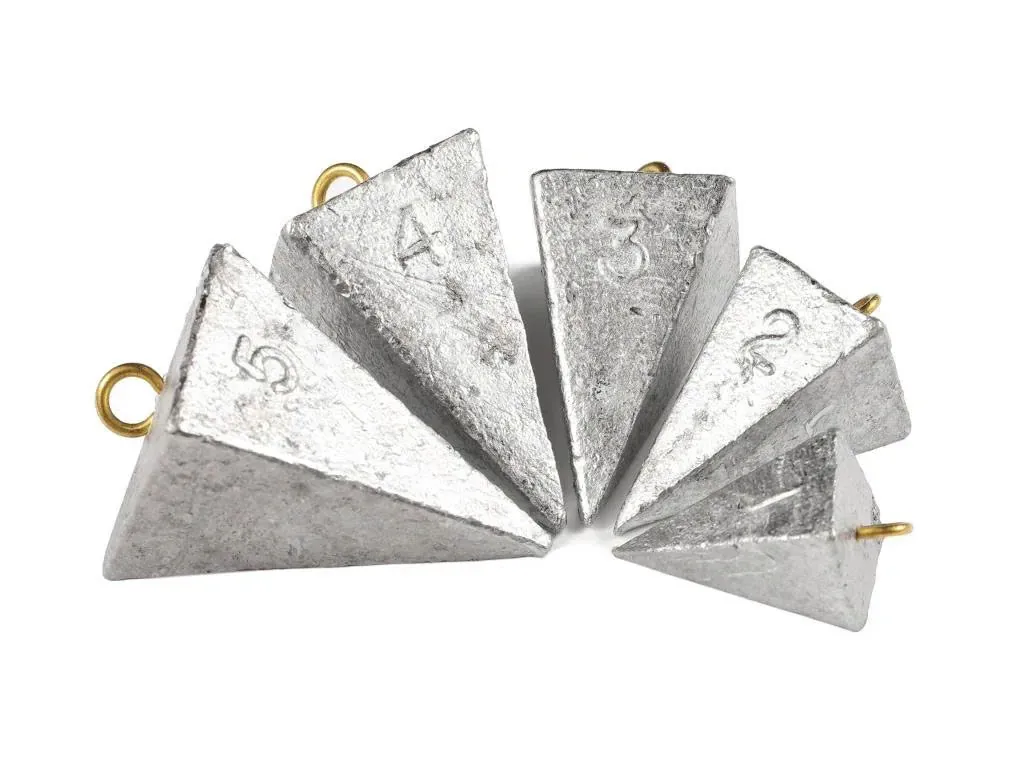
Weight marks
Most shapes carry their weight in ounces, such as “4” for 4 oz. Some markets prefer grams, and some brands show both. A few points to agree with your supplier:
- Units: ounces, grams or both. Metric markets such as Europe and Australia often prefer grams.
- Format: number only, or number and unit (for example “4” or “4 oz”).
- Small sizes: sinkers under about 1/4 oz have little flat surface, and a mark may not be readable. Many brands leave them unmarked and rely on the pack label.
- Accuracy: the mark must match the weight. Ask for scale readings with your samples.
For ounce and gram equivalents, see our sinker weight chart.
Brand logos
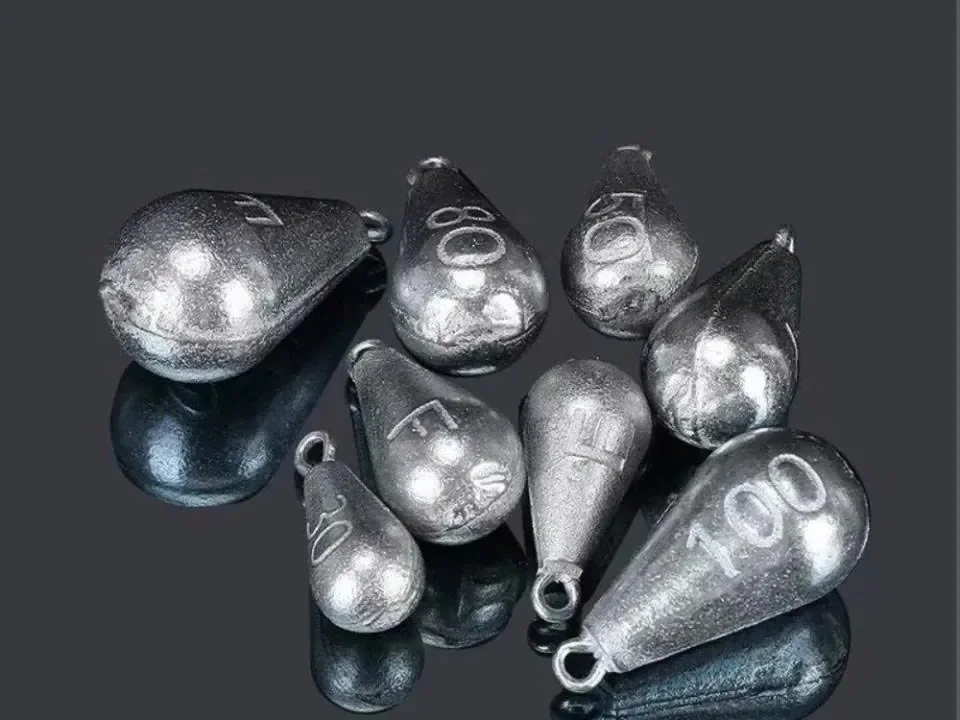
A logo on the sinker itself is possible, but it has costs. The logo has to be cut into the mold, so each shape and size needs its own mold, and the logo must be simple enough to read in lead. For most brands, the logo works better in other places:
- On the pack: header cards, printed bags and boxes carry your logo, size, count and barcode. See private label sinker packaging.
- On a coated weight: for vinyl-dipped weights, such as coated dive weights, a logo label can go on the coating. See coated lead weights.
- In the color: a brand color on vinyl-dipped weights is recognisable even without a logo.
What to include in your order
- Which sizes are marked and which are not.
- Units and format of the mark, with a drawing or photo of the position.
- Whether your logo goes on the sinker, the coating or only the pack.
- Approval of the marked samples before production. The approved sample becomes the reference.
Our sample checklist shows how to check marks on samples.
FAQ
Can you put my logo on the sinker?
A logo on the lead needs to be built into the mold for each size. Most brands put the logo on the packaging instead, or on a label over a vinyl coating. Ask us if you want to discuss a logo mold.
Can the weight be marked in grams?
Ask for it with your order. Ounces are standard for the US market, and grams are common for metric markets.
Are small sinkers marked?
Very small sizes often have too little flat surface for a readable mark, so the size is shown on the pack instead.
Does marking add cost?
A weight mark on a standard shape is normally part of the mold. A new logo or a new marking format can need mold work, which we quote with your order.
At Fides Fishing, the weight is marked on the sinker and your logo goes on the packaging. Request a quote with your marking and packaging plan.