
Short answer: slow pitch jigs are centre-weighted, keeled metal jigs that flutter and glide as they fall on a slack line, imitating a wounded baitfish. They are fished with a short lift and drop for reef and bottom fish such as snapper. Speed (knife) jigs are long and thin, sink fast and are wound back fast for pelagic fish. A good starting weight is 2 to 3 g per metre of depth, heavier in strong current.
What is slow pitch jigging?
On The Water explains that speed jigging imitates a fleeing baitfish, while slow pitch imitates a wounded or dying one, and that the jig is most enticing as it falls, not as it is retrieved. The rod, not the angler, gives the action, so it is less tiring than speed jigging. According to Saltwater Sportsman, slow pitch jigs have keels and are centre-weighted, and they flutter erratically as they sink once you release line tension.
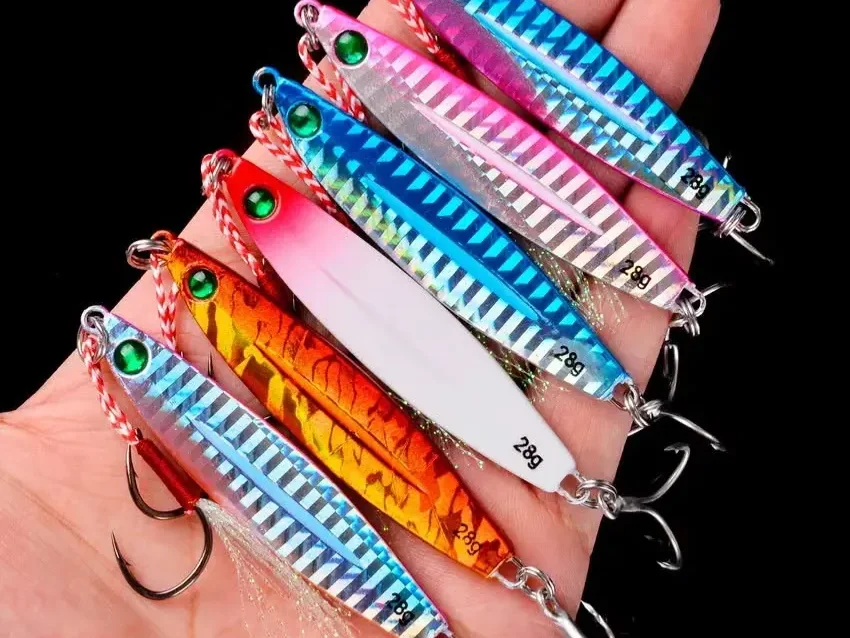
Slow pitch vs speed jigs
| Slow pitch | Speed (knife) | |
|---|---|---|
| Shape | Short, wide or leaf-shaped, centre-weighted | Long, thin and streamlined |
| Action | Flutters and glides on the fall | Drops fast, worked at speed |
| Retrieve | Short lift and drop with a part turn of the reel | Fast winding |
| Typical fish | Snapper, pearl perch, dhufish | Kingfish, amberjack, samson fish |
Shapes and species from Fishing Tackle Shop (Australia). The Fisherman adds that centre-weighted, leaf-shaped jigs dig and dance horizontally on the drop, while narrower and butterfly-style jigs are built for more vertical work.
Short and wide or long and thin?
Within slow pitch jigs, shape changes the fall. Saltwater Sportsman notes that short, wide jigs flutter more, while long, skinny ones cut through the water to reach deeper fish. At the light end, micro jigs of about 10 to 40 g imitate tiny baitfish for snapper, trevally and flathead (Fishing Tackle Shop). For other jig types, see our guide to types of metal jigs.
What jig weight for your depth?
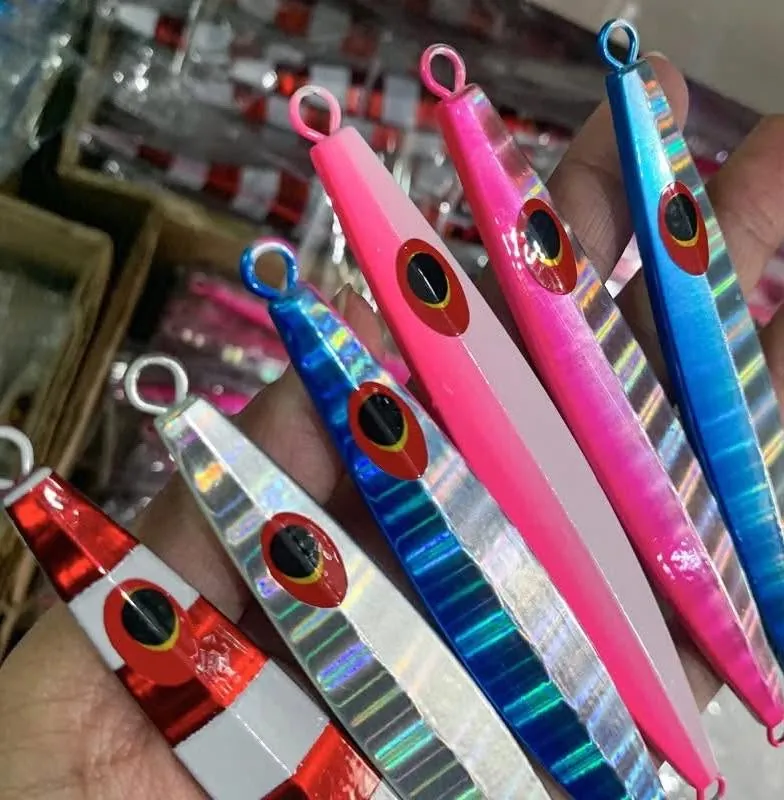
Fishing Tackle Shop gives a starting point of 2 to 3 g of jig per metre of depth, so about 100 to 150 g at 50 m, rising to 4 to 5 g per metre in strong current or wind. Saltwater Sportsman gives examples of a 300 g jig at 200 ft, 750 g at 600 ft and up to 1,000 g at 1,000 ft, and says to use as light a jig as you can while keeping the line vertical.
| Depth | 2–3 g per metre | Strong current (4–5 g per metre) |
|---|---|---|
| 20 m (66 ft) | 40–60 g | 80–100 g |
| 30 m (98 ft) | 60–90 g | 120–150 g |
| 50 m (164 ft) | 100–150 g | 200–250 g |
| 80 m (262 ft) | 160–240 g | 320–400 g |
| 100 m (328 ft) | 200–300 g | 400–500 g |
| 150 m (492 ft) | 300–450 g | 600–750 g |
Line matters too. Saltwater Sportsman says slow pitch reels are usually spooled with 15 to 40 lb braid joined to a fluorocarbon leader, with the jig tied straight to the leader, and that deeper water and stronger current call for thinner line. On The Water calls thin braid essential for keeping lighter jigs vertical.
Matching the rod
Slow pitch rods have light blanks and soft tips and are rated for a jig weight range, such as 100 to 300 g or 400 to 1,000 g (Saltwater Sportsman). When you stock jigs, stock them in the weight bands your customers’ rods are rated for.
What to stock
Stock by local depth. For shallow reefs and bays of 20 to 50 m, carry about 40 to 150 g, plus micro jigs for light tackle; for offshore grounds of 80 to 150 m, carry about 160 to 450 g, with heavier sizes for strong current. Carry each weight in several colours and finishes. For buying jigs under your own brand, see our guides to choosing metal jigs and OEM metal jig manufacturing.
FAQ
What is a slow pitch jig?
A centre-weighted metal jig, usually short and wide, that flutters and glides as it sinks. It imitates a wounded baitfish and is fished with a short lift and drop near the bottom.
What weight slow pitch jig should I use?
Start with 2 to 3 g per metre of depth, so about 100 to 150 g at 50 m. Go up to 4 to 5 g per metre in strong current, and use the lightest jig that keeps your line vertical.
What is the difference between slow pitch and speed jigging?
Speed jigs are long and thin and are wound back fast to imitate a fleeing baitfish. Slow pitch jigs are short and centre-weighted and catch fish on the fall, imitating a wounded one.
What fish do slow pitch jigs catch?
Mainly reef and bottom fish such as snapper, pearl perch and dhufish.
What line is used for slow pitch jigging?
Usually thin braid of about 15 to 40 lb with a fluorocarbon leader, with the jig tied directly to the leader.
Fides Fishing casts mini slow pitch jigs from 15 g to 60 g for shallow reefs and vertical jigs from 60 g to 920 g, in painted, laser and luminous finishes, and packs them in bulk or under your brand. See our mini slow pitch jigs and vertical jigs, or request a quote.