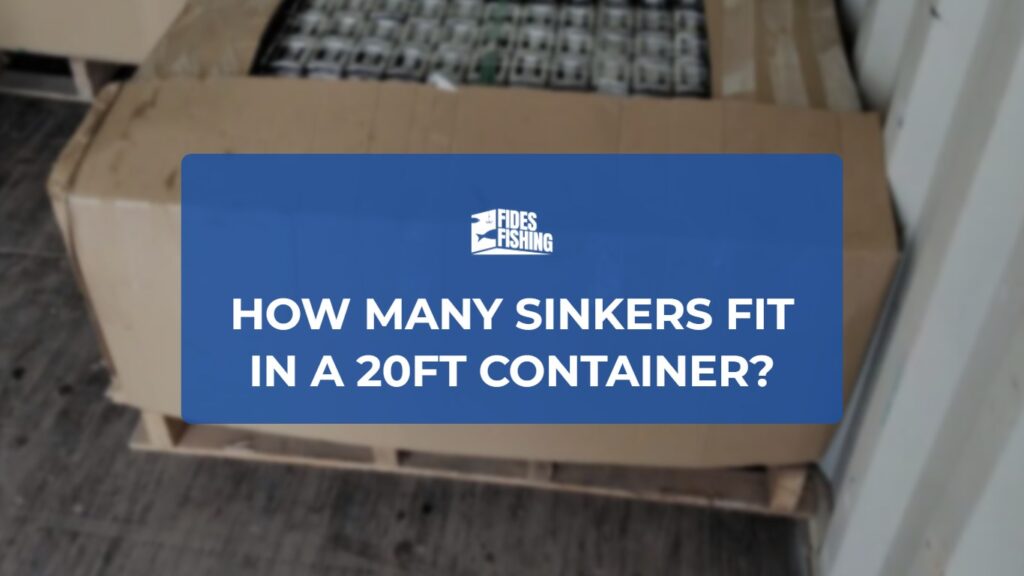
Short answer: a 20ft container of lead fishing sinkers fills up by weight, not by space. On paper a 20ft box can carry about 28 tonnes of cargo, but for road delivery in the United States most loads are planned at around 38,000 lb (about 17 tonnes). That is roughly 600,000 one-ounce sinkers, or about 2.4 million 1/4 oz sinkers, before packaging. It is also more than 12 times our 3,000 lb minimum order for lead sinkers.
Why a sinker container fills by weight, not volume
Lead is very dense, at about 11.3 g/cm³. Seventeen tonnes of solid lead takes up only about 1.5 m³. Even with bags, cartons, pallets and the air between the sinkers, a full-weight load uses only a small part of the roughly 33 m³ inside a 20ft container.
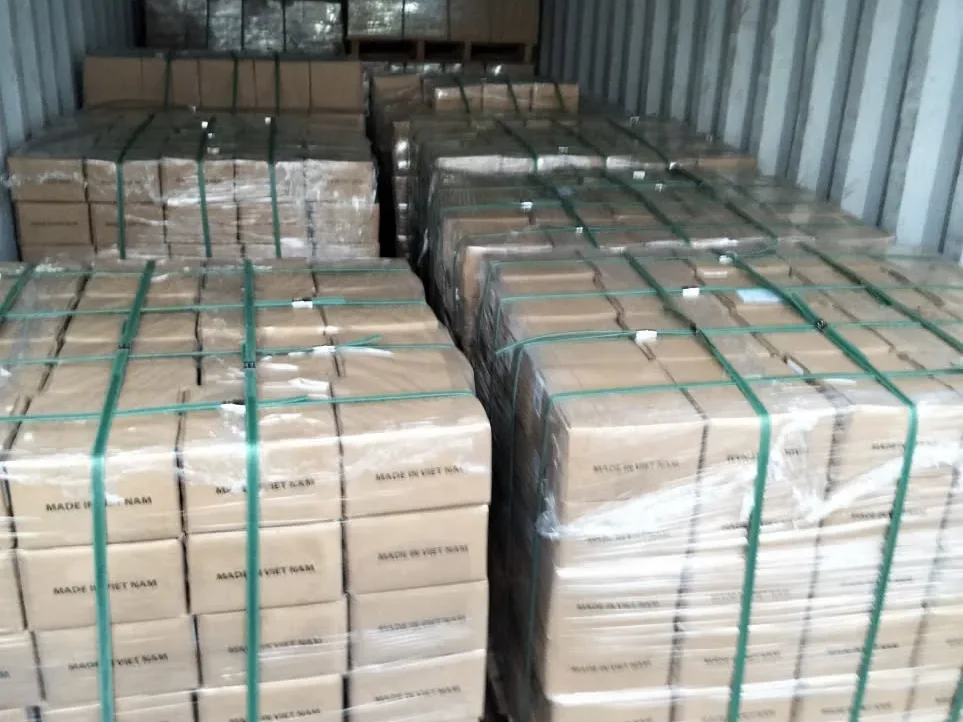
So a container of sinkers that has reached its weight limit can still look half empty when the doors close. That is normal. The pallets are spread along the whole floor and kept low, so the weight sits evenly and the load cannot shift at sea.
The limits that decide how much fits
| Limit | Typical figure | What it means for sinkers |
|---|---|---|
| Container maximum payload | About 28,200 kg (62,170 lb) for a 20ft dry box. Check the plate on the actual container. | The ocean limit. With lead it is rarely the one that stops you. |
| Inside volume | About 33 m³ | A full-weight sinker load uses only a small part of it. |
| US road delivery | About 38,000–42,000 lb of cargo on a standard 20ft chassis, up to about 47,400 lb on a tri-axle chassis | The limit that usually matters. Heavier loads need special equipment or overweight permits, which add cost. |
| US gross vehicle weight | 80,000 lb federal limit for truck, chassis, container and cargo together | Why the road limit is lower than the container limit. |
Road limits differ by state and by country. Buyers in Canada, Mexico, Australia and New Zealand should ask their forwarder or trucker for the local limit before booking. We then plan the load to that number.
How many sinkers is that?
The count depends on the size of the sinker. The table uses a 38,000 lb load of lead as an example. Cartons, bags and pallets also count toward the weight limit, so the real number is a little lower.
| Sinker size | Pieces per lb | Pieces in 38,000 lb |
|---|---|---|
| 1/4 oz | 64 | about 2,430,000 |
| 1/2 oz | 32 | about 1,220,000 |
| 1 oz | 16 | about 608,000 |
| 2 oz | 8 | about 304,000 |
| 4 oz | 4 | about 152,000 |
| 8 oz | 2 | about 76,000 |
| 16 oz (1 lb) | 1 | about 38,000 |
Need the gram equivalents? See our fishing sinker weight chart.
Mixing products in one container
Most buyers do not fill a container with one size. Plan the mix by weight, one line per item. A load might combine:
- bank and pyramid sinkers in bulk bags for distributors;
- egg and bullet sinkers in retail packs under your brand;
- lead dive weights for dive shops;
- metal jigs to round off the load.
Our minimum is 3,000 lb per order for lead sinkers, 2,500 pcs for diving weights and 3,000 pcs for lead jigs and lures. A full 20ft container leaves plenty of room to combine several shapes and sizes above those minimums.
Retail packs weigh more per sinker than bulk bags, because the packaging adds weight. A container of retail packs therefore holds fewer sinkers than a container of bulk bags.
Packing that holds up to the weight
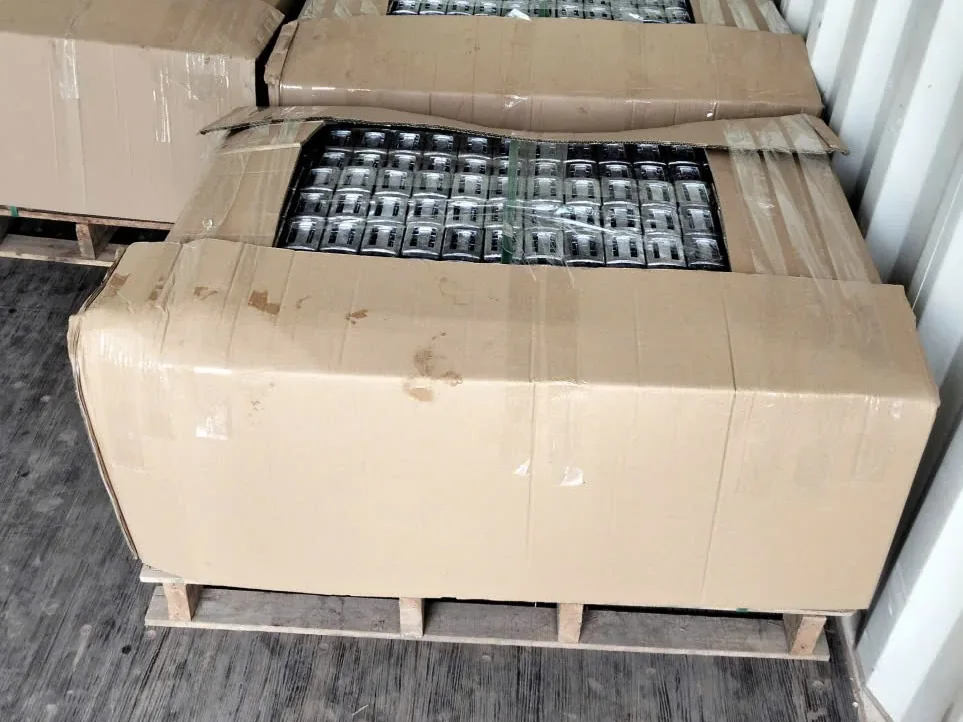
A heavy load only arrives in good shape if every layer is built for it:
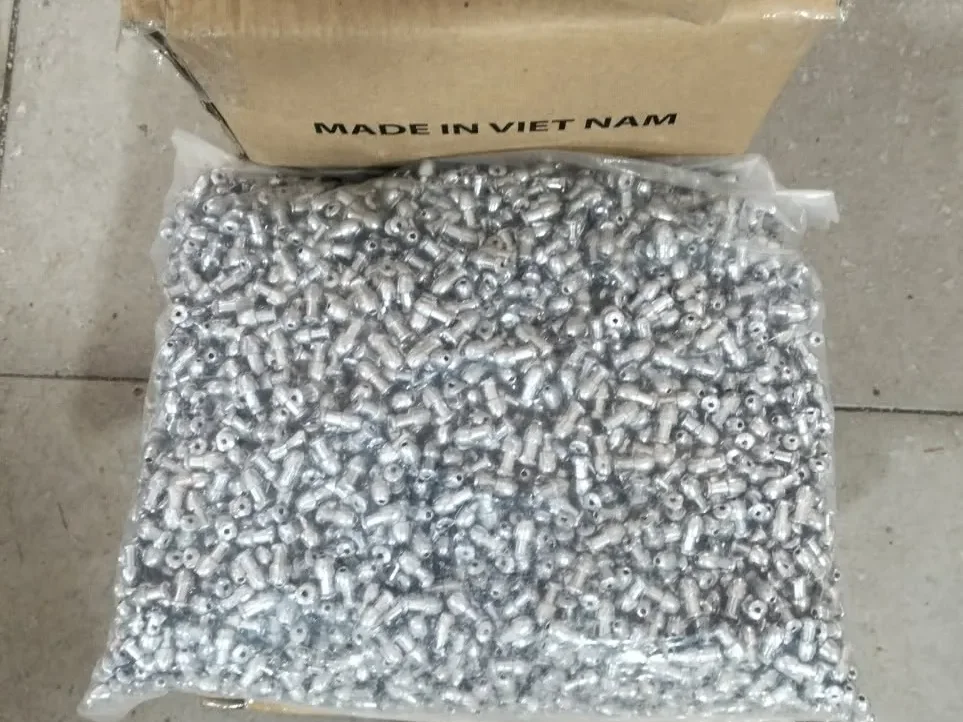
- Bags: clear bulk bags of 5, 10 or 40 lb, or 25 kg bags for larger bulk orders.
- Cartons: strong export cartons packed to a safe handling weight, not filled to the top.
- Heavy pieces: weights over 16 oz are packed one by one so they do not dent each other.
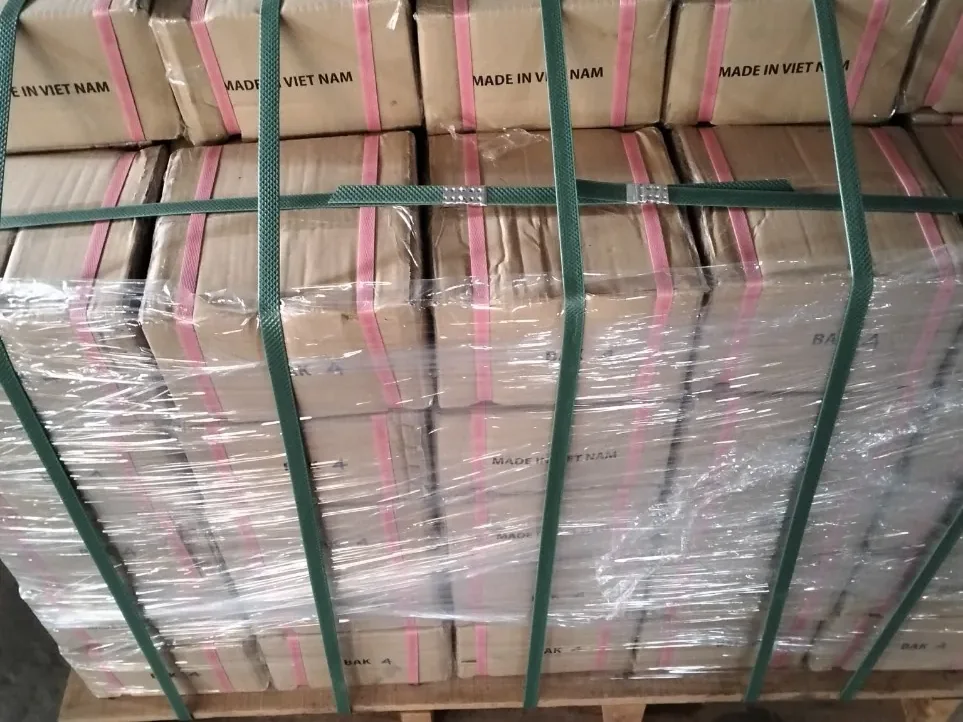
- Pallets: cartons strapped and stretch-wrapped, with corner protection.
- Container: pallets spread evenly along the floor and secured before the doors close.
More detail is in our guides on how to package fishing sinkers and private label sinker packaging.
20ft or 40ft container?
For an all-lead order, a 20ft container is usually the better choice. A 40ft container has about twice the space (around 67 m³) but almost the same maximum payload, about 28,800 kg. With sinkers you cannot use that extra space.
On US roads a 40ft can usually carry somewhat more cargo, about 43,000–48,500 lb on a standard chassis. It also costs more to ship. A 40ft makes sense when you add light, bulky goods to the order, such as retail displays or packaging stock, or when your trucker confirms the extra weight is allowed on your route.
How Fides Fishing plans your load
- We plan the container by weight, to the road limit you give us.
- Production and packing take about 30 days for sinkers.
- Cartons are palletized and loaded at the factory in Vietnam.
- We prepare the export documents, and a Certificate of Origin on request.
New to buying from Vietnam? Start with our guide on how to import fishing sinkers from Vietnam.
FAQ
How much does a 20ft container of fishing sinkers weigh?
For delivery by road in the US, most sinker loads are planned at about 38,000–42,000 lb of cargo, depending on the chassis and the state. The container itself can carry more, but the truck usually cannot without a permit.
How many 1 oz sinkers fit in a 20ft container?
About 600,000 in a 38,000 lb load, a little fewer once cartons and pallets are counted.
Is a 40ft container cheaper per sinker?
Usually not. A 40ft carries little or no extra weight at sea, and only somewhat more on US roads, while the freight costs more.
Can I mix sizes and products in one container?
Yes. Most buyers mix shapes, sizes, dive weights and jigs in one container. Our minimums per order are 3,000 lb for lead sinkers, 2,500 pcs for diving weights and 3,000 pcs for lead jigs and lures.
Do I need an overweight permit?
Only if the load is above the road limit for your route. Tell us the limit your trucker gives you, and we will keep the load under it.
Fides Fishing plans every container by weight, to the road limit you give us. Request a quote with your item list and destination, and we will plan the container for you.