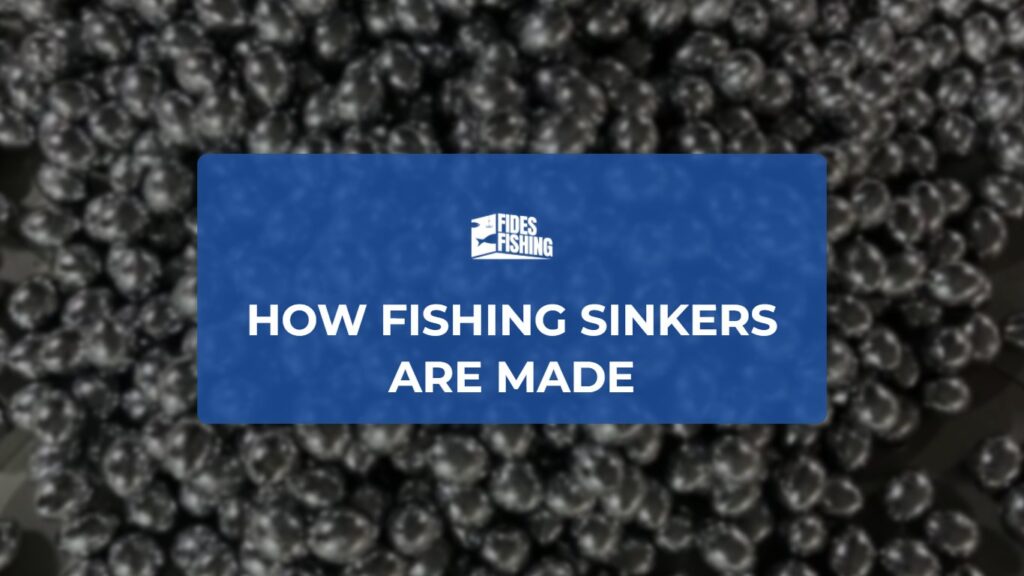
Short answer: lead fishing sinkers are made by melting lead, pouring it into a mold shaped like the sinker, letting it set, then sorting, weight-checking and packing the castings. Shapes with hardware, such as cannonball sinkers with brass eyes or sputnik sinkers with wire legs, get that hardware in the same production run. At Fides Fishing in Vietnam, molds are made in-house, the size is stamped on every sinker and every batch is weight-checked before packing. Samples take about 10 days and production about 30 days.
This guide walks through each step on our factory floor, with real photos, and shows what a buyer should check at each stage.
The process at a glance
| Step | What happens | What to check as a buyer |
|---|---|---|
| 1. Mold | A mold is made for each shape and size | Is your shape already in production, or does it need a new mold? |
| 2. Melt and pour | Lead is melted and poured into the mold | Full, clean castings without holes or missing edges |
| 3. Hardware | Eyes, rings or wire legs for shapes that need them | Eye size fits your snaps and swivels; wires are straight |
| 4. Cool and sort | Castings set, are taken out and sorted by size | No mixed sizes in a lot |
| 5. Size marking | The weight is stamped on each sinker | Marks are readable after packing |
| 6. Weight check | Each batch is checked on a scale | Weight per size matches your order |
| 7. Finish (optional) | Vinyl dip in your colors | Color per size, even coating |
| 8. Packing | Bulk bags, retail packs or individual packs | Count per bag, barcodes, warning labels |
| 9. Cartons and container | Cartons go on pallets and into the container | Carton weight, strapping, container plan |
Step 1: The mold
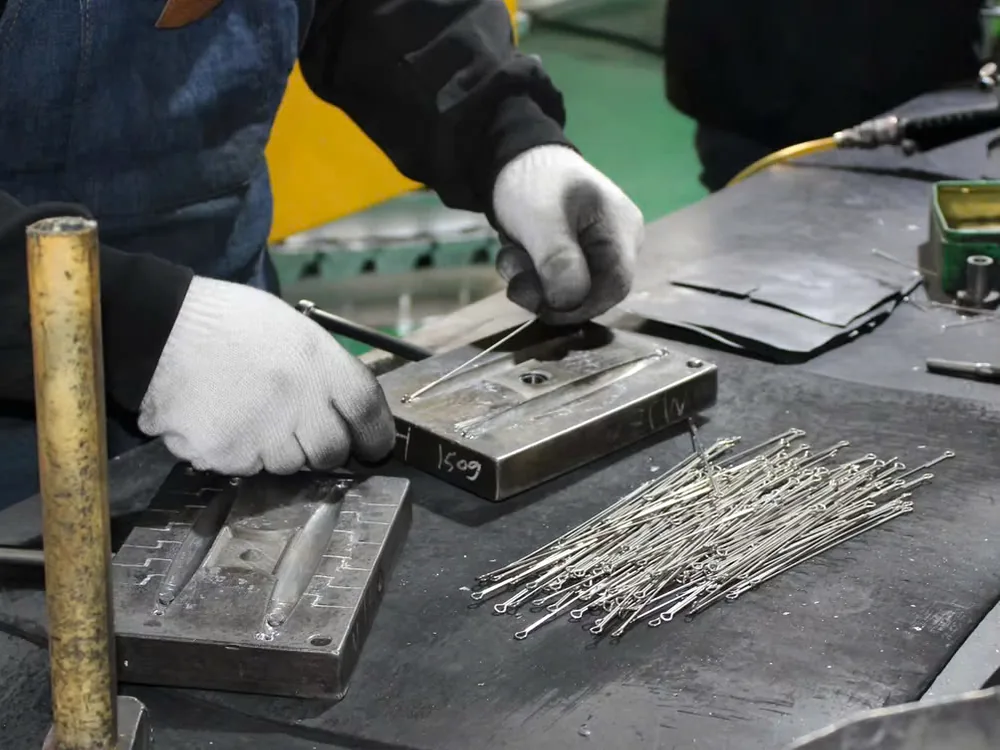
Every sinker starts with a mold cut to the shape and weight of the finished piece. A pyramid sinker, a bank sinker and an egg sinker each need their own mold, and so does every size of each shape, because a 2 oz and a 4 oz pyramid are different cavities.
We make molds in-house. For shapes we already produce, samples come straight from existing molds in about 10 days. For a new shape, we make the mold first and then cast samples; any tooling cost is stated in the quote. Once made, the mold stays at the factory for your repeat orders.
Want a shape of your own? Read about custom sinker manufacturing in Vietnam.
Step 2: Melting and pouring
Lead melts at about 327 °C (621 °F), which is low for a metal. That is one reason lead has been the standard sinker material for so long: it is easy to cast into precise shapes, and it is dense, so a small sinker carries a lot of weight.
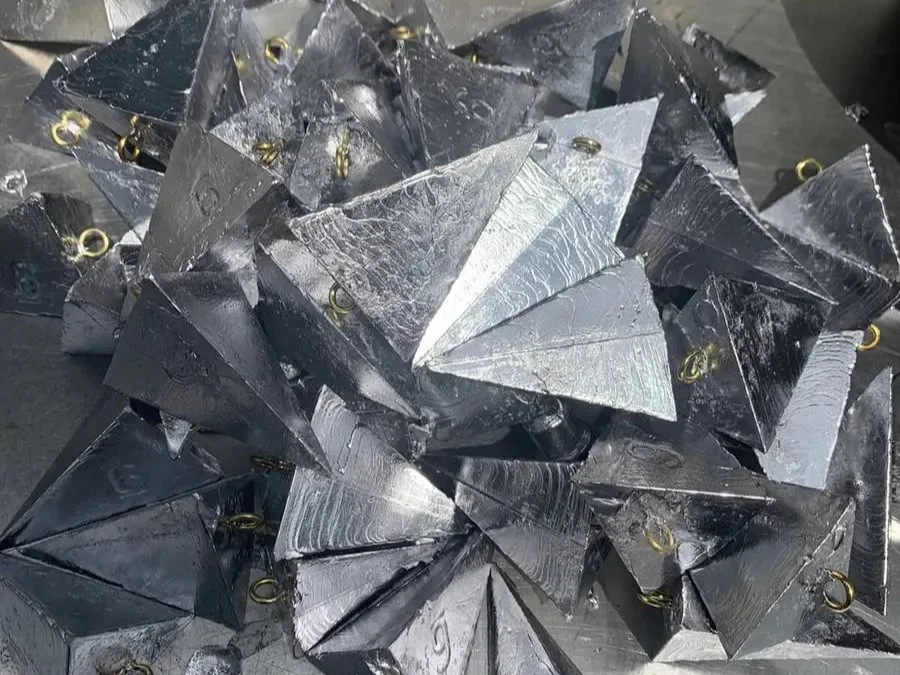
The molten lead is poured into the mold and fills the cavity. A good pour fills every corner, so the finished sinker has sharp edges, a full eye and the right weight. A short pour leaves a light sinker or a missing edge, which is why the weight check later in the process matters.
Step 3: Eyes, rings and wire legs
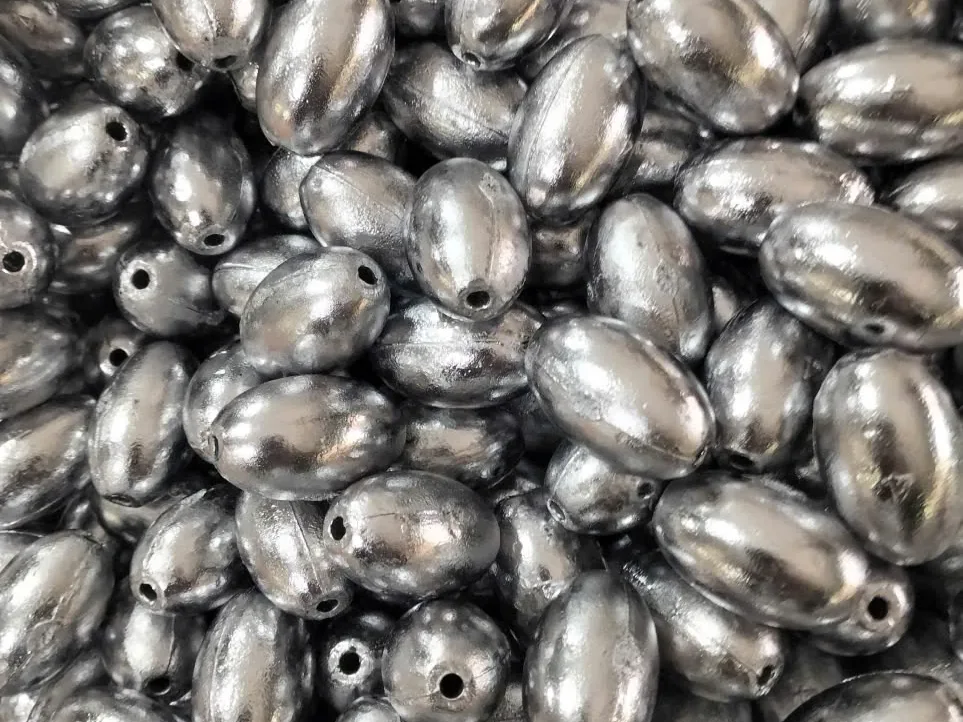
Many sinkers are plain lead: egg, bullet, coin and split shot have a line hole or slot and no hardware. Other shapes need something to tie to:
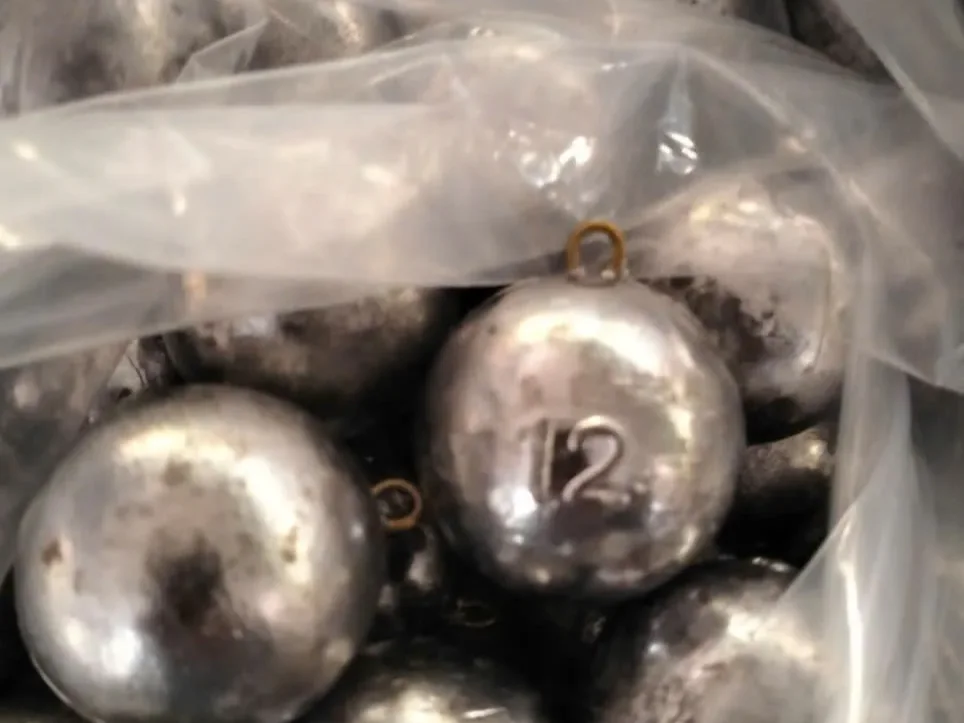
- Brass eyes on cannonball and pyramid sinkers, so the angler can clip on a snap or swivel.
- Rings at both ends on torpedo trolling sinkers, for in-line trolling rigs.
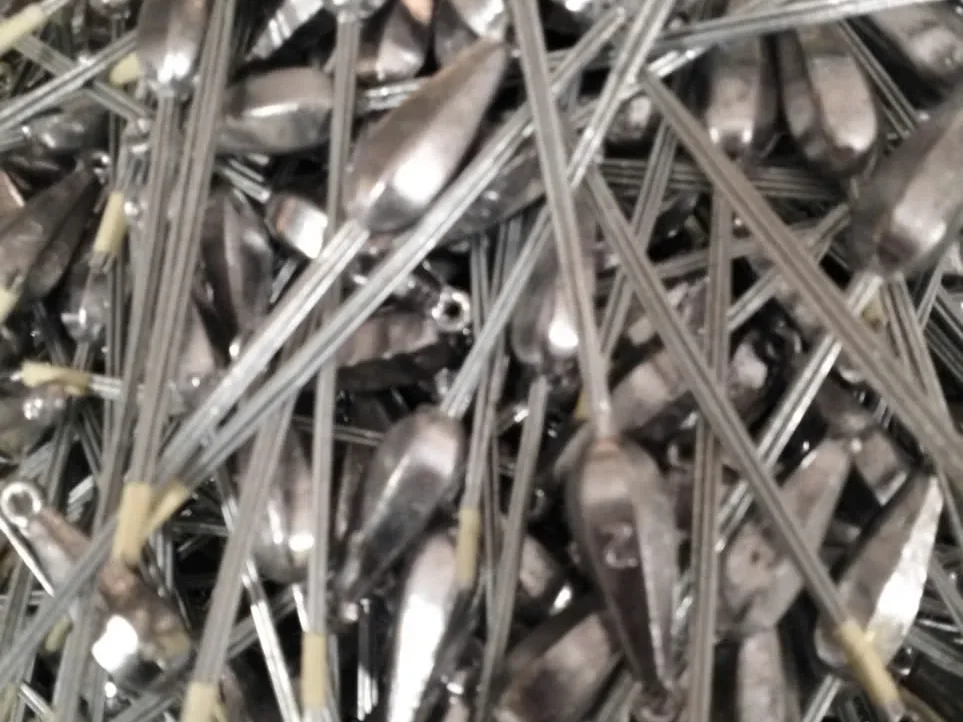
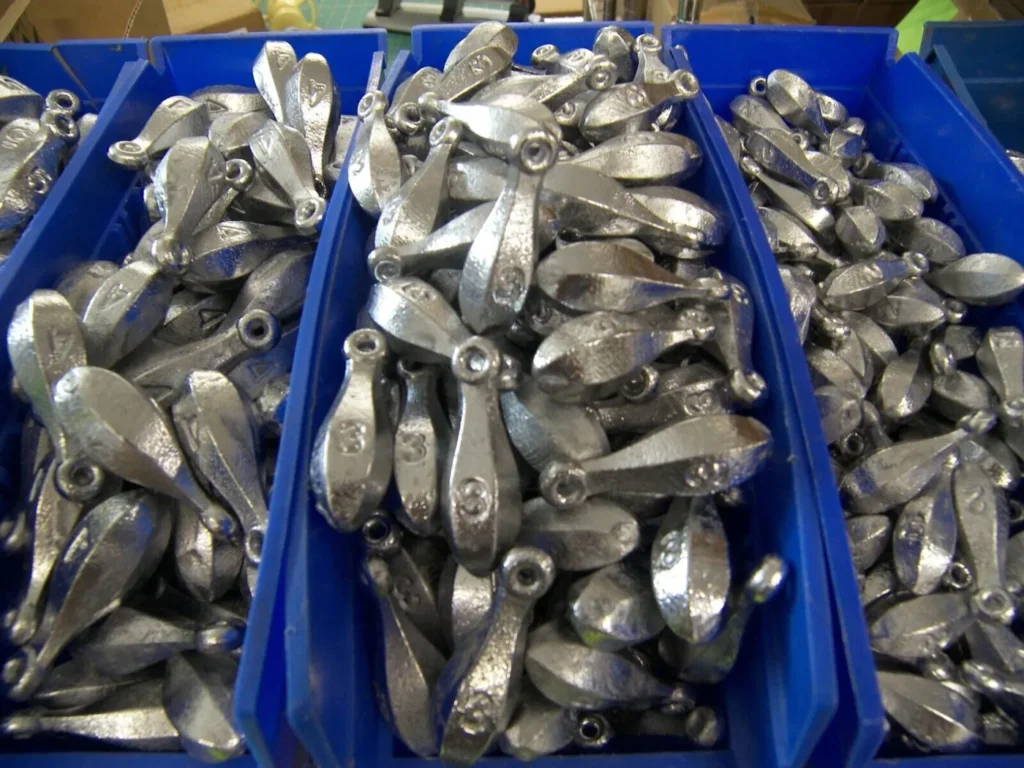
- Wire legs on sputnik sinkers, which grip the seabed in surf and current. They ship with protective caps on the wires.
The hardware is added in the same production run as the casting. For buyers, the details that matter are the eye’s inside diameter (it has to fit the snaps your customers use) and that wires are straight and firmly set.
Step 4: Cooling and sorting
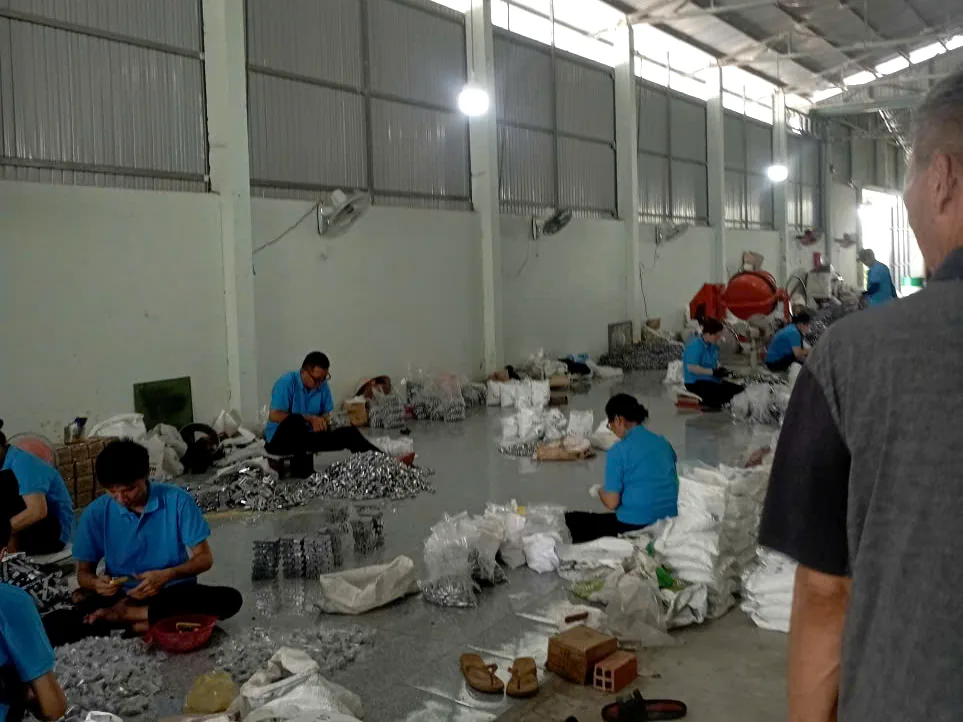
Lead sets quickly. The castings come out of the mold, cool, and are laid out or binned by shape and size. Sorting at this stage keeps sizes from mixing, which is the most common complaint buyers have about cheap sinkers: a bag sold as 3 oz with a few 2 oz pieces in it.
Step 5: Size marking
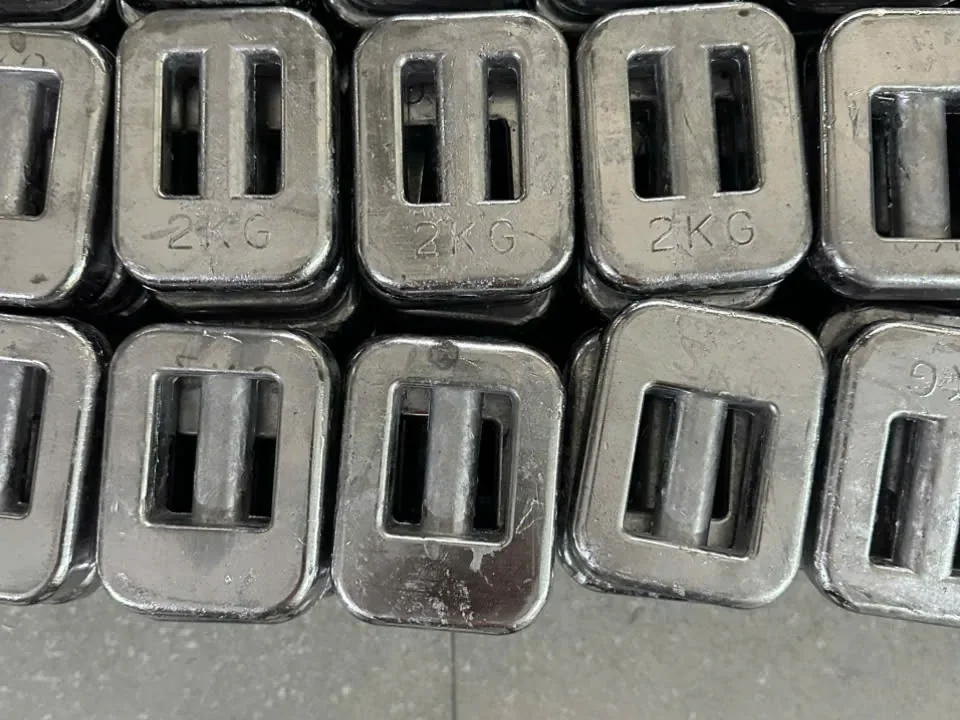
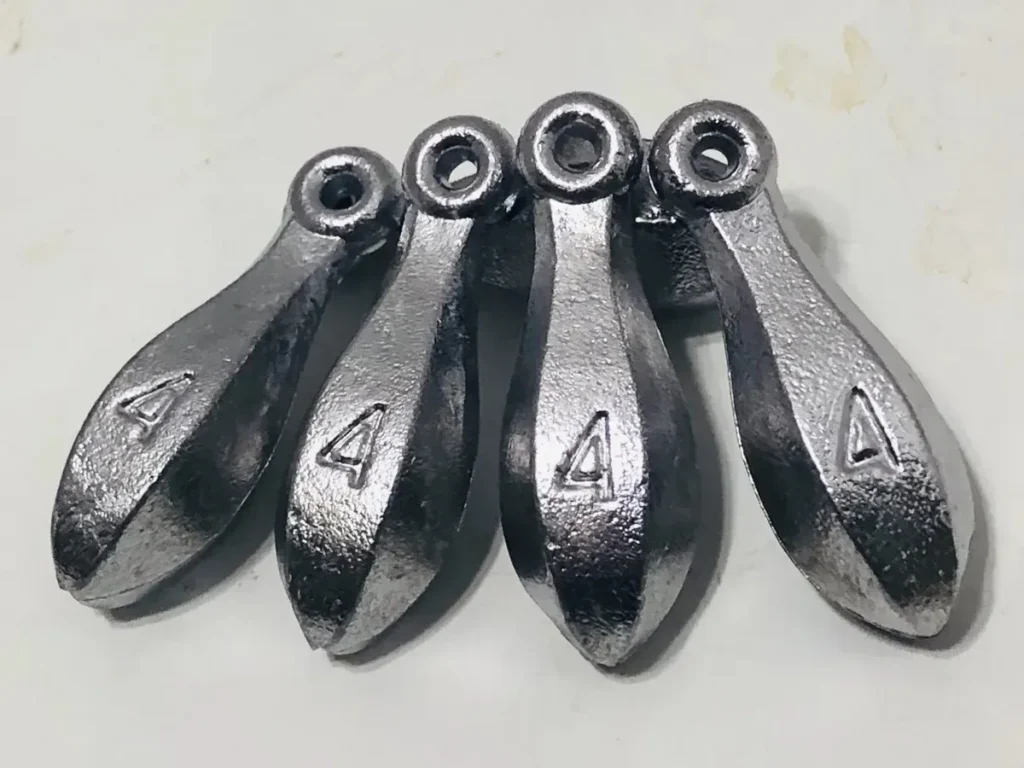
Anglers and store staff cannot tell 3 oz from 4 oz by eye. We stamp the size on every sinker, so stock stays sorted after the pack is opened and a loose sinker on the shop floor can go back in the right bin. On very small sinkers, such as split shot, the size goes on the pack instead.
Step 6: Weight check
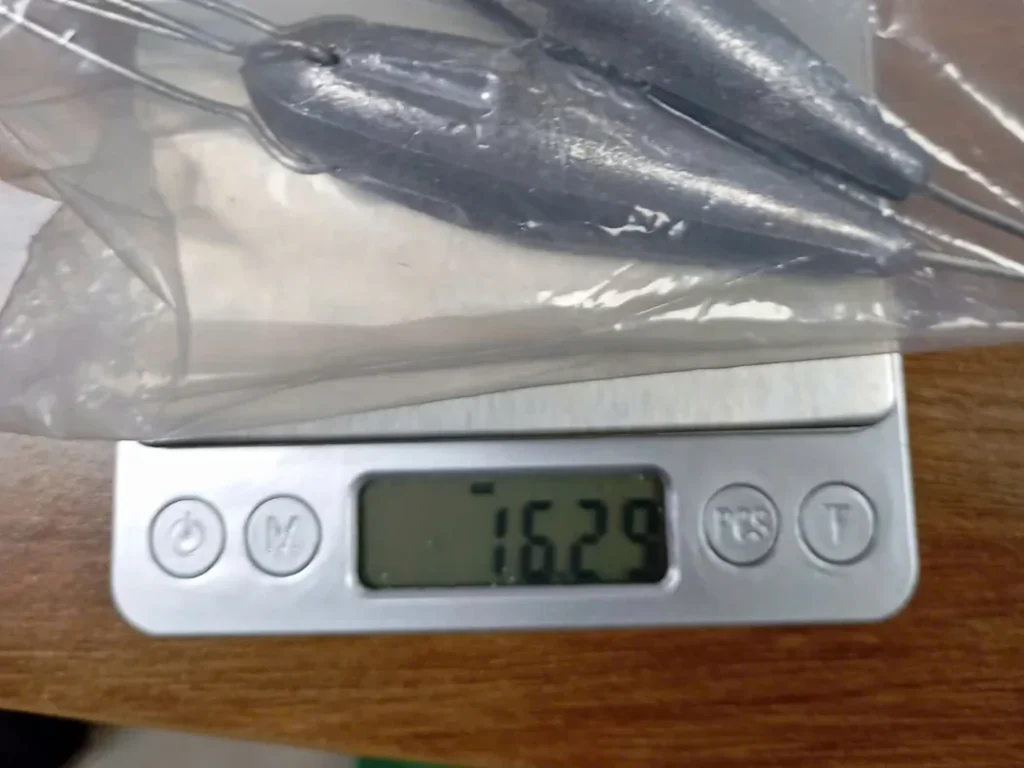
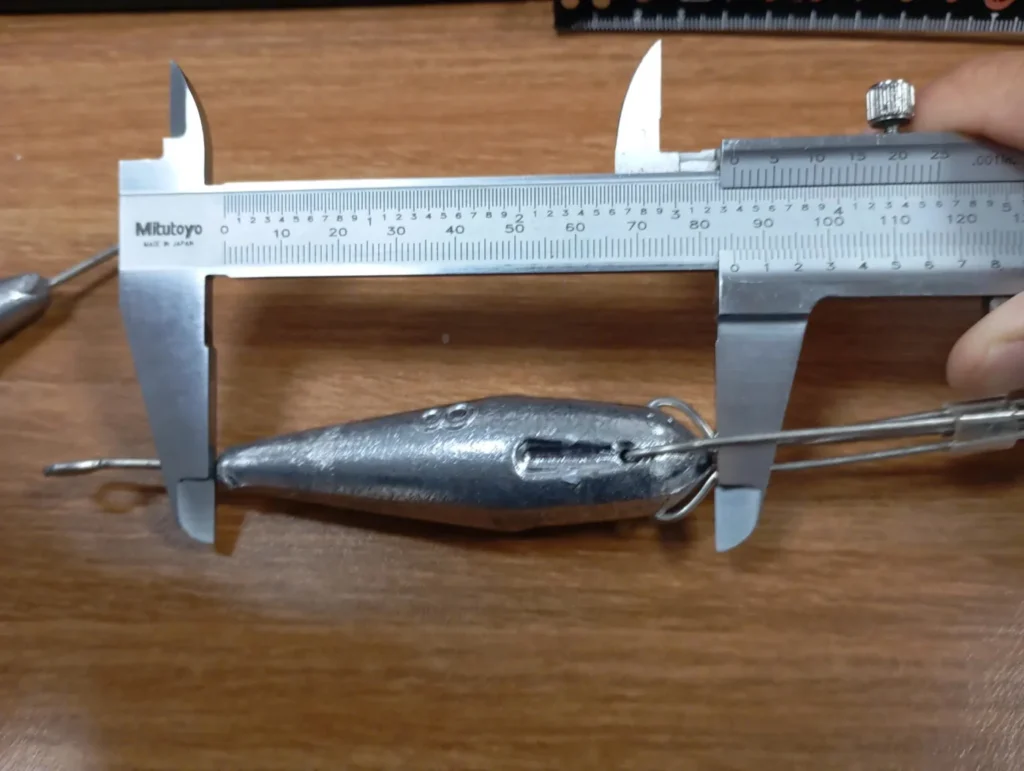
Every batch is weight-checked before it moves on to finishing or packing. Pieces are weighed on a digital scale, and key dimensions such as length and eye size are measured with calipers. Weight is what the angler is paying for, so this is the check that protects your brand.
We cover tolerances, sampling and the rest of the checks in detail in our guide to fishing sinker quality control. For weight conversions, see the sinker weight chart.
Step 7: Vinyl dip (optional)
Most sinkers ship as raw lead, the lowest-cost finish. On request, any of our sinkers can be vinyl-dipped. The coating adds color, gives a softer surface and reduces grey marks on hands and gear, and one color per size makes sizes easy to tell apart. Coated sinkers are still lead products and should be labeled as such where your market requires it. More in coated lead weights.
Step 8: Packing
Packing is set by how you sell:
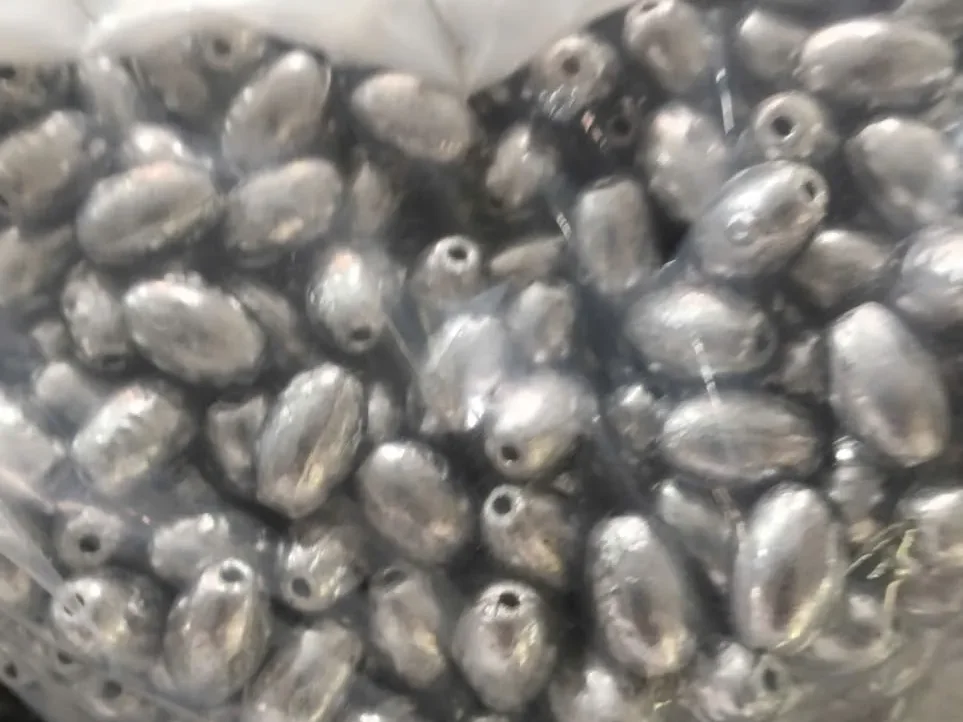
- Bulk bags for bait shops, distributors and your own repacking.
- Retail packs with a set count per bag, your header card or label and your barcode.
- Individual packs for heavy sinkers sold one at a time.
If you sell into California, retail packs need a Prop 65 lead warning. See private label sinker packaging for pack options.
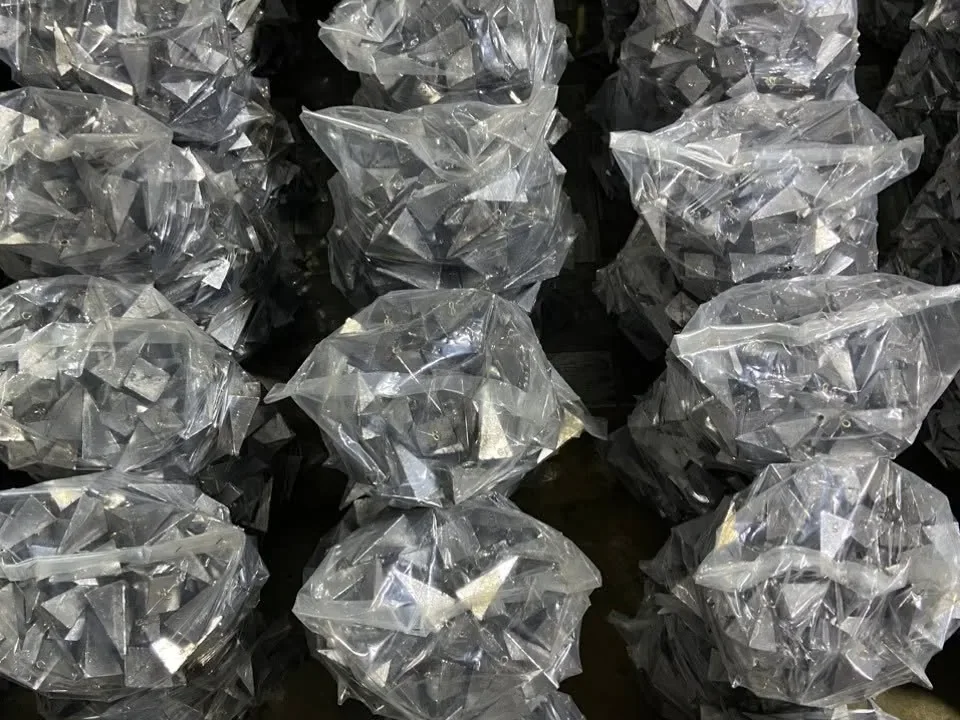
Step 9: Cartons, pallets and the container
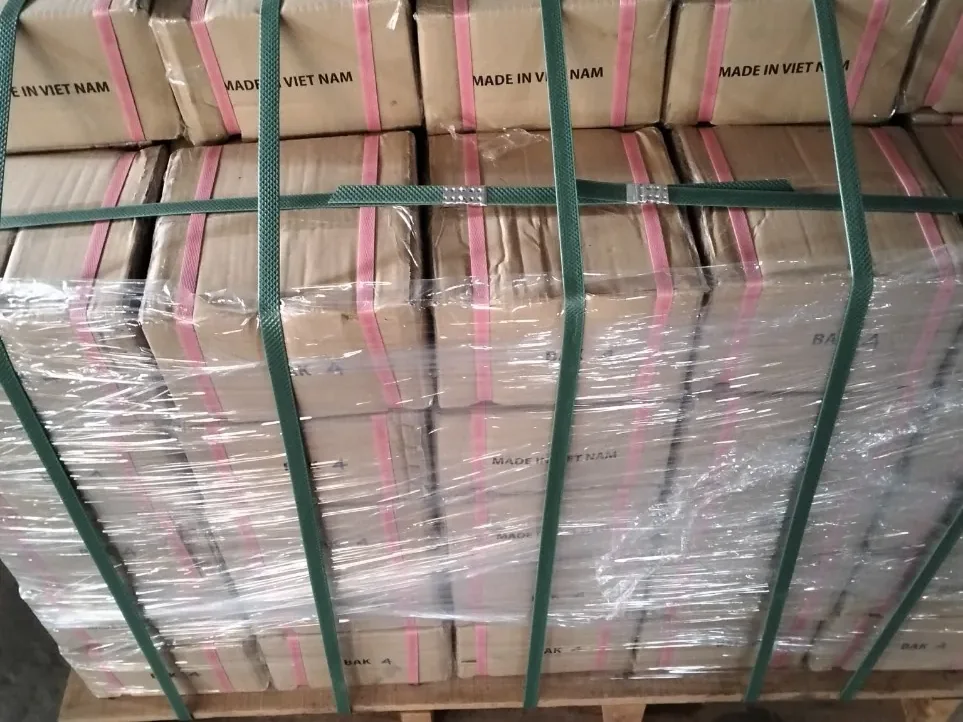
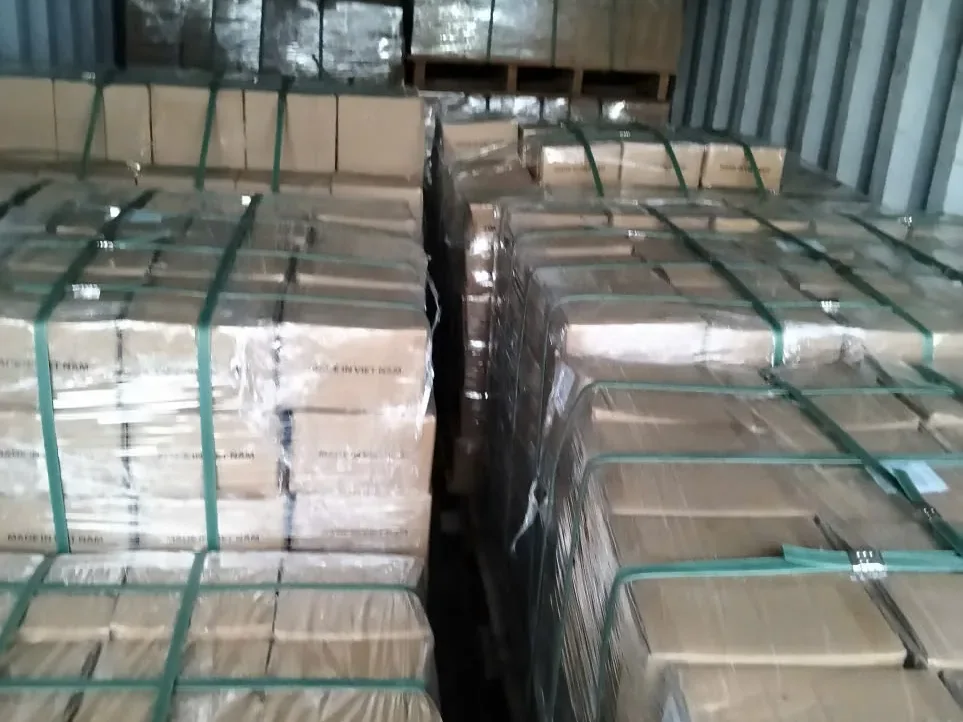
Lead is heavy, so cartons are packed to a safe weight rather than filled to the top. Cartons go onto pallets, are strapped and stretch-wrapped, and are loaded into the container. With sinkers, a container usually reaches its weight limit long before it is full by volume, so the load plan is worked out by weight.
We prepare the export paperwork, including a Certificate of Origin on request. The full import process is in how to import fishing sinkers from Vietnam.
How long it takes
| Stage | Time |
|---|---|
| Samples from existing molds | About 10 days |
| New shape | Mold first, then samples; timing in the quote |
| Production after sample approval | About 30 days |
| Minimum order | 3,000 lbs, split across shapes and sizes |
Frequently asked questions
What are fishing sinkers made of?
Most are cast lead, because it is dense, cheap and easy to cast. Lead-free sinkers use tungsten, steel, brass or bismuth, which cost more or are larger for the same weight. Some markets now restrict small lead sinkers; check the rules for where you sell.
Can you make a sinker shape I design?
Yes. Send a sample, photos or a drawing with dimensions and weights. We make the mold in-house, cast samples for your approval, and keep the mold for repeat orders.
Why is the size stamped on the sinker?
So sizes stay sorted after the pack is opened. It saves time for store staff and helps anglers pick the right weight.
Do you make finished sinkers or sell molds?
We make finished sinkers. Molds stay at our factory and are used for your production.
Get a quote
This is how every order is made at Fides Fishing. Send the shapes, sizes and quantity per size, the finish and how you want them packed, and we will reply with a price and sample timing. Use the Request a Quote form, or browse the types of fishing sinkers we make.