Short answer: judge sinker samples on what your customers will notice. Check weight accuracy and how much the weight varies from piece to piece. Check that the dimensions fit your rigs, the size mark is correct, the hardware is solid and the surface and finish are clean. Ask for several pieces of each size, measure them yourself and compare them with your current stock. Then sign off one set as the reference for production.
Before you ask for samples
A sample can only be judged against a clear request. Send the supplier:
- shape and sizes, in ounces or grams;
- the weight tolerance you accept for each size;
- eye size, line hole or slot size, so the sinkers fit the snaps, swivels and belts your customers use;
- finish: raw lead or vinyl-coated, with colors;
- size marking: stamped on the body or not;
- packaging and any warning text your market needs, such as California Prop 65.
If you already sell a sinker you are happy with, send it as the reference. Ask the supplier how they will measure the samples and whether they will send the readings with them.
The sample scorecard
| Check | How to check | Red flag |
|---|---|---|
| Weight accuracy | Weigh each piece on a scale that reads to 0.1 g for small sinkers | Average weight off the nominal size |
| Weight consistency | Compare the lightest and heaviest piece of each size | A wide spread between pieces of the same size |
| Dimensions | Calipers against your spec or current stock | Eye too small for standard snaps, rough or narrow line holes |
| Size marking | Read the stamp and compare it with the scale | Stamp missing, unreadable or wrong |
| Hardware | Twist and pull eyes, rings and wires by hand | Eyes that turn or loosen, bent wires |
| Surface | Look closely at seams and faces | Holes, cracks, missing corners, sharp seams |
| Finish | Check coating cover and color on every size | Bare spots, drips, wrong color |
| Packaging proof | Count, scan the barcode, read the warning text | Wrong count, barcode that will not scan |
Each of these checks is explained in more detail in our guide to fishing sinker quality control.
Weigh more than one piece
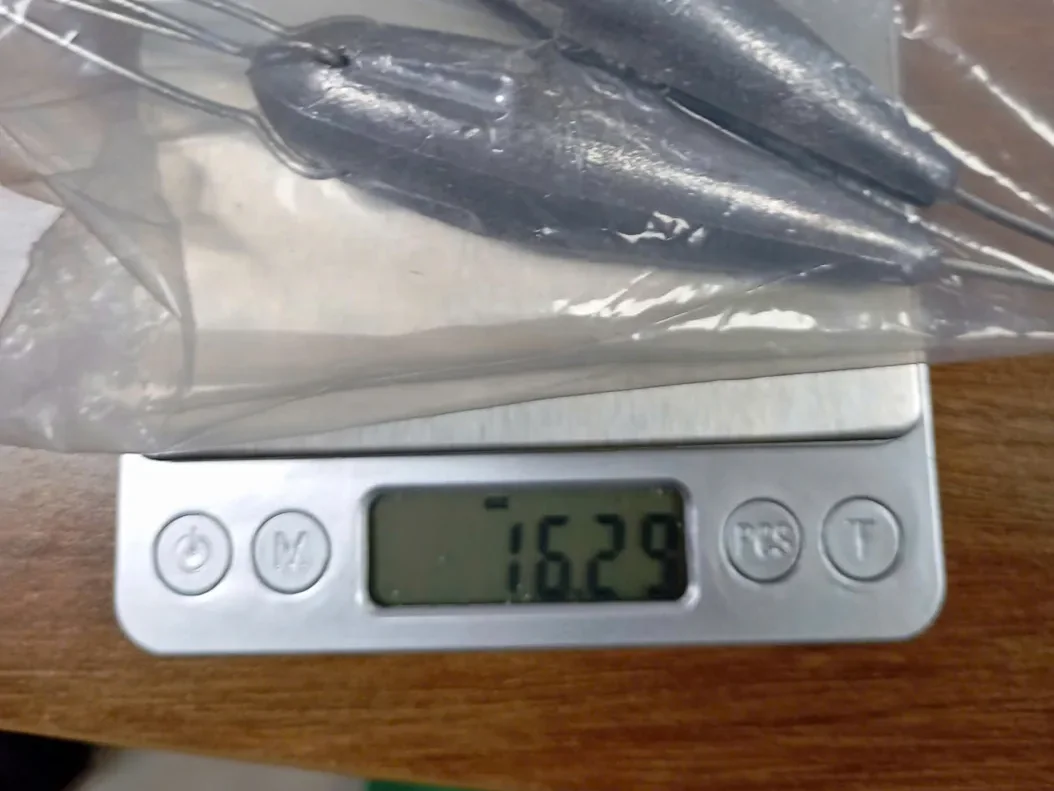
One sinker tells you very little. A supplier can pick its best piece for a sample, and a single piece cannot show how much the weight varies. Ask for several pieces of each size, and weigh each one.
Example: a 4 oz sinker should weigh 113.4 g. If ten samples weigh between 112.1 and 115.0 g, the average is close to target, but the spread is 2.9 g, about 2.6% of the nominal weight. Whether that is acceptable depends on the tolerance you set. The point is to measure the spread, not only the average. Our sinker weight chart gives the gram weight for each size.
Test them the way your customers will
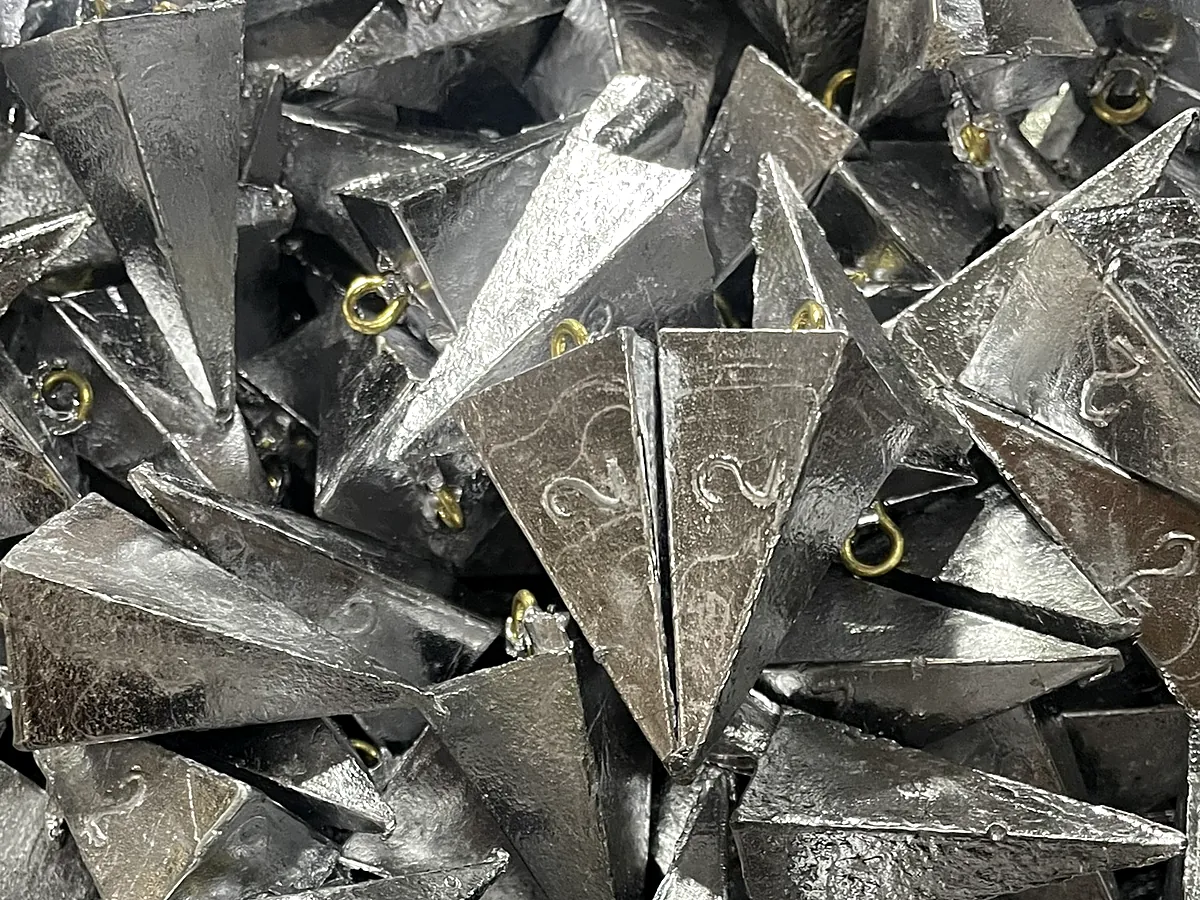
- Clip the sinkers to the snaps and swivels your customers use.
- Run line through egg, bullet and coin sinkers and check that the hole does not nick it.
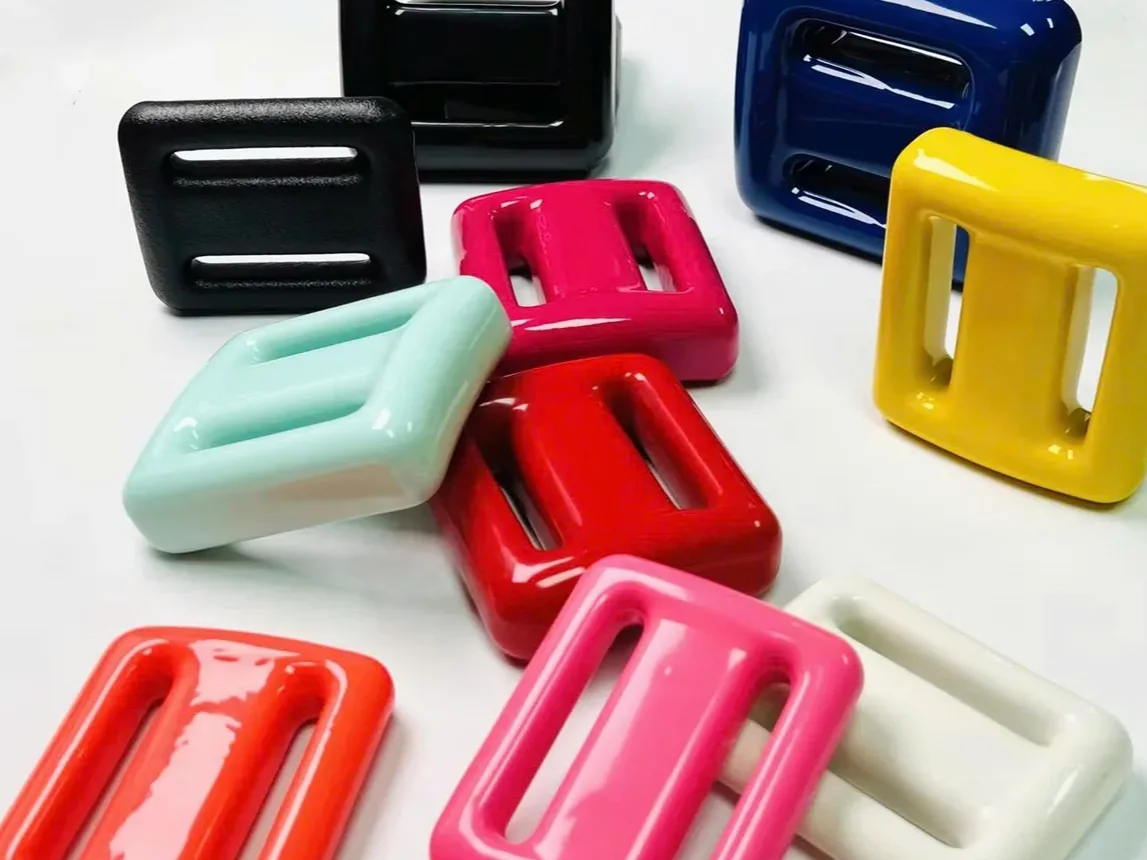
- Thread dive weights onto a standard weight belt.
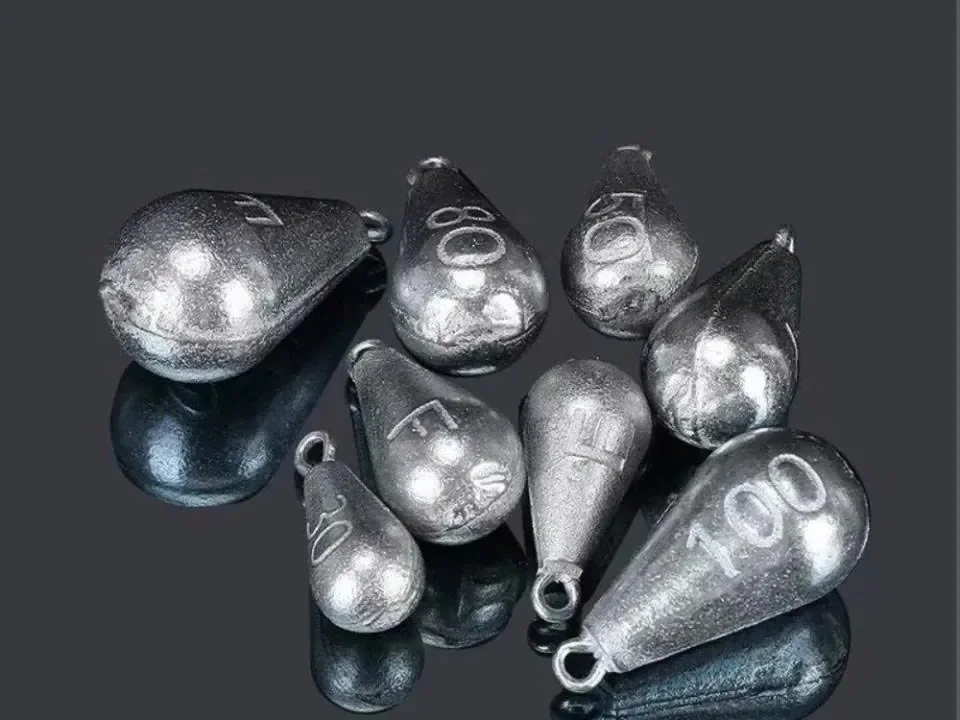
- Put the samples next to your current stock. Customers will compare them on the shelf.
Judge the supplier, not only the sinker
Samples also show you how a supplier works. Look at:
- The spec: did they confirm it in writing before making the samples?
- Measurements: did the samples come with weights and dimensions, or did you have to find them yourself?
- Timing: did the samples arrive when promised?
- Problems: did they tell you about an issue, or hope you would not notice?
- Packaging: did they send a packaging proof for you to approve before printing?
Red flags
- A supplier that will not put a weight tolerance in writing.
- Samples that look much better than photos of the supplier’s bulk stock.
- Different weights for the same size, or stamps that do not match the weight.
- Loose eyes or rings on new samples. They will not get tighter in shipping.
Approve a reference sample
When the samples pass, approve them in writing with the measurements. Label one set per size as the approved reference, and keep one set on each side. The production order is then checked against that reference, and any dispute can be settled by comparing the shipment with the approved set.
At Fides Fishing, samples are ready in about 10 days. We measure them against your spec with calipers and a digital scale, and the approved sample becomes the reference for the whole order. For reorders, the approved sample and packaging files stay on record, so you only confirm quantities. For the full process, see how to import fishing sinkers from Vietnam.
Planning a factory check as well? See how to audit a fishing tackle factory in Vietnam.
FAQ
How many samples should I ask for?
Several pieces of each size, not one. Five to ten pieces per size is a practical number for checking weight spread.
What weight tolerance is reasonable?
There is no single industry figure. Agree a number for each size in writing, in grams for small sinkers or as a percentage for heavy ones, so both sides check against the same figure.
Can I send my current sinker as the reference?
Yes. A physical sample is the clearest spec. We also work from photos or drawings.
How long do samples take?
About 10 days at our factory for an existing shape, plus courier time. A new mold takes longer.
What happens after I approve the samples?
Production starts, about 30 days for sinkers, and the shipment is checked against your approved reference before packing.
At Fides Fishing, samples take about 10 days, and the sample you approve becomes the standard for production. Request samples with your sizes, tolerances and packaging.