Short answer: if you import or sell lead sinkers and jigs, the rules now differ sharply by market. Several US states restrict small lead sinkers and jigs, California requires lead warnings, the EU has adopted a phased sales ban on lead tackle (Regulation (EU) 2026/2501), Canada bans small lead tackle in national parks and national wildlife areas, and England restricts the supply of small lead weights. Heavier sinkers are mostly unaffected until the EU’s last step in 2031, but the thresholds and dates matter for every SKU you stock.
This guide summarizes the rules as of November 2026 for the markets our buyers ship to. It is a starting point, not legal advice: rules change, so check the official sources linked at the end before you finalize an order.
Quick reference by market
| Market | What is restricted | Threshold | Sale or use |
|---|---|---|---|
| New Hampshire (US) | Lead sinkers and jigs | 1 oz or less | Sale; use in fresh water |
| Maine (US) | Lead sinkers, bare and painted lead jigs | 1 oz or less, or 2.5 in or shorter | Sale statewide; use on inland waters |
| Massachusetts (US) | Lead sinkers, weights and jigs | Less than 1 oz | Use on inland waters |
| New York (US) | Lead sinkers | 0.5 oz or less | Retail sale |
| Vermont (US) | Lead sinkers | 0.5 oz or less | Sale |
| Washington (US) | Lead weights and jigs | 1.5 in or shorter | Use on designated loon lakes |
| California (US) | Products that expose users to lead | No weight threshold | Warning required (Prop 65) |
| European Union | Sinkers, lures, fishing wire with 1% or more lead | 3 March 2027: lead fishing line and drop shot sinkers; 3 December 2029: 50 g or less; 3 December 2031: over 50 g up to 1 kg | Sale (and commercial use) |
| Canada | Lead sinkers and jigs | Less than 50 g | Use and possession in national parks and national wildlife areas |
| England (UK) | Lead weights for fishing lines | 0.06 g to 28.35 g | Supply |
United States: state rules plus California warnings
There is no nationwide US ban on lead fishing tackle. Restrictions are set state by state, mostly in the Northeast, and they target small sinkers and jigs that loons and other water birds can swallow. That means one shipment can be legal in Florida and partly unsellable in New England.
New Hampshire
New Hampshire prohibits both selling and fishing with lead sinkers and jigs that weigh one ounce or less, in all fresh water. Lead core line, spinnerbaits, spoons, plugs and flies are outside the rule.
Maine
Maine covers lead sinkers and lead jigs that weigh one ounce or less or measure 2.5 inches or less. Selling them is unlawful statewide and using them is unlawful on inland waters. Painted lead jigs were already banned from sale, and the ban on using them took effect on September 1, 2026.
Massachusetts
Massachusetts prohibits using lead sinkers, weights and jigs of less than one ounce in its inland waters, a rule enforced since 2012. The regulation targets use; check with your customers whether their retail partners also avoid stocking these sizes.
New York and Vermont
Both states ban the sale of lead sinkers weighing half an ounce or less. In New York the ban applies to retail sale; in Vermont it has applied since 2006. Neither definition covers lures, weighted flies or jig heads, and Vermont also excludes downrigger weights.
Washington
Washington restricts the use of lead weights and jigs measuring 1.5 inches or less along the longest axis on a list of lakes where loons nest. The rule is lake-specific, so check the current WDFW regulations for the lakes concerned.
California Proposition 65
California does not ban lead sinkers, but Proposition 65 requires a clear and reasonable warning on products that expose consumers to lead. Enforcement is active: in July 2026 a private enforcer served a 60-day notice over lead bank sinkers sold through a US retailer without a warning. The safe-harbor short-form warning also changed: since January 1, 2025 it must name at least one listed chemical, and businesses using the old short form have until January 1, 2028 to switch. For lead tackle, that means printing a warning that names lead on the retail pack.
European Union: a phased sales ban under REACH
The EU has restricted lead in fishing tackle under Annex XVII of the REACH Regulation. The restriction was published in November 2026 as Regulation (EU) 2026/2501, and the dates are now fixed:
- Scope: sinkers, lures and fishing line containing 1% or more lead by weight.
- 3 March 2027: sale of lead fishing line and lead drop shot sinkers ends, and retailers must start displaying lead warning information.
- 3 December 2029: sale of sinkers and lures of 50 g or less ends.
- 3 December 2031: sale of sinkers and lures over 50 g and up to 1 kg ends.
- Outside the scope: sinkers over 1 kg, and lead that is enclosed in, embedded in or threaded onto fishing nets or lines. Loose sinkers sold to be fitted to a net may still count as sinkers.
- Exemptions reported by EFTTA: copper-alloy lures with less than 3% lead, and split shot of 0.06 g or less sold in spill-proof, child-resistant packaging. Check the final text for the exact wording.
- Recreational use is not banned EU-wide, but use in commercial fishing is restricted and Member States may add their own use bans.
The warning information must be in the official language of the country of sale and explain that the product contains lead, the risks, and the phase-out dates. In shops it goes near the products; online it goes in the product listing.
Canada: national parks and national wildlife areas
Canada has no general federal sales ban. The restrictions apply in protected areas. Under the National Parks of Canada Fishing Regulations, anglers may not use or possess lead sinkers or lead jigs weighing less than 50 g while fishing in park waters. The Wildlife Area Regulations similarly prohibit possessing lead sinkers or jigs while fishing in a national wildlife area, where a lead sinker means one under 50 g with more than 1% lead. Provincial rules can add to this, so ask your Canadian customers which parks and regions they supply.
United Kingdom
England prohibits supplying lead weights between 0.06 g and 28.35 g (one ounce) for weighting fishing lines. In Wales, Natural Resources Wales byelaws prohibit using lead weights in that range, with exceptions for dust shot, weights of one ounce or more, and lead inside lures, flies and lead-cored lines. If you sell into Scotland or Northern Ireland, check those rules separately.
What this means when you source lead tackle
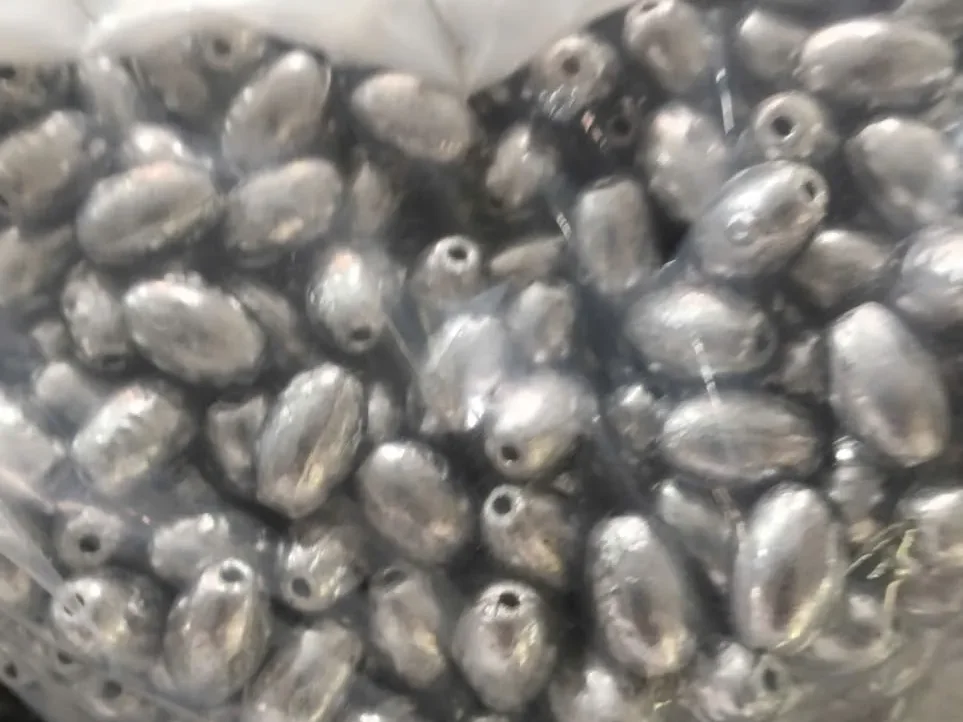
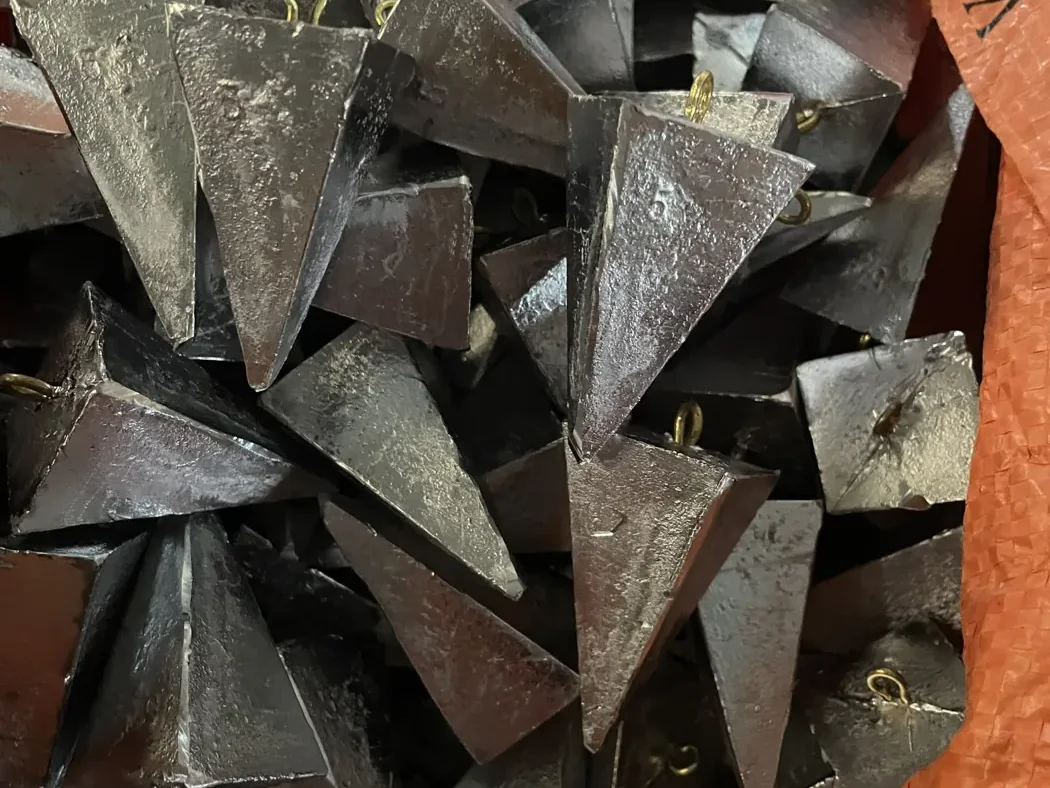
- Map every SKU to the strictest market you sell into. A 1/4 oz bullet sinker falls under the rules in New York, Vermont, New Hampshire, Maine and England; a 4 oz pyramid is above the weight thresholds in all of them (in Maine and Washington, check the length rules too).
- Mark the weight. Thresholds are set by weight (and in Maine and Washington by length), so a weight marked on each piece makes compliance checks easier for you and your retailers. See logo and weight marking on sinkers.
- Print the right warnings. For California, put a Prop 65 warning naming lead on the retail pack. For the EU, prepare point-of-sale and online warning text in each local language. Our guide to labels for private label tackle covers origin marking too.
- Plan EU ranges by date. Drop shot sinkers stop in March 2027, small sinkers in December 2029 and the rest up to 1 kg in December 2031. Decide now which SKUs to phase out at each step, and which lead-free materials could replace them.
- Keep documents. Keep specifications and test results for lead content, and a Certificate of Origin for customs.
Sources
- New Hampshire Fish and Game: Lead Free Law
- Maine Department of Inland Fisheries and Wildlife: Lead fishing tackle
- Massachusetts 321 CMR 4.01
- New York Environmental Conservation Law 11-0308
- Vermont Statutes 10 V.S.A. 4615
- WDFW: lead tackle restrictions on lakes with loons
- Squire Patton Boggs: Prop 65 short-form warning changes
- California Attorney General: Prop 65 60-day notice on bank sinkers (2026)
- Regulation (EU) 2026/2501 (EUR-Lex)
- EFTTA: EU lead sales ban is final
- Tackle Trade World: Lead ban in Europe finally gets go ahead
- National Parks of Canada Fishing Regulations
- Canada Wildlife Area Regulations
- UK: Environmental Protection (Anglers’ Lead Weights) (England) Regulations 2015, explanatory memorandum
- Natural Resources Wales: using rods and lead
FAQ
Is lead fishing tackle banned in the United States?
Not nationwide. Several states restrict the sale or use of small lead sinkers and jigs, mostly at thresholds of half an ounce to one ounce, and California requires Prop 65 warnings.
When does the EU ban on lead sinkers start?
Regulation (EU) 2026/2501 sets three dates: 3 March 2027 for lead fishing line and drop shot sinkers, 3 December 2029 for sinkers and lures of 50 g or less, and 3 December 2031 for those over 50 g and up to 1 kg.
Can anglers in the EU still use lead sinkers?
The EU restriction targets sales; recreational use is not banned EU-wide. Individual Member States can still set their own use rules, so check each country you sell into.
Are heavy sinkers affected?
Mostly not yet. Most US state rules and the UK supply rule are set at about one ounce or less, although Maine and Washington also use length limits. The EU rule reaches sinkers over 50 g in December 2031, and sinkers over 1 kg are outside its scope.
Fides Fishing makes lead sinkers, dive weights and lead jigs for export, with private-label packaging that can carry the Prop 65 warning and the labels your market needs. Request a quote and tell us where you sell, and we will help you match sizes and packaging to the rules there.