Short answer: most fishing weights are made of lead, because lead is dense, soft and easy to cast. The main alternatives are tungsten, bismuth, brass, steel, tin and zinc, plus clay, stone or glass. Tungsten is denser than lead, so a tungsten weight is smaller for the same weight. Every other alternative is less dense, so the weight gets bigger. To check whether a sinker is lead, rub it on a sheet of paper: lead leaves a gray mark and is soft enough to dent with a fingernail.
Why most fishing weights are lead
Outdoor Life puts it simply: in most cases, fishing weights are made of lead. Lead has a density of about 11.34 g/cm³ (Engineering ToolBox), so a small sinker carries a lot of weight. It is soft, which is why split shot can be pinched onto the line, and it melts at a low temperature, so it can be poured into simple molds in almost any shape. Our guide to how fishing sinkers are made shows the casting process step by step.
Fishing weight materials compared
The table compares common materials by density. The third column shows how big a weight is compared with a lead weight of the same weight, worked out from the densities. Real weights vary with the alloy and the shape.
| Material | Density (g/cm³) | Size vs lead, same weight | Notes |
|---|---|---|---|
| Lead | 11.34 | Same | Soft, cheap and easy to cast into any shape. Restricted in some places. |
| Tungsten (pure) | about 19.3 | About 40% smaller | Hard and compact, with better bottom feel. Costs much more than lead. |
| Bismuth | 9.75 | About 16% bigger | Brittle on its own; often mixed with tin for split shot. |
| Brass | 8.4 to 8.7 | About 30 to 35% bigger | Hard, so it cannot be crimped. Used for bullet and walking weights. |
| Steel | 7.85 | About 45% bigger | Cheap and holds paint well, but too hard to pinch. |
| Tin | 7.28 | About 55% bigger | Soft enough for split shot, and shinier than lead. |
| Zinc | 7.14 | About 60% bigger | Lighter and bulkier than lead for the same weight. |
| Clay, stone, glass | far lower | Much bigger | Look like a stone on the bottom, but are brittle. |
Densities from Engineering ToolBox; tungsten from BassResource. For pure tungsten the profile is about 40% smaller, but many tungsten fishing weights are alloys, so the real difference is often less.
Tungsten vs lead
Tungsten is the only common material that is denser than lead. BassResource gives its density as 19.3 g/cm³, almost twice that of lead. That gives three advantages: a smaller profile for the same weight, better feel for changes in the bottom, and a clicking sound against rock and cover, because tungsten is harder than lead. The downside is price. Northern Wilds notes that tungsten is more expensive than lead, sometimes dramatically so. It is also more brittle, so tungsten split shot can break when pinched, and purity varies because tungsten is often mixed with other metals such as nickel. Tungsten prices have risen sharply in 2026; see our fishing tackle trends for 2027.
Tungsten weights are popular in bass fishing, where a small, hard weight helps punch through cover. Our bass fishing weights guide covers the shapes and sizes.
Steel, brass, bismuth, tin and zinc
- Steel: inexpensive and holds paint color well, but less dense, so weights are bulkier, and too hard for pinch-on or crimp-on weights. It suits weights with a hole, a rubber core or a line tie (Take Me Fishing).
- Brass: costly and hard, so it is a poor substitute where a weight must be crimped. It is used in jigs, bottom bouncers, walking sinkers and Texas rigs (Northern Wilds).
- Bismuth and tin: pure bismuth is brittle; adding tin makes it softer for split shot. Because it is less dense than lead, weights are larger (Take Me Fishing).
- Tin: softer than steel and good for split shot, but shinier than lead, which some anglers dislike (Northern Wilds).
- Zinc: at 7.14 g/cm³, a zinc weight is about 1.6 times the volume of a lead weight of the same weight.
- Clay, stone and glass: can look like a stone on the bottom, but they are brittle and much larger for the weight (Take Me Fishing).
How to tell if a fishing weight is lead
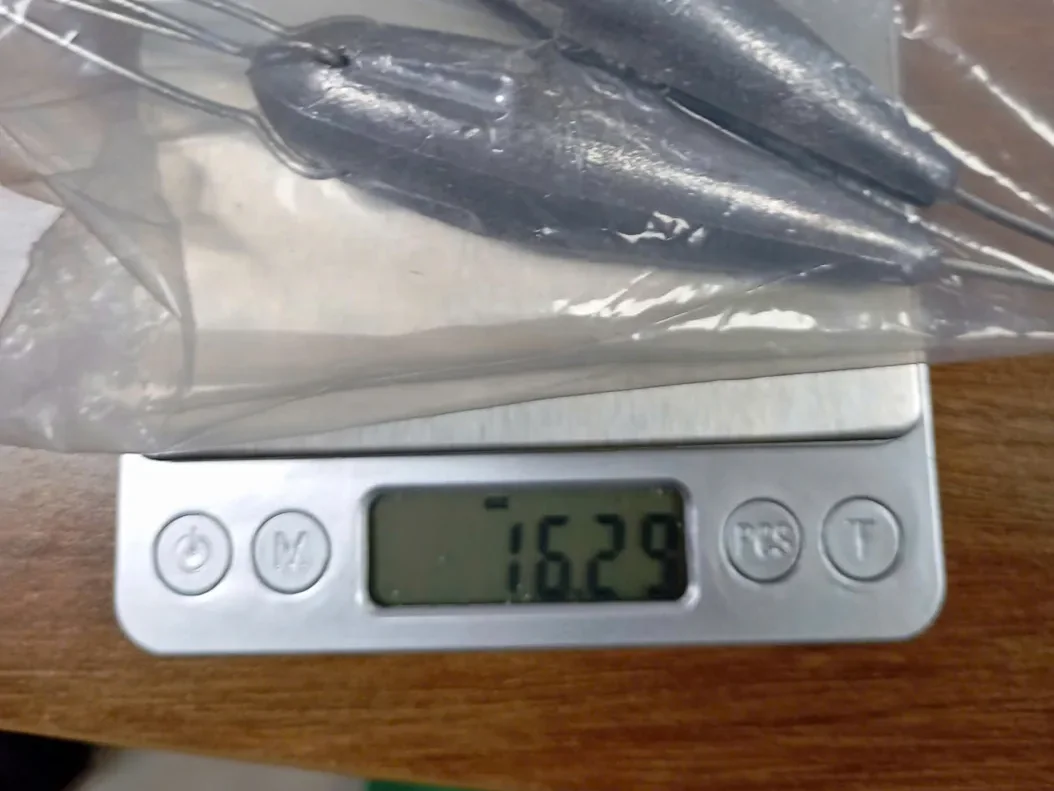
- Rub it on paper. Lead leaves a gray mark. Painted tackle can still leave a mark once the paint is scratched (Minnesota Pollution Control Agency).
- Try to dent it. Lead is soft, so a fingernail or pliers will dent it. Tungsten and steel are much harder (Loon Preservation Committee).
- Look at the color. Lead is dull, dark gray. Steel and tungsten tend to look shiny (Loon Preservation Committee).
- Read the pack. Lead tackle packaging carries a lead warning (MPCA), such as a California Prop 65 warning.
- Try a magnet. A magnet picks up most steel weights, but not lead, tungsten or brass.
A coating does not change what is inside. A vinyl-dipped or painted weight is still lead if the core is lead.
Where lead fishing weights are restricted
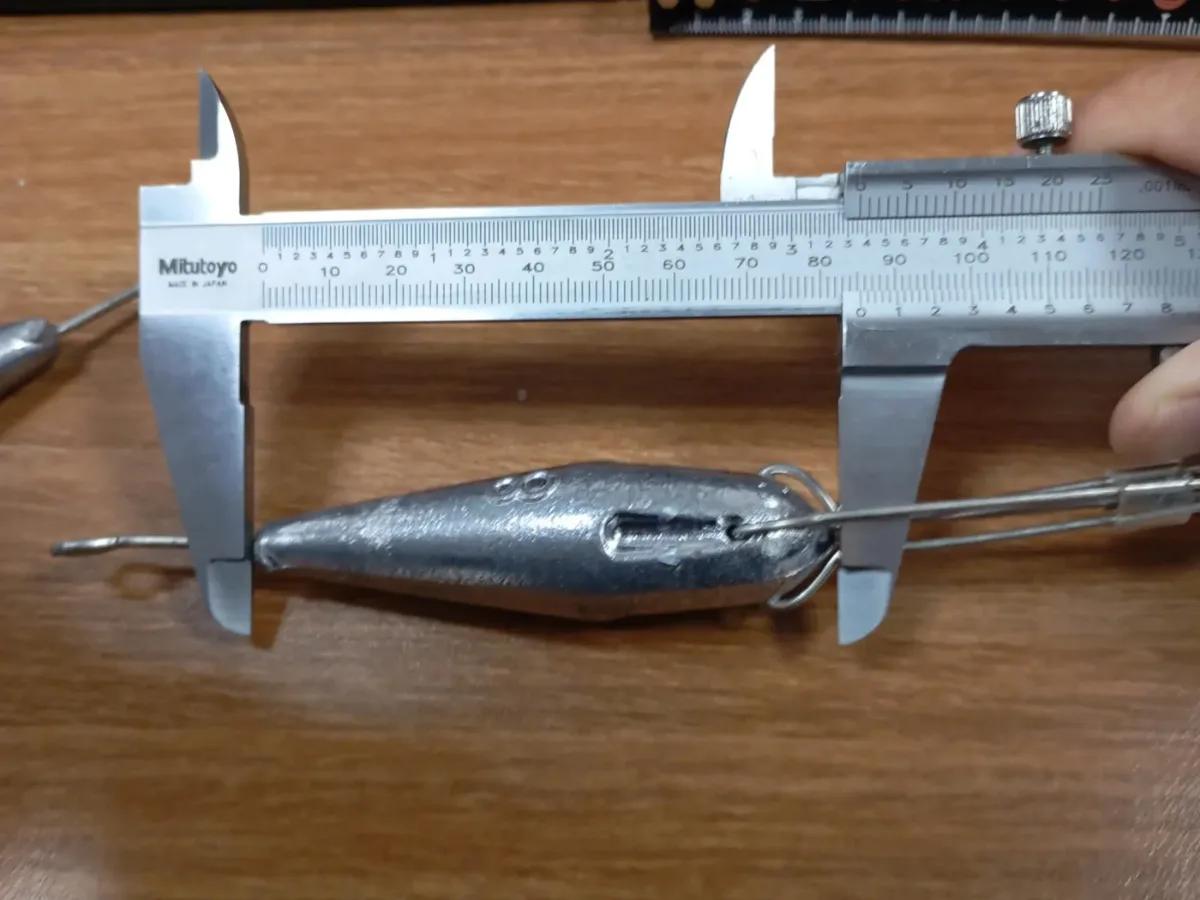
- European Union: Regulation (EU) 2026/2501 restricts lead in fishing tackle in three steps: from 3 March 2027 for lead fishing line and drop shot sinkers, from 3 December 2029 for sinkers and lures of 50 g or less, and from 3 December 2031 for sinkers and lures over 50 g and up to 1 kg.
- United States: rules are set by states. Outdoor Life lists California, Maine, Massachusetts, New Hampshire, Vermont and New York as requiring lead-free substitutes, chiefly for weights under one ounce. In New Hampshire, the sale of lead sinkers and jigs of 1 oz or less, and their use in all fresh water, is prohibited (New Hampshire Fish and Game). California also requires Prop 65 warnings on products that contain lead.
- Canada: in national parks such as Jasper, lead sinkers, jigs, lures and flies under 50 grams are prohibited (Parks Canada).
Most rules target small sizes first. If you sell into a market with lead limits, check each size in your range against local rules before you order.
For every threshold and date by market, read lead fishing tackle regulations by market.
FAQ
What are most fishing sinkers made of?
Lead. It is dense, soft and cheap to cast, so it is still the standard material for most sinker shapes.
Is tungsten better than lead?
Tungsten is denser and harder, so a tungsten weight is smaller and gives better bottom feel. It costs much more than lead and can break when pinched, so lead is still used for most sinkers.
How can I tell if my fishing weights are made of lead?
Rub the weight on paper and try to dent it. Lead leaves a gray mark and dents easily; tungsten and steel do not. Lead packaging also carries a lead warning.
Are steel fishing weights magnetic?
Most steel weights are. Lead, tungsten and brass are not, so a magnet is a quick way to spot steel.
Are lead fishing weights banned?
Not everywhere. The EU is phasing lead tackle out between 2027 and 2031, several US states restrict small lead sinkers, and Canadian national parks prohibit lead tackle under 50 g. Check the rules in each market you sell into.
Fides Fishing casts lead fishing sinkers, dive weights and jigs in Vietnam; we do not make tungsten, steel or zinc weights. Request a quote for lead sinkers in your sizes, or browse the types of fishing sinkers we make.