Short answer: a good request for quotation (RFQ) for fishing sinkers lists, for every item, the shape, the weight per piece, the quantity per size, the finish, the marking and the packing. It also gives the destination, the Incoterm you want and the date you need the goods. With that, a factory can quote a real price the first time, and you can compare suppliers line by line.
Why a complete RFQ saves time
A message like “send me your best price for sinkers” usually starts a long back-and-forth. The factory has to ask about shapes, sizes, packing and shipping before it can quote. Worse, two suppliers may quote on different assumptions, such as bulk bags against retail packs, or FOB against CIF, so the prices cannot be compared.
A complete RFQ fixes both problems. Every supplier prices the same thing, and the price you get is close to the price you pay.
What to include, item by item
| Section | What to write | Why it matters |
|---|---|---|
| Your company | Name, website, country, and who you sell to | Helps the factory suggest the right packing and range |
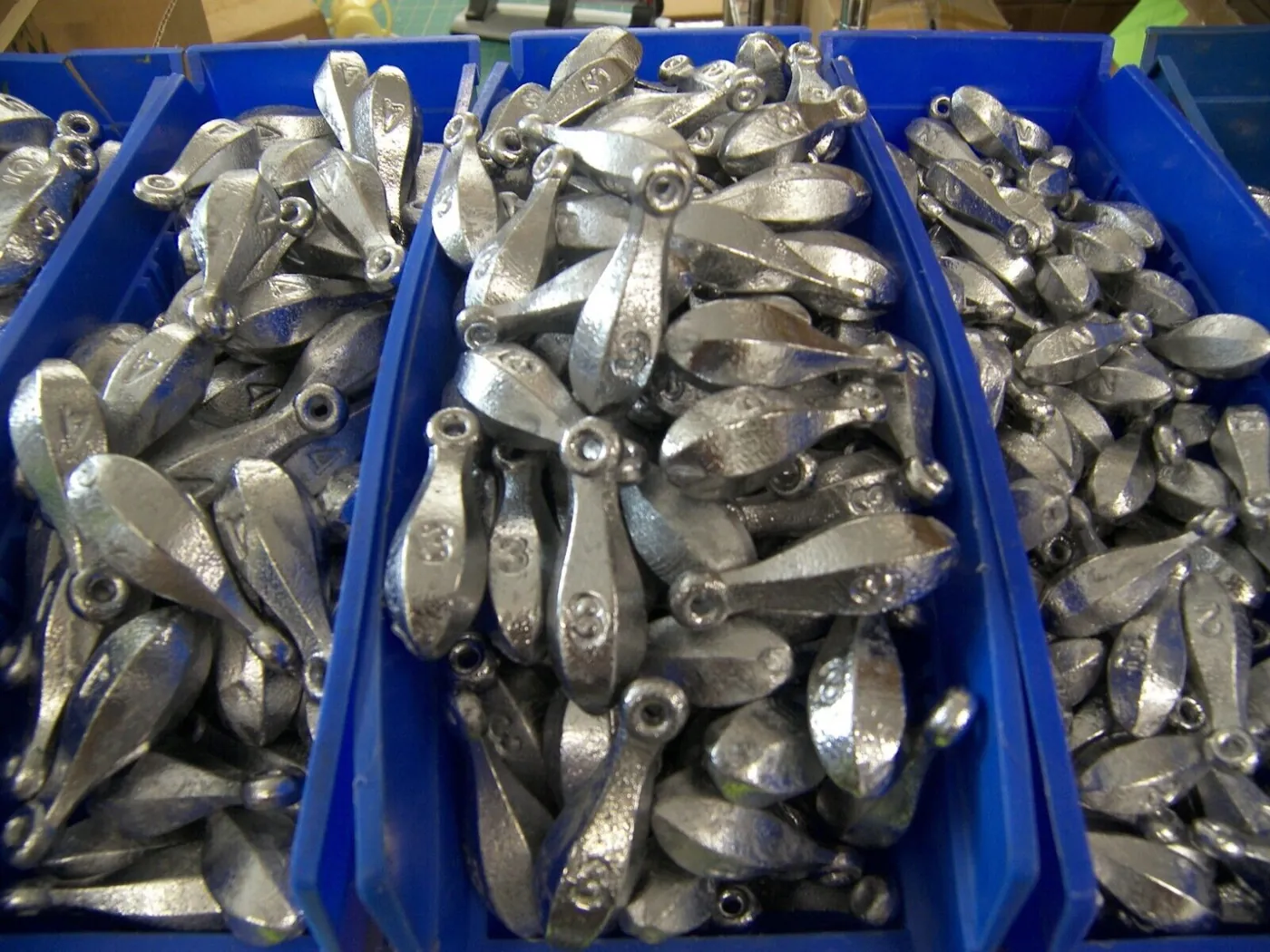
| Shape | Shape name plus a photo, drawing or sample | Sinker names differ between markets. A photo removes doubt |
| Sizes | Weight per piece in oz or grams | Price and mold depend on weight. Avoid size numbers only |
| Quantity | Quantity per size: lb or kg for sinkers, pieces for dive weights and jigs | Unit price depends on volume per size, not only the total |
| Finish | Raw lead, or vinyl-dipped with the color | Coating adds a process step and cost |
| Marking | Weight marked on the sinker? Logo on the pack? | Affects the mold and the packing artwork |
| Packing | Bulk bag weight, or pieces per retail pack, pack type, carton, barcode, warning labels | Packing can change the landed cost per piece a lot |
| Shipping | Destination port or city, Incoterm, full container or LCL | Decides which costs are in the price |
| Timing | When you need samples and when the goods must ship | Lets the factory confirm a realistic schedule |
| Quality | Weight tolerance, and whether you will inspect before shipment | Sets the standard the goods are checked against |
Not sure what a term means? Our fishing sinker glossary explains 46 of them, and our guide to sinker names in Australia and New Zealand shows how names change between markets.
Sizes and quantities: the part most RFQs get wrong
- Give a weight, not a number. “Size 4” means different weights in different brands. Write 4 oz or 113 g.
- Give a quantity for each size. “3,000 lb of pyramid sinkers, 2–6 oz” can be split many ways. Write 3 oz – 1,000 lb, 4 oz – 1,000 lb, and so on.
- Use one unit for weight. Mixing ounces, pounds and grams in one list causes mistakes. Pick one and stick to it.
- Check the minimum. Our minimum is 3,000 lb per order for lead sinkers, and you can combine shapes and sizes to reach it. Diving weights start at 2,500 pcs, and lead jigs and lures at 3,000 pcs.
To convert between ounces, grams and pieces per pound, use our fishing sinker weight chart.
Packing and labels
Packing is often where quotes differ most. Spell out:
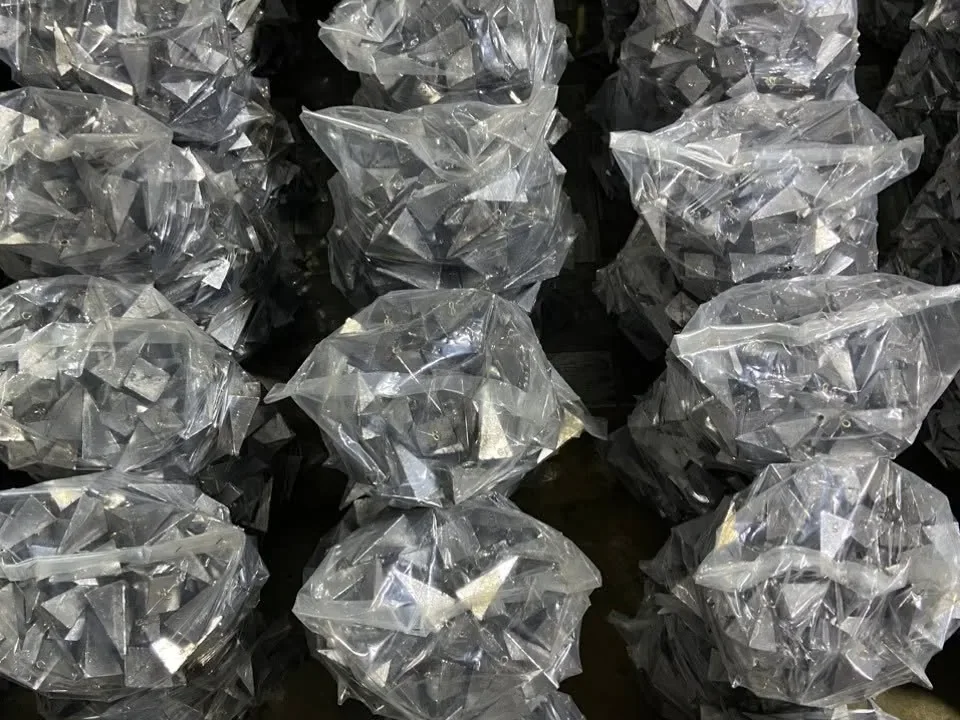
- Bulk or retail: bulk bags by weight, or retail packs with a set number of pieces.
- Pack type: zip bag, bag with header card, box or dispenser.
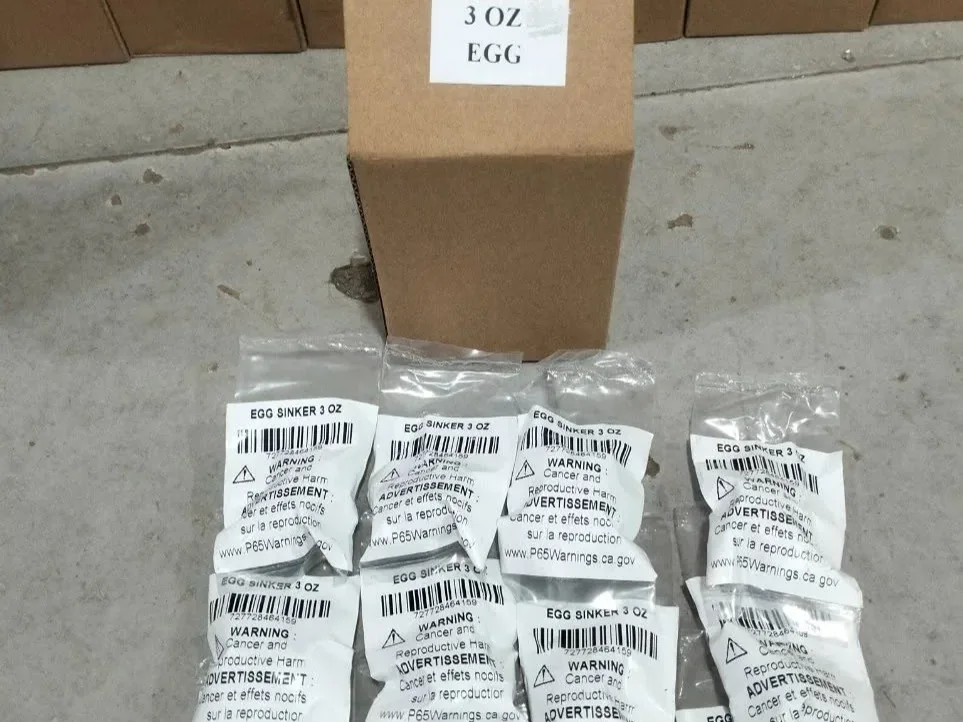
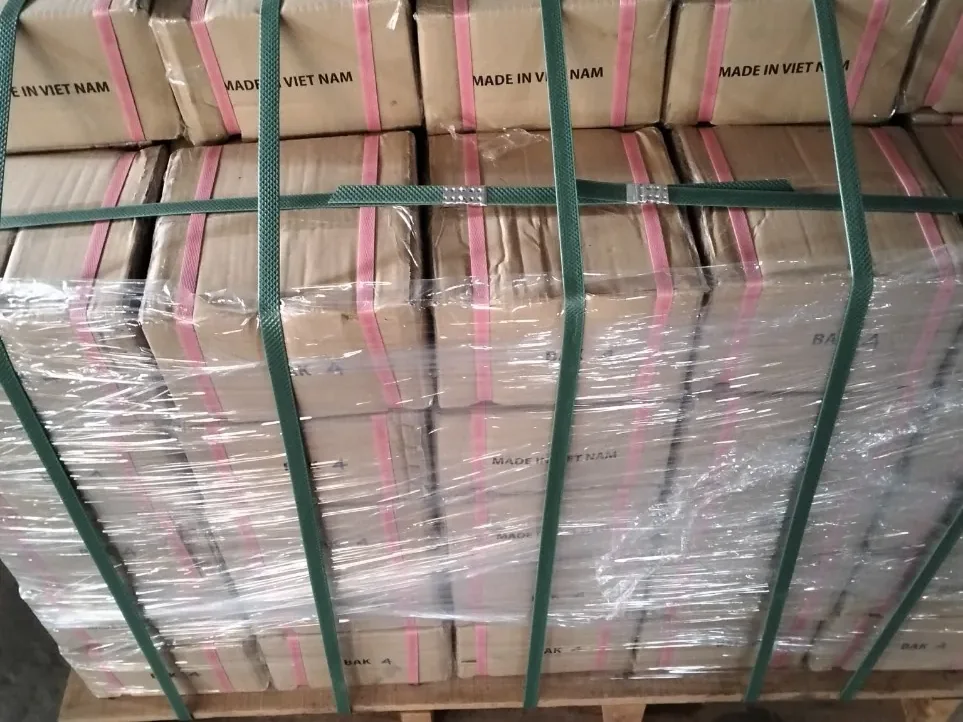
- What goes on the label: your logo, the product name and size, the barcode (UPC or EAN), and the origin, for example “Made in Vietnam”.
- Warnings: for example a California Prop 65 warning if you sell in California.
- Cartons: the carton marks you need, and any limit on carton weight.
More detail in private label sinker packaging and “Made in Vietnam” marking for private label tackle.
Shipping terms
Say where the goods are going and which Incoterm you want the price on, for example FOB Ho Chi Minh City or CIF Los Angeles. If you are not sure, ask for FOB and get freight quotes yourself. Our guide to FOB, CIF and DDP for fishing tackle explains the difference.
For a full container, tell the factory the road weight limit your trucker gives you. Lead sinkers fill a container by weight long before it is full by volume. See how many sinkers fit in a 20ft container.
What to ask the supplier to state
A good quote answers these points in writing:
- unit price per size, with packing included;
- sample cost and sample lead time;
- production lead time after sample approval;
- payment terms;
- the weight tolerance they work to;
- how long the quote is valid.
Asking for the price per piece and per pound makes it easier to compare suppliers who quote in different units. Once you have chosen a supplier, put the agreed points into your purchase order. See quality agreement for OEM tackle orders.
What happens after you send an RFQ to Fides Fishing
- Quotation: we send a detailed proposal for the items, packing and shipping you asked for.
- Sample and contract: you approve a pre-production sample, sign the sales contract or PO, and pay a deposit to confirm the order. Samples take about 10 days.
- Production and delivery: we produce with batch weight checks, in about 30 days after sample approval. You pay the balance, and we ship with full export documents.
New to sample approval? Read how to evaluate fishing sinker samples.
Have more questions about ordering? See our factory FAQ.
FAQ
What is an RFQ?
A request for quotation: a document that tells suppliers exactly what you want to buy, so they can give you a price and terms.
Do I need exact quantities to ask for a quote?
Estimates per size are fine for a first quote. The closer they are to your real order, the more accurate the price.
Should I send photos or samples?
Yes. A photo or sample of each shape avoids confusion over names. For a new design, send a drawing or sample and we can cut a new mold.
What if I do not know which sizes to order?
Tell us your market and customers. Our product guides, such as bass fishing weights and catfish sinkers, suggest starting ranges.
What is the minimum order?
3,000 lb per order for lead sinkers, across shapes and sizes. 2,500 pcs for diving weights, and 3,000 pcs for lead jigs and lures.
At Fides Fishing, a complete RFQ like this lets us come back with prices and sample timing without a long back-and-forth. Request a quote and paste your RFQ into the message box, or send it by email with your photos and drawings.