Short answer: this glossary explains the terms you will meet when buying fishing sinkers and other lead tackle from a factory. It covers sinker types, how sinkers are made and checked, and the words used in quotes, packing and shipping. Each term has a short, plain definition, with links to our longer guides.
Sinker and weight types
- Ball sinker: A round sinker with an eye or swivel, used on bottom rigs. See ball sinkers.
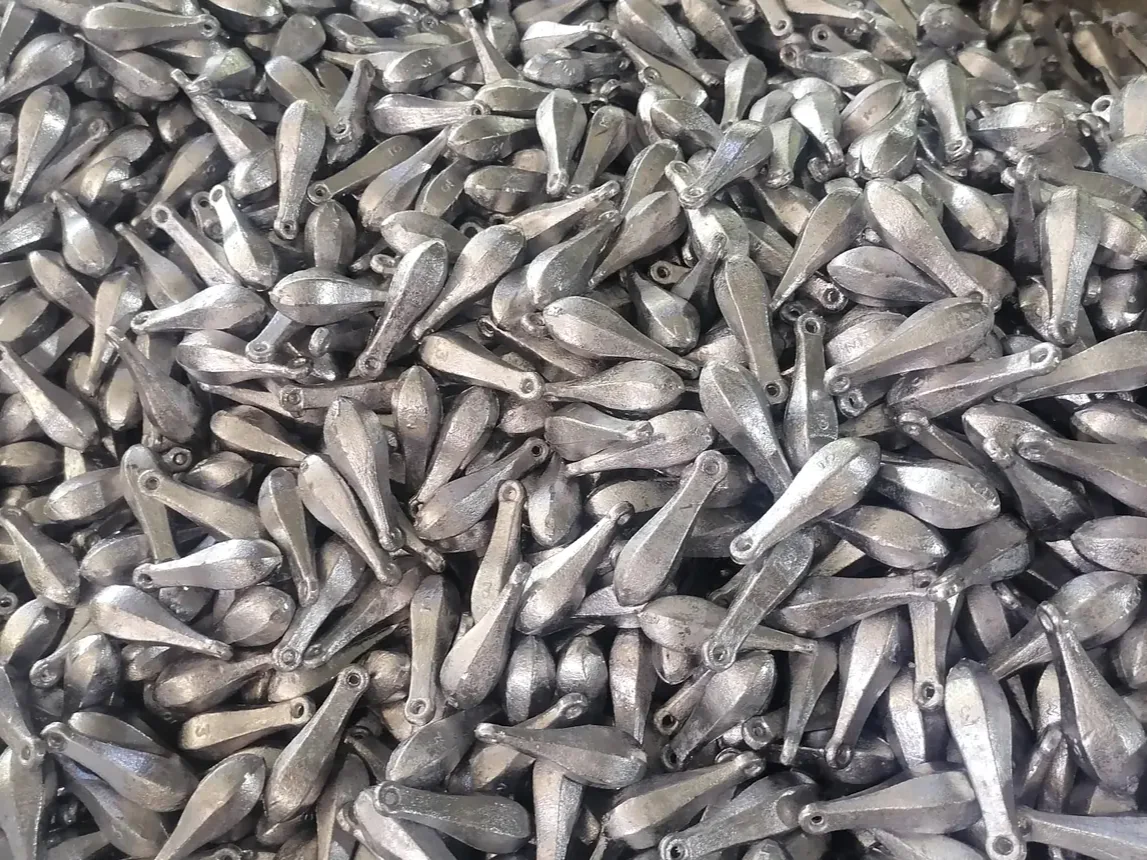
- Bank sinker: A six-sided, teardrop-shaped sinker with a cast-in eye. One of the most common bottom sinkers, for lakes, piers and boats. See bank sinkers.
- Bullet weight: A cone-shaped sliding weight with a hole through the middle, used by bass anglers on Texas and Carolina rigs. See bass fishing weights.
- Cast net sinker: A small barrel-shaped weight threaded onto the lead line of a cast net. See cast net sinkers.
- Coin sinker: A flat, round sinker that lies flat on the bottom and resists rolling in current.
- Deep drop weight: A heavy cylinder weight, usually 3 lb and up, for bottom fishing in very deep water. See deep drop weights.
- Dive weight: A lead weight for scuba divers, usually slotted to thread onto a weight belt. See lead dive weights.
- Downrigger weight: A heavy ball or fish-shaped weight that takes a trolled lure to a set depth on a downrigger cable. See downrigger weights.
- Drop shot weight: A weight that sits on the bottom below the hook on a drop shot rig, often pencil-shaped with a swivel.
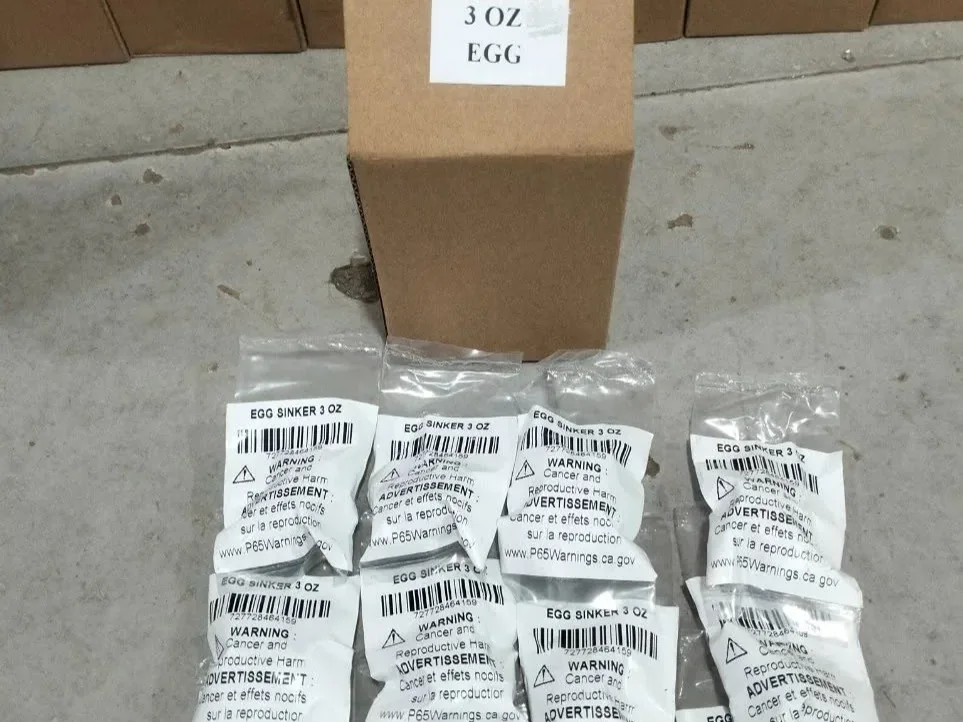
- Egg sinker: An egg-shaped sliding sinker with a hole through its length, used on bottom bait rigs. See egg vs bullet sinkers.
- Flat no-roll sinker: A flat sinker with an eye, made to stay in place on rocky or sloping bottoms.
- Metal jig: A lure made of lead or another metal, fished by lifting and dropping. See types of metal jigs.
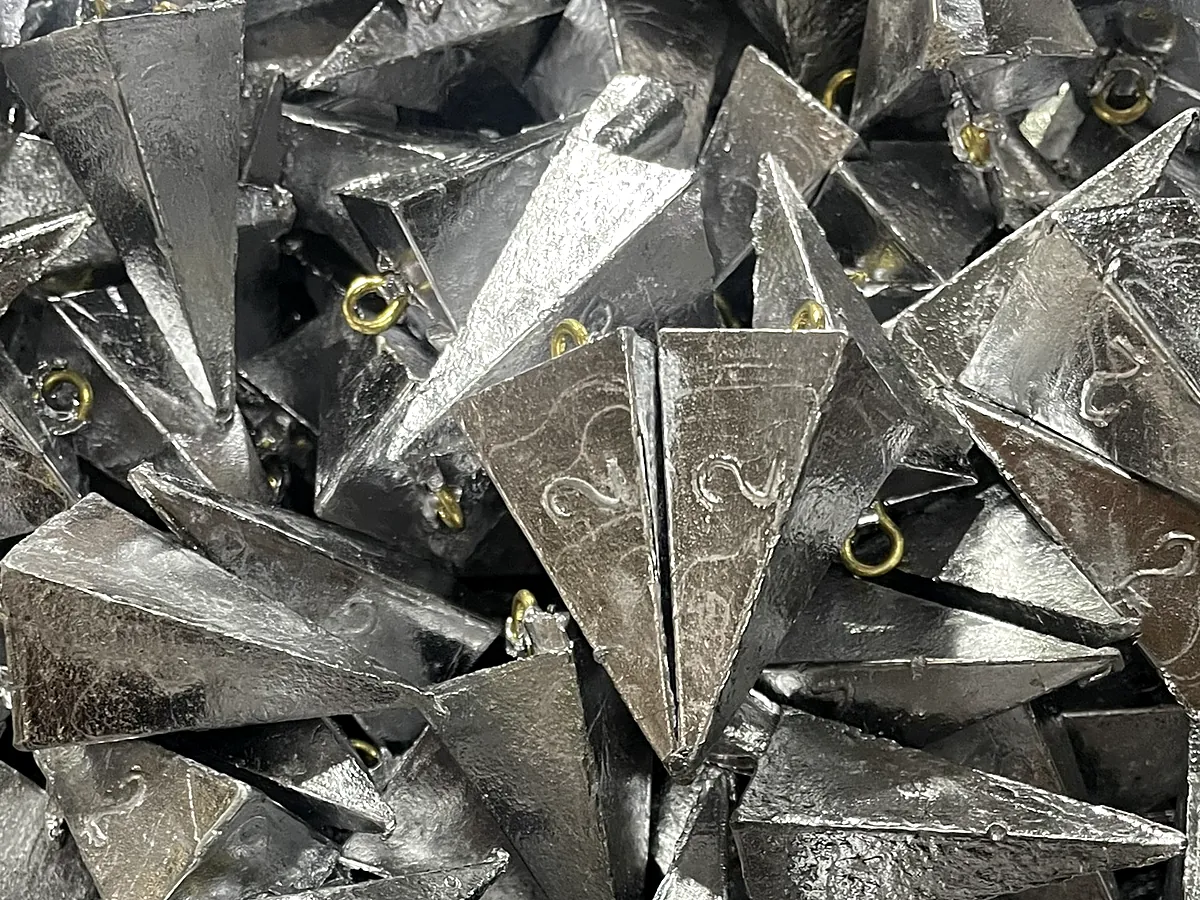
- Pyramid sinker: A three- or four-sided sinker that digs into sand, popular for surf fishing.
- Split shot: Small round weights with a slot, pinched onto the line.
- Sputnik sinker: A surf sinker with wire legs that grip the sand and release when the line is pulled hard.
- Torpedo trolling sinker: A slim weight with a ring at each end, tied in-line for trolling. See torpedo trolling sinkers.
For an overview of all shapes, see our guide to types of fishing sinkers.
Manufacturing and quality
- Casting: Pouring molten lead into a mold to form the sinker.
- Mold: The steel or aluminium tool that gives a sinker its shape and weight. A new shape or size needs a new mold.
- Seam (flash): The thin line of extra lead where the two halves of a mold meet. It is trimmed so it cannot cut line or fingers.
- Porosity: Small holes or voids in a casting, caused by air or an incomplete pour. A visual defect to check on samples.
- Size stamp: The weight cast or stamped into the sinker body, such as “4” for 4 oz.
- Eye (eyelet): The loop on a sinker for tying line or attaching a snap. It can be cast lead, brass wire or stainless steel.
- Swivel: A rotating eye that reduces line twist.
- Raw lead: A sinker with no coating, dull grey in color. The lowest-cost finish.
- Vinyl dip: A plastic coating applied by dipping, used to add color and protect boats and gear. See coated lead weights.
- Weight tolerance: How far a sinker may weigh above or below its stated size, agreed in writing per size.
- Batch weight check: Weighing pieces from every production batch before packing. See fishing sinker quality control.
- Reference sample: The approved sample set that production is checked against, sometimes called a golden sample. See evaluating sinker samples.
Ordering and packaging
- OEM: Original Equipment Manufacturing: the factory makes your product to your design, under your brand.
- ODM: Original Design Manufacturing: the factory offers its own designs, which you sell under your brand.
- Private label: Products made by a factory and sold under the buyer’s brand. See private label fishing tackle.
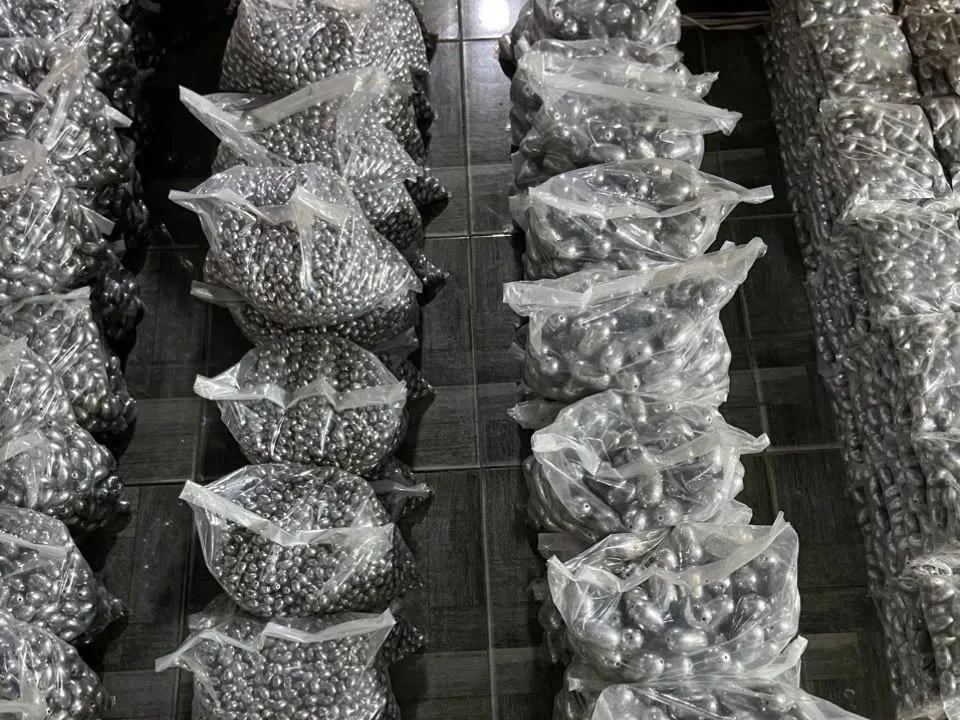
- MOQ: Minimum order quantity. For lead sinkers it is often set by weight, such as 3,000 lb per order.
- Lead time: The time from sample approval to finished goods ready to ship.
- Header card: A printed card stapled or sealed to the top of a retail bag, with a hole for a store peg.
- Inner box and master carton: Small boxes of packs go into a larger shipping carton, the master carton, marked with item, size and quantity.
- UPC / EAN barcode: The retail barcode on each pack. UPC is used mainly in North America, EAN elsewhere.
- Prop 65: California’s Proposition 65. It requires a clear warning on products sold in the state that can expose people to listed chemicals, including lead.
Shipping and documents
- Incoterms: Standard trade terms from the International Chamber of Commerce that set who pays for transport and where risk passes. See FOB, CIF or DDP.
- FOB: Free On Board: the seller loads the goods on the ship at the named port. The buyer pays ocean freight from there.
- CIF: Cost, Insurance and Freight: the seller also pays freight and basic insurance to the destination port.
- DDP: Delivered Duty Paid: the seller delivers to your door and pays import duties.
- FCL / LCL: Full Container Load or Less than Container Load, meaning a whole container or a shared one.
- Payload: The maximum cargo weight a container can carry. Lead sinkers reach it long before the container is full. See sinkers per container.
- Bill of lading: The shipping line’s document for the goods. It works as a receipt and shows who can collect them.
- Certificate of Origin: A document showing where goods were made. It can lower import duties under trade agreements.
- HS code: The international customs code for a product, used to set the import duty rate.
FAQ
What is the difference between OEM and ODM?
With OEM the factory makes your design. With ODM you choose from the factory’s own designs. Both can be sold under your brand.
Why is the minimum order for sinkers set by weight?
Lead is bought and cast by weight, so a weight-based minimum lets you mix many shapes and sizes in one order.
What does “vinyl-dipped” mean?
The sinker is dipped in liquid vinyl that sets into a colored coating.
Which Incoterm should I use?
Many importers buy FOB and book their own freight. Our Incoterms guide compares the options.
The Fides Fishing team uses these terms every day with buyers in our five export markets. Have a term we missed? Contact us and we will explain it, or request a quote for your next order.