
Short answer: on a rocky bottom, use a sinker with rounded or tapered edges that slides over rock instead of wedging into it. Bank and bell sinkers, egg sinkers, walking sinkers and slim pencil sinkers all snag less than pyramids, which are made to dig in. Use the lightest weight that keeps the bait down, and tie the sinker on a lighter line than the main line so that, when it does snag, you lose only the lead.
Why sinkers snag on rocks
Rocky ground is full of gaps. A sinker with sharp corners or flat faces drops into a crack, turns sideways and jams. Shapes that work well on sand often do worst on rock: pyramid sinkers are designed to bury themselves in a soft bottom (Bass Pro Shops), and the same edges catch between stones. Weight matters too. A sinker much heavier than the current needs sits hard on the bottom and is more likely to wedge.
Best sinker shapes for rocky bottoms
| Sinker | Why it snags less | Typical use |
|---|---|---|
| Bank sinker | Tapered body helps it avoid rocks; flat sides stop it rolling in current | Boat and pier fishing over reefs and wrecks |
| Bell sinker | Rounded profile reduces the chance of snagging | Bottom rigs in current |
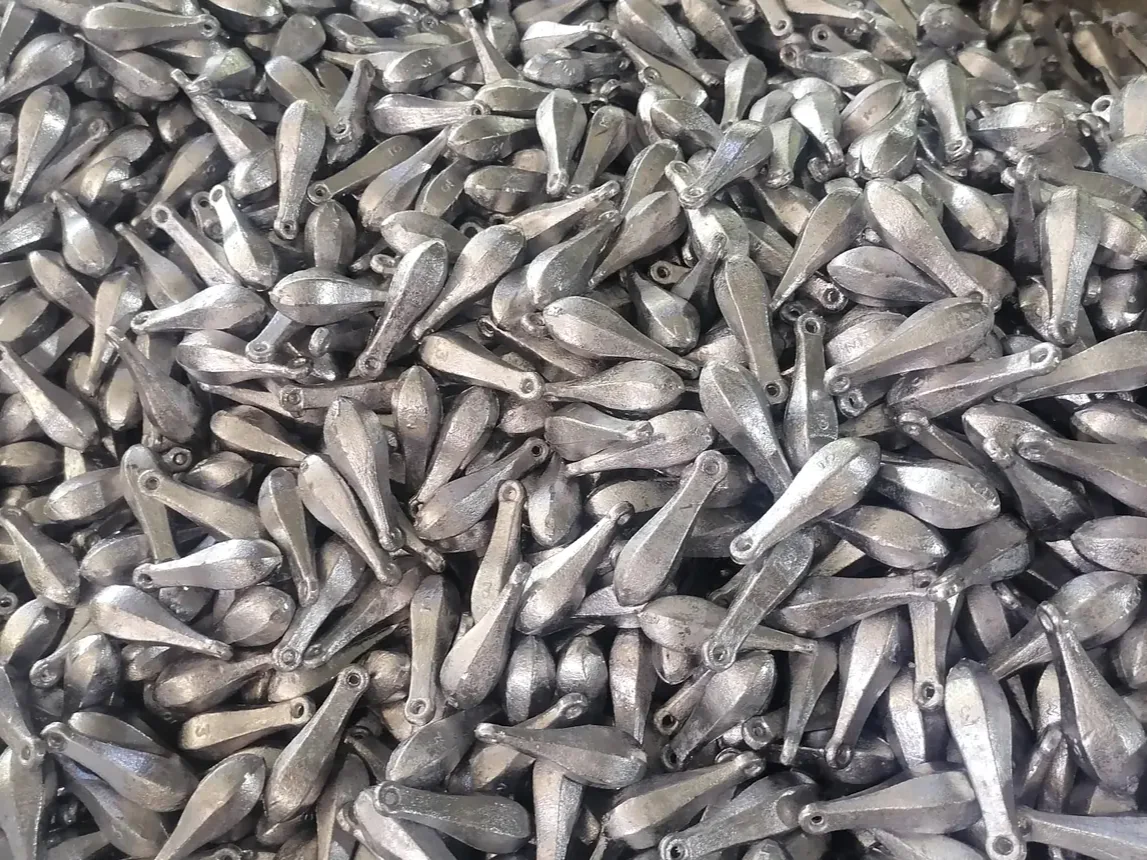
| Egg sinker | Fairly snag resistant and rolls along the bottom | Slip rigs in rivers and lakes |
| Walking sinker | Weighted so it rolls with its rounded edge down and glides over rocks | Dragging bait over rocky river and lake bottoms |
| Pencil (drop shot) sinker | Slim shape slips between rocks and through gravel | Drop shot rigs and finesse fishing |
| Flat bank sinker | Some anglers find it bounces out of a snag more easily than a standard bank sinker | Wreck and structure fishing |
Sources: bank, bell, egg and walking sinkers from Bass Pro Shops; flat bank sinkers from On The Water. Take Me Fishing adds that bank sinkers are usually round or bell-shaped to avoid snagging in structure, and that anglers over rocky ground often choose slender sinkers.
Bottom bouncers are another option for drifting or trolling over rock: the wire leg fends off rocks and usually stops the weight wedging between boulders (In-Fisherman). More shapes are covered in our guide to the types of fishing sinkers.

How heavy should the sinker be?
Use the lightest sinker that keeps the bait in the feeding zone (Take Me Fishing). A lighter weight lifts over rock with a small twitch of the rod, while a heavy one settles into gaps. In current, size up just enough to hold, and switch to a shape that holds without digging in, such as a flat-sided bank sinker, before adding more weight. Our fishing sinker weight chart converts ounces to grams if you sell in both.
Rigs that cut tackle losses
- Weak link or rotten bottom: tie the sinker on a short length of lighter line, for example 6 to 10 lb as Sea Angler suggests for the weak link. If the sinker jams, a firm pull breaks the weak link and you lose only the lead, not the hooks or the fish.
- Simple rigs: rough-ground rigs use as few parts as possible, so there is less to snag and less to lose (British Sea Fishing).
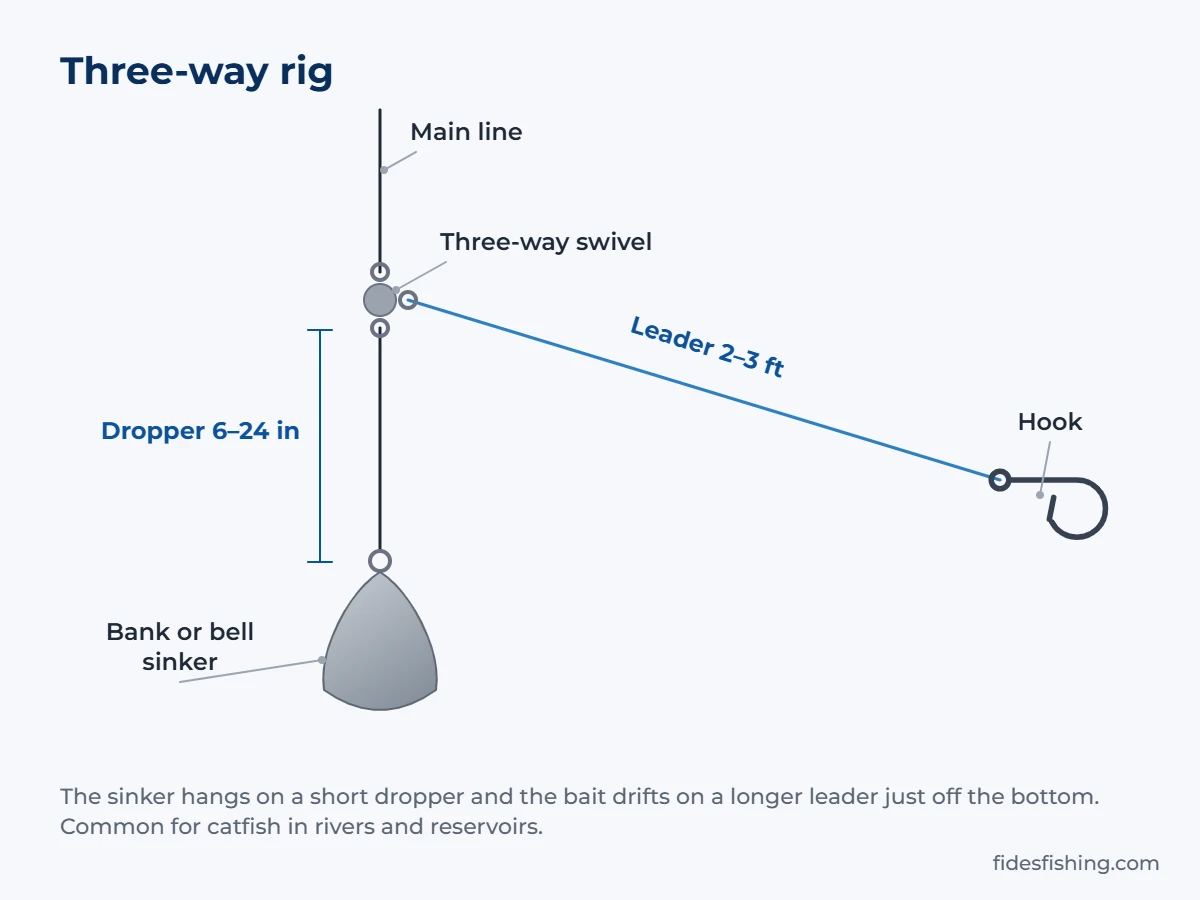
- Sinker below the hook: on three-way and dropper rigs the sinker hangs on its own short line, so the weight takes the snag rather than the hook. See our guide to 6 bottom rigs with diagrams.
What this means for tackle shops
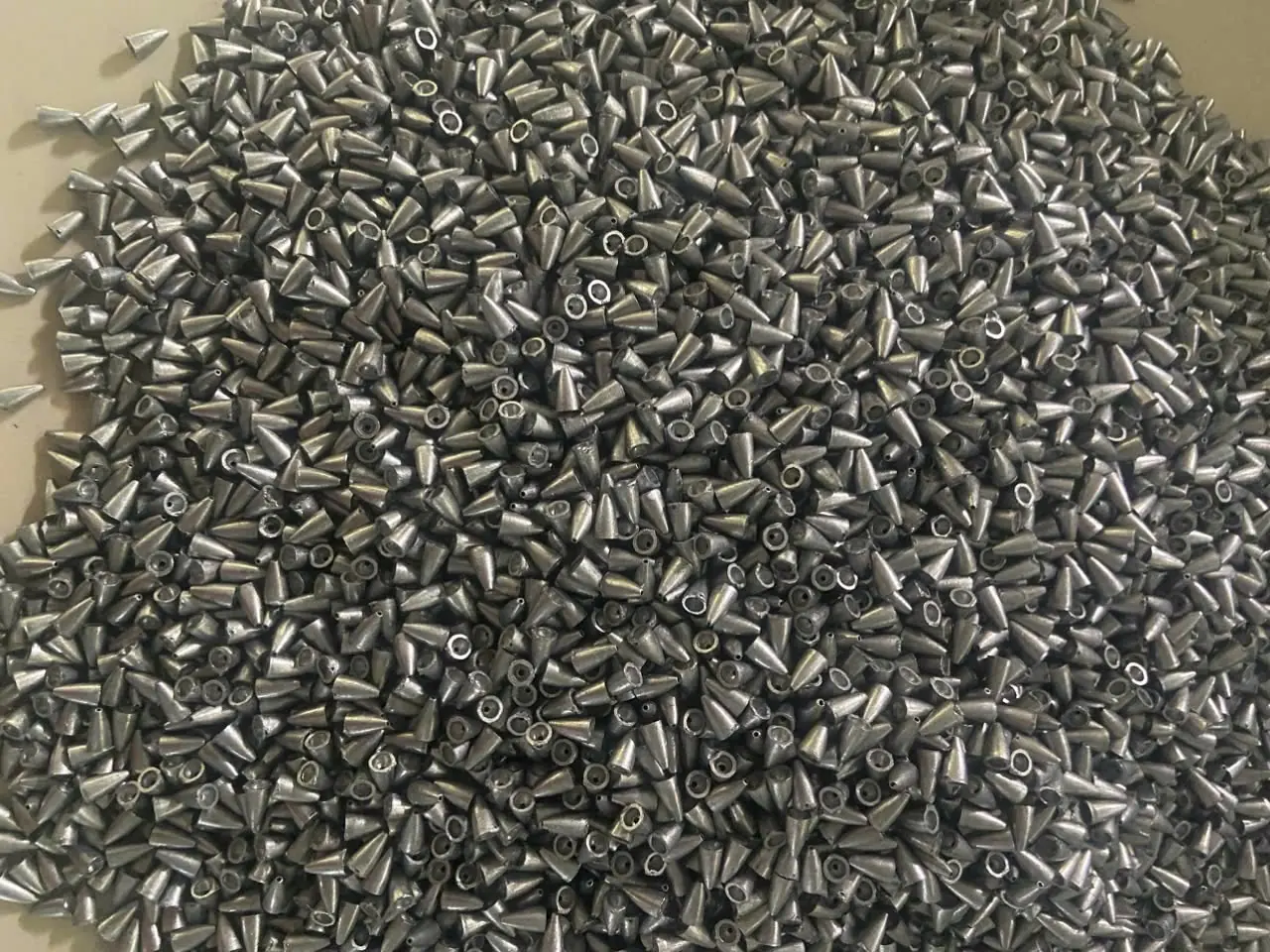
Anglers who fish over rock expect to lose sinkers, which is why rough-ground rigs are kept simple and cheap (British Sea Fishing). For a shop near reefs, jetties or rocky rivers, that means steady demand for the shapes above, often in bulk packs. Stock several sizes of each shape so customers can match the weight to the current, and keep a few lighter sizes for the weak-link rigs above.
FAQ
What is the best sinker for a rocky bottom?
A rounded or tapered shape such as a bank, bell, egg or walking sinker. They slide over rock instead of wedging into gaps. Pencil sinkers also work well for drop shot fishing.
Why do pyramid sinkers snag on rocks?
Pyramid sinkers are designed to dig into sand and mud. On rock, the same flat faces and corners catch in cracks.
How do I stop losing sinkers on rocks?
Use the lightest weight that holds, choose a rounded shape, and tie the sinker on a weaker line than your main line so only the lead breaks off when it snags.
What is a rotten bottom rig?
A rig where the sinker is tied on a short length of lighter line, the weak link. When the sinker snags, the weak link breaks and the rest of the rig comes back.
Do heavier sinkers snag more?
Usually, yes. A sinker heavier than the current needs sits hard on the bottom and settles into gaps. Use just enough weight to hold.
Fides Fishing casts bank, egg, bullet, drop shot and other lead sinkers for tackle shops and brands, packed in bulk or under your brand. Request a quote with the shapes and sizes your customers use on rocky ground.