Short answer: lead sinkers turn dull gray over time because lead forms a thin natural film, or patina, that protects the metal. A white powder is different: it is a lead corrosion product, usually lead carbonate or lead acetate, caused mainly by acid vapors from wood, poor-quality paper, some paints and glues. Heat and sunlight speed it up. To limit it, store sinkers cool, away from bare wood and in a space that is not sealed tight with acid-releasing materials, and handle white powder with gloves.
Gray patina vs white powder
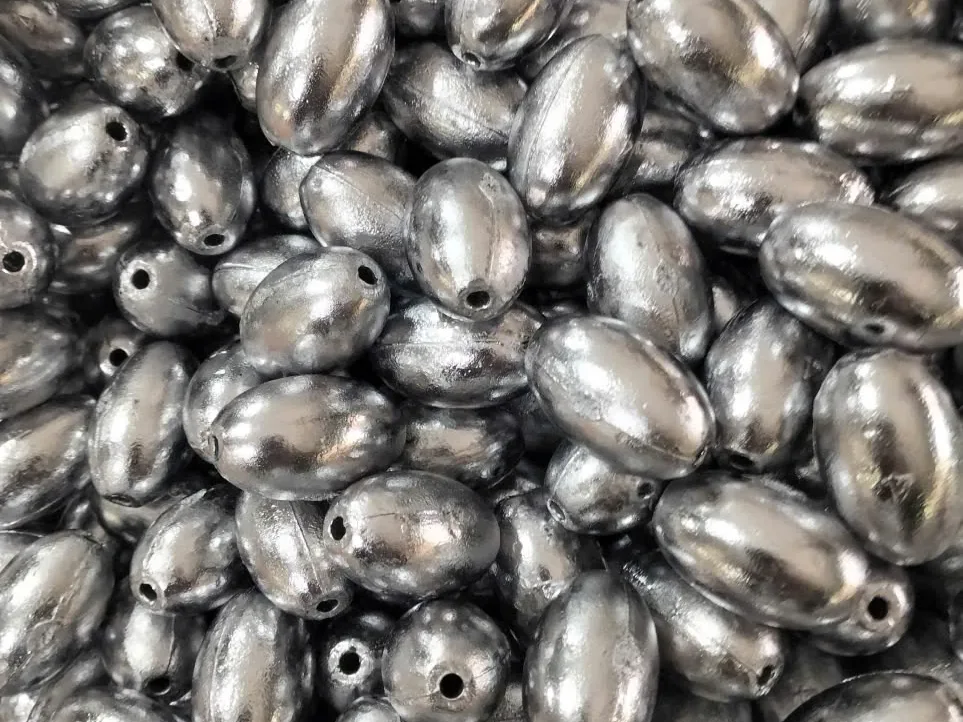
Freshly cast lead is bright and silvery. Over time it turns a dull gray. That gray-white film is a protective patina and, according to the Western Australian Museum, it should not be removed. It is normal and does not mean the sinker is damaged.
White, powdery or crusty spots are a different thing. The US Navy Curator of Ship Models describes this as lead carbonate, sometimes called lead bloom, where the surface of the lead is slowly turned into powder. The Western Australian Museum describes the white bloom as lead or tin acetate.
What causes white corrosion on lead?
- Acid vapors: acetic acid is the main cause, and wood is the largest source; all woods give off some (US Navy). Poor-quality papers and some fabrics are also named as sources (Western Australian Museum).
- Paints, glues and varnishes: these, and some plastics, can also release acids. Closed cases trap the vapors (US Navy).
- Heat and sunlight: both speed the reaction (US Navy).
- A self-sustaining reaction: acid, lead and carbon dioxide form lead carbonate and release acid again, so corrosion that has started tends to continue (US Navy).
How to store lead sinkers
- Keep them away from bare wood. Wooden shelves, drawers, crates and plywood are the main source of acetic acid. Unseasoned oak, plywood and chipboard are among the worst (US Navy).
- Let the air change. A sealed box full of acid-releasing materials concentrates the vapors. A little ventilation helps (US Navy).
- Keep them cool and out of direct sun. Heat and sunlight speed corrosion (US Navy).
- Do not wash them in vinegar. Vinegar is acetic acid, and the US Navy guidance does not recommend vinegar washes for lead.
- Rotate stock. Sell older stock first, so sinkers do not sit in a warm back room for years.
Coatings are not a cure. The US Navy guidance notes that no coating makes lead fully resistant to acid, and paints and clear coats have not reliably stopped corrosion. Do not rely on a coating, including vinyl dipping, to stop corrosion.
Is white powder on sinkers dangerous?
The powder is a lead compound, so treat it like lead. Do not brush it off with bare hands, avoid breathing the dust, and wash your hands after handling lead tackle. The US Navy guidance recommends a respirator and hand washing when brushing lead carbonate off models. Lead tackle packaging also carries a lead warning (Minnesota Pollution Control Agency). If a pack shows heavy white corrosion, it is better replaced than sold.
What this means for importers and shops
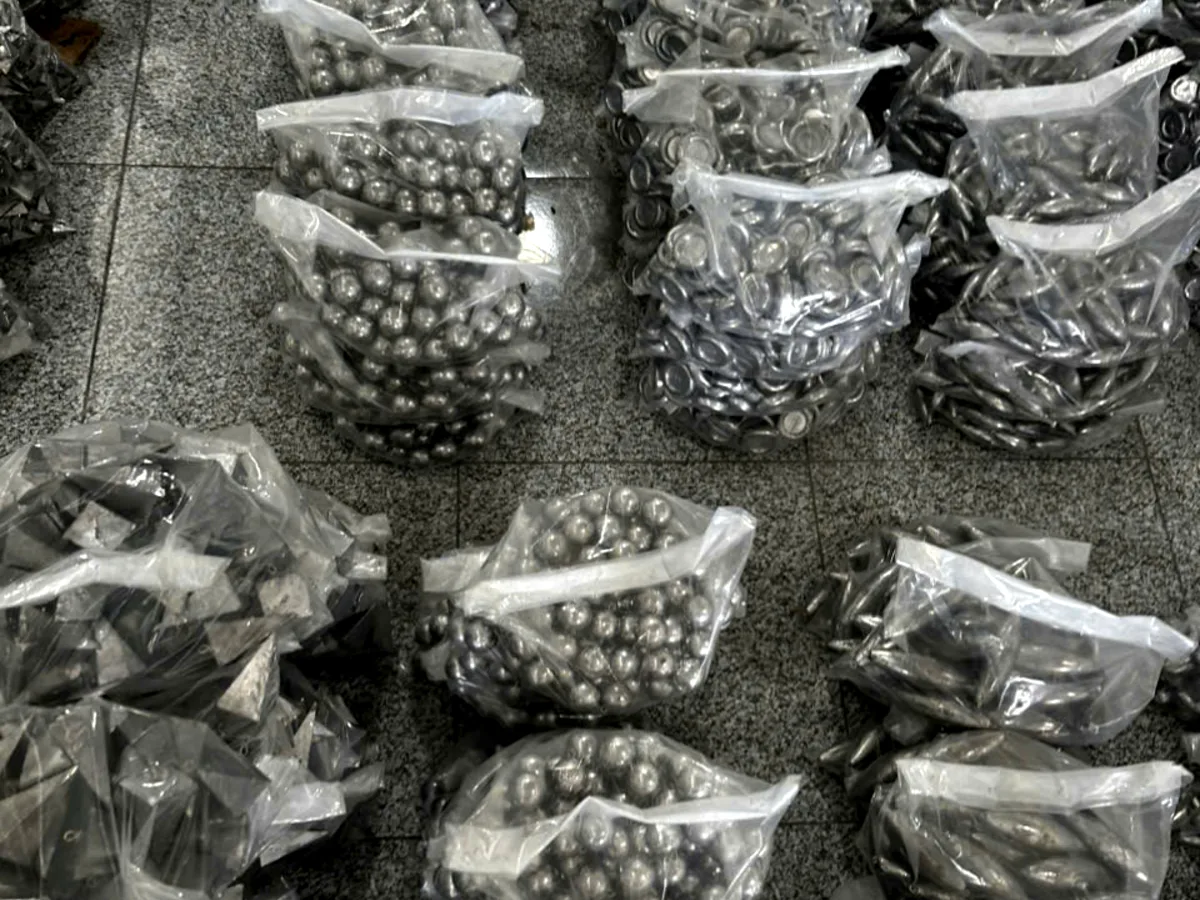
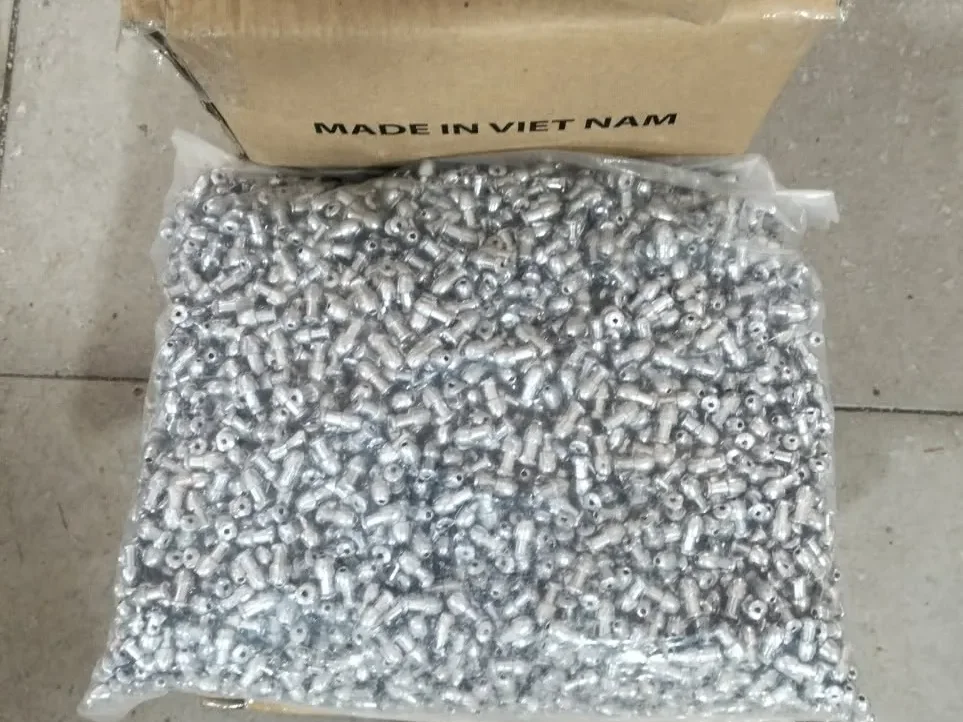
Imported sinkers can spend weeks in transit and months in a warehouse before they reach an angler. Plan storage as part of the order: keep cartons off bare wooden shelving where you can, keep the warehouse cool, and sell older stock first. If you see white spots on arrival, photograph them and tell your supplier with the batch and carton number. For what to check on arrival, see our guide to fishing sinker quality control, and for packing options, retail or bulk packaging.
FAQ
Why do lead sinkers turn white?
White powder on lead is a corrosion product, usually lead carbonate or acetate, caused mainly by acid vapors from wood, paper, paints and glues. Heat and sunlight speed it up.
Is the gray color on lead sinkers a problem?
No. Lead forms a dull gray patina that protects the metal. It is normal and should be left in place.
How should I store lead sinkers?
Keep them cool, out of direct sun and away from bare wood, in a space that is not sealed tight with acid-releasing materials. Sell older stock first.
Can I clean white corrosion off sinkers with vinegar?
No. Vinegar is acetic acid, the main cause of lead corrosion. Brush the powder off with gloves on, avoid breathing the dust and wash your hands afterwards.
Does vinyl coating stop lead from corroding?
Not reliably. US Navy conservation guidance notes that no coating makes lead fully resistant to acid, and paints and clear coats have not reliably stopped corrosion.
Fides Fishing casts lead sinkers in Vietnam, weight-checks every batch and packs them in poly bags inside export cartons, in bulk or under your brand. Request a quote and tell us how you store and sell your range.