Fides Fishing theme skeleton — template not yet ported for this URL.
Fishing Sinker Weight Chart: Ounces to Grams (and Pounds to Kilograms)
Short answer: 1 ounce equals 28.35 grams, and 1 pound equals 16 ounces or 453.6 grams. So a 1/4 oz bullet sinker weighs about 7 g, a 2 oz pyramid sinker about 57 g, and an 8 oz bank sinker about 227 g. The charts below cover every common sinker size from 1/16 oz to 15 lb.
US anglers buy sinkers in ounces and pounds. Many buyers in Mexico and around the world think in grams, and jig sizes are usually given in grams. Use these charts when you build a product range, print packaging or compare suppliers.
Sinker weight chart: ounces to grams
| Sinker size | Weight in grams |
|---|---|
| 1/16 oz | 1.8 g |
| 1/8 oz | 3.5 g |
| 3/16 oz | 5.3 g |
| 1/4 oz | 7.1 g |
| 3/8 oz | 10.6 g |
| 1/2 oz | 14.2 g |
| 3/4 oz | 21.3 g |
| 1 oz | 28.3 g |
| 1.5 oz | 42.5 g |
| 2 oz | 56.7 g |
| 3 oz | 85.0 g |
| 4 oz | 113.4 g |
| 5 oz | 141.7 g |
| 6 oz | 170.1 g |
| 8 oz | 226.8 g |
| 10 oz | 283.5 g |
| 12 oz | 340.2 g |
| 16 oz (1 lb) | 453.6 g |
Formula: grams = ounces × 28.35. Values are rounded to one decimal.
Heavy weights: pounds to kilograms
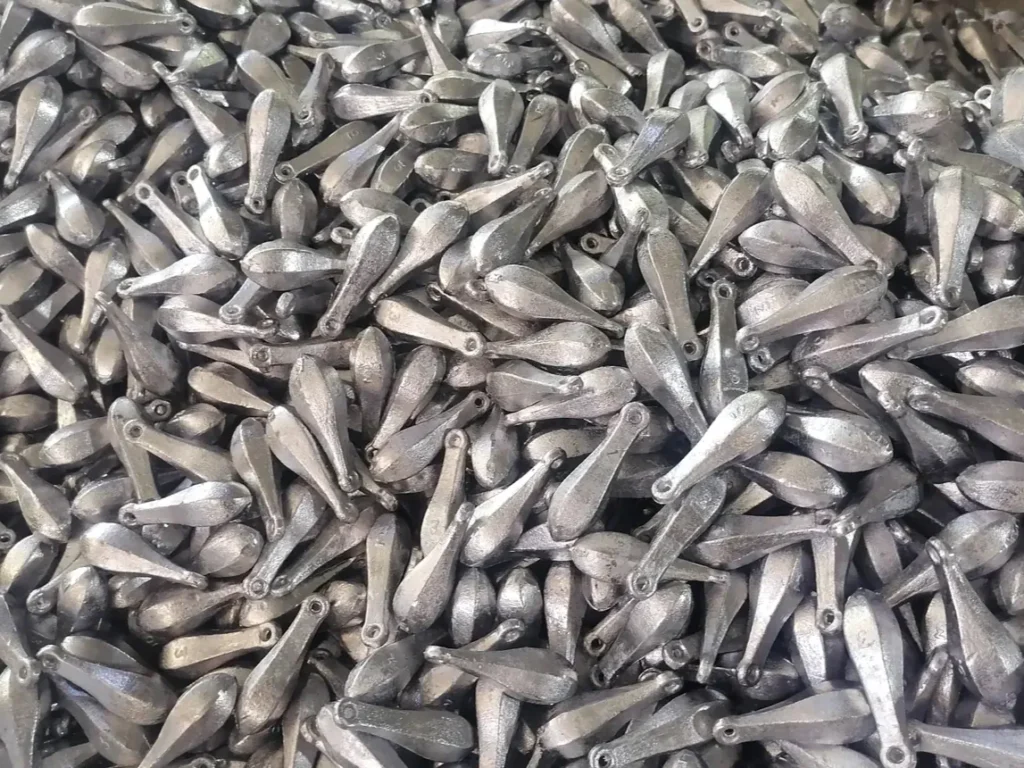
Downrigger, deep drop and dive weights are sold in pounds.
| Weight | Kilograms |
|---|---|
| 1 lb | 0.45 kg |
| 2 lb | 0.91 kg |
| 3 lb | 1.36 kg |
| 4 lb | 1.81 kg |
| 5 lb | 2.27 kg |
| 6 lb | 2.72 kg |
| 8 lb | 3.63 kg |
| 10 lb | 4.54 kg |
| 12 lb | 5.44 kg |
| 15 lb | 6.80 kg |
Formula: kilograms = pounds × 0.4536.
Jig weight chart: grams to ounces
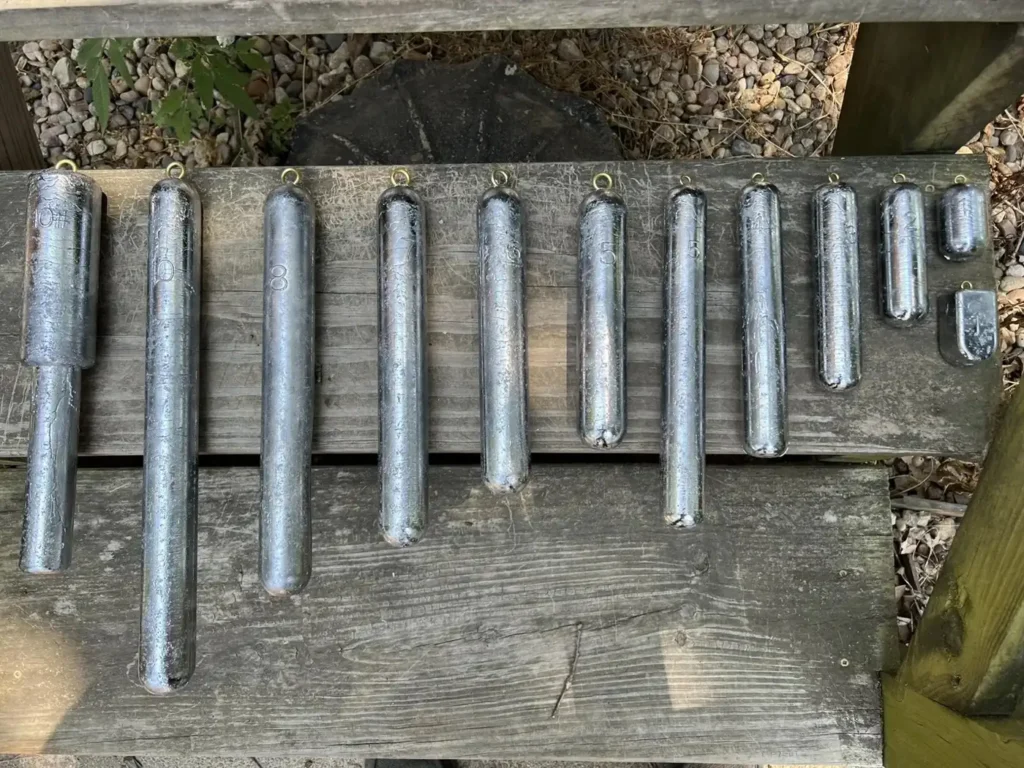
Metal and lead jigs are usually sold by grams. Our lead jigs range from 15 g to 920 g (0.5–32 oz).
| Jig weight | Ounces |
|---|---|
| 15 g | 0.53 oz |
| 20 g | 0.71 oz |
| 30 g | 1.06 oz |
| 40 g | 1.41 oz |
| 60 g | 2.12 oz |
| 80 g | 2.82 oz |
| 100 g | 3.53 oz |
| 120 g | 4.23 oz |
| 160 g | 5.64 oz |
| 200 g | 7.05 oz |
| 250 g | 8.82 oz |
| 300 g | 10.58 oz |
| 400 g | 14.11 oz |
| 500 g | 17.64 oz |
| 800 g | 28.22 oz |
| 920 g | 32.45 oz |
Formula: ounces = grams ÷ 28.35.
Which sizes are used for which sinker?
| Sinker | Size range | Approx. grams |
|---|---|---|
| Bullet | 1/16–1 oz | 1.8–28 g |
| Tear drop | 1/8–2 oz | 3.5–57 g |
| Bank | 1–8 oz | 28–227 g |
| Pyramid | 1.5–8 oz | 43–227 g |
| Sputnik | 4–8 oz | 113–227 g |
| Torpedo trolling | 1–16 oz | 28–454 g |
| Downrigger ball | 4–12 lb | 1.8–5.4 kg |
| Deep drop | 3–15 lb | 1.4–6.8 kg |
| Dive weights | 1–5 lb | 0.45–2.3 kg |
See all shapes in our guide to types of fishing sinkers.
How many sinkers are in an order?
Wholesale sinker orders are often counted by weight. A useful rule: pieces = (order weight in oz) ÷ (sinker size in oz), and 1 lb = 16 oz.
| Sinker size | Pieces per 100 lbs | Pieces per 3,000 lbs |
|---|---|---|
| 1/2 oz | 3,200 | 96,000 |
| 1 oz | 1,600 | 48,000 |
| 2 oz | 800 | 24,000 |
| 4 oz | 400 | 12,000 |
| 8 oz | 200 | 6,000 |
3,000 lbs (about 1,360 kg) is our minimum order for sinkers. You can split it across several shapes and sizes; we confirm the mix in the quote.
Why the size is stamped on the sinker
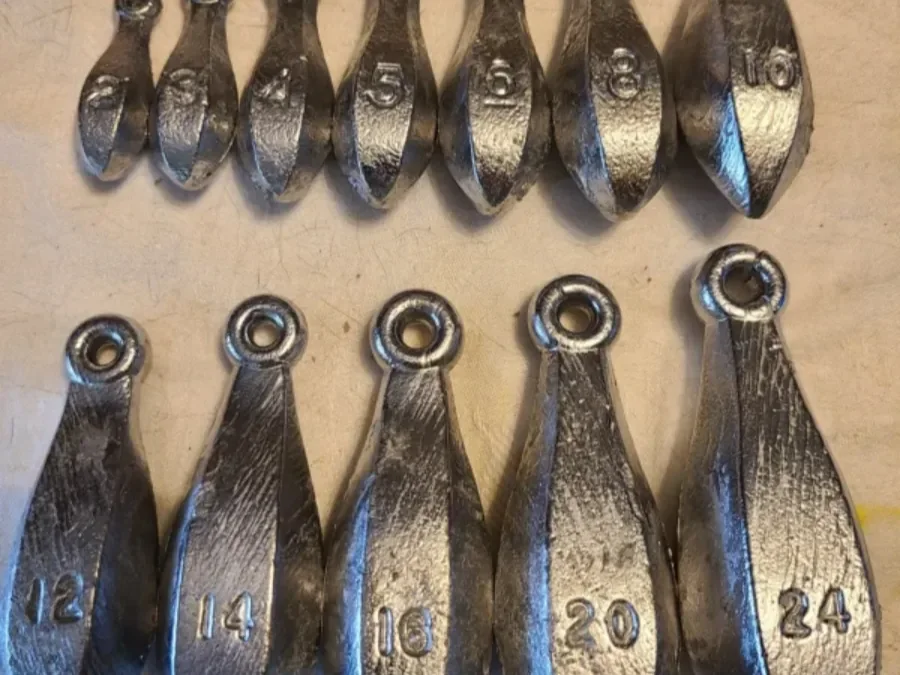
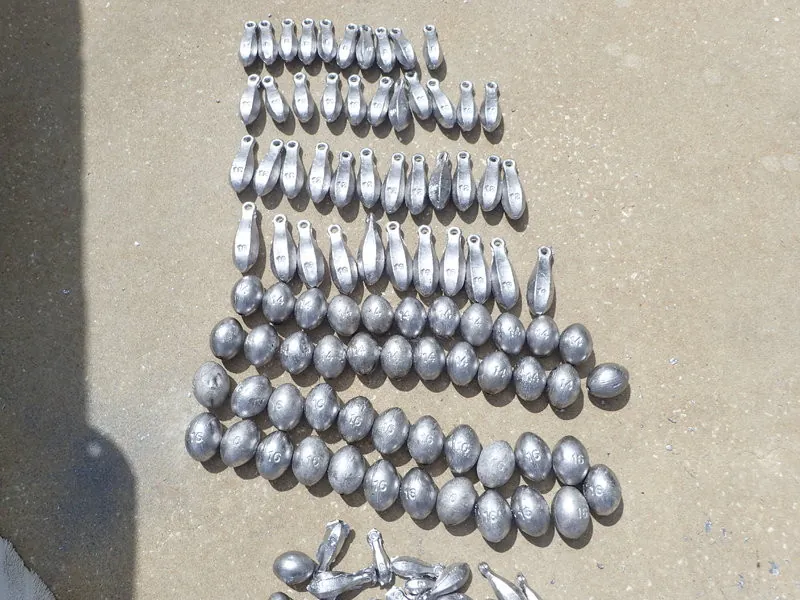
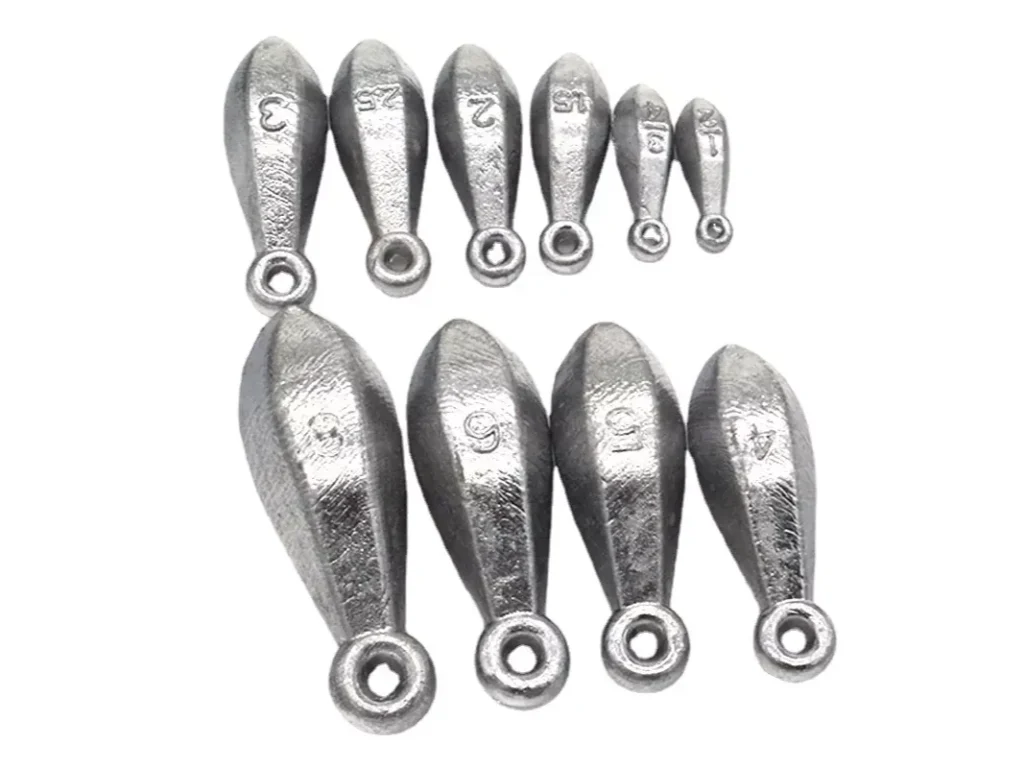
Once sinkers leave the pack, anglers and store staff cannot tell 3 oz from 4 oz by eye. A size stamped into the lead keeps sizes sorted in the tackle box and on the shop floor. We stamp the size on our sinkers and weight-check every batch before packing.
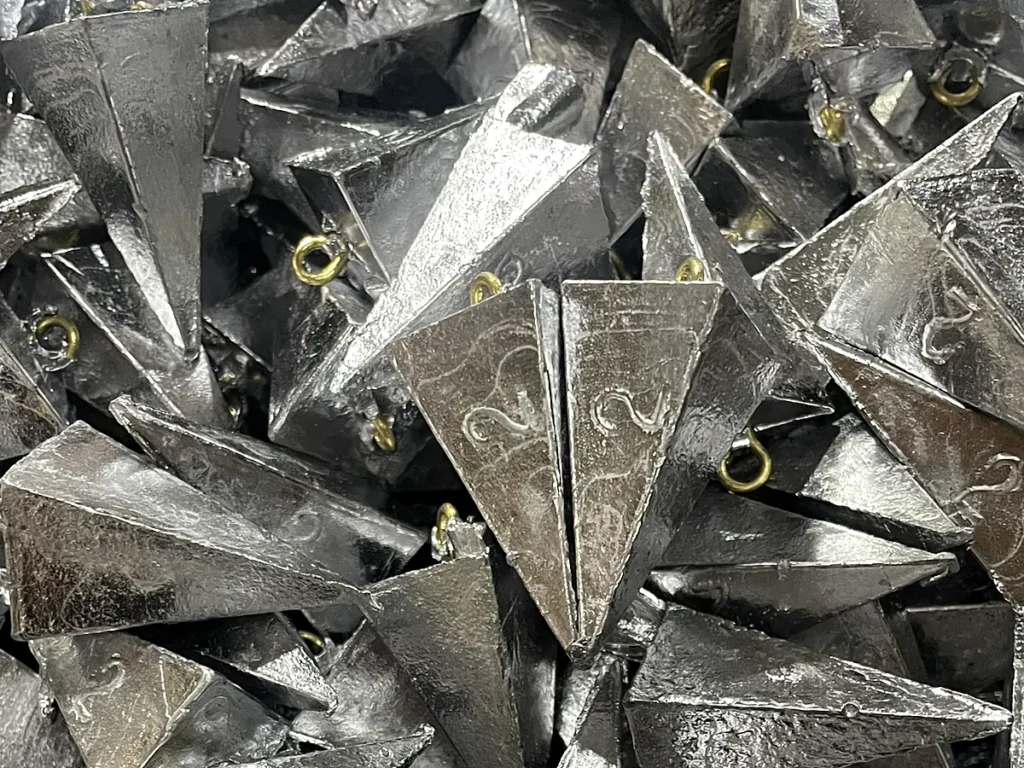
Converting a size is the easy part; holding it batch after batch is harder. See fishing sinker quality control for how weight tolerance is set and checked.
FAQ
How many grams is a 1 oz sinker?
A 1 oz sinker weighs about 28.35 grams.
How many grams is a 1/4 oz sinker?
About 7.1 grams.
What does a 2 oz sinker weigh in grams?
About 56.7 grams.
How heavy is a 100 g jig in ounces?
About 3.5 oz.
How many 1 oz sinkers are in 1 lb?
Sixteen, because 1 lb equals 16 oz.
Need a size list priced in oz or grams? Send it to us and we will quote in the units your market uses.
Lead Dive Weights: A Wholesale Guide for Dive Shops and Brands
Short answer: most dive shops and rental fleets stock lead belt weights from 1 lb to 5 lb in two finishes: bare lead, the lowest-cost option, and vinyl-coated lead, which protects wetsuits, BCDs and boat decks and can be color-coded by size. At Fides Fishing, dive weights start at 2,500 pcs, samples take about 10 days and production about 30 days.
Bare vs vinyl-coated dive weights
| Bare lead | Vinyl-coated | |
|---|---|---|
| Finish | Smooth bare lead | Vinyl-dipped lead (no paint) |
| Sizes | 1–5 lb | 1–5 lb |
| Price | Lowest | Higher |
| Marks on gear | Can leave grey marks on hands, gear and decks | No lead marks; softer on gear |
| Size by color | No | Yes, choose a color per size |
| Best for | Rental fleets, high-volume budget lines | Retail, boats, premium rental gear |
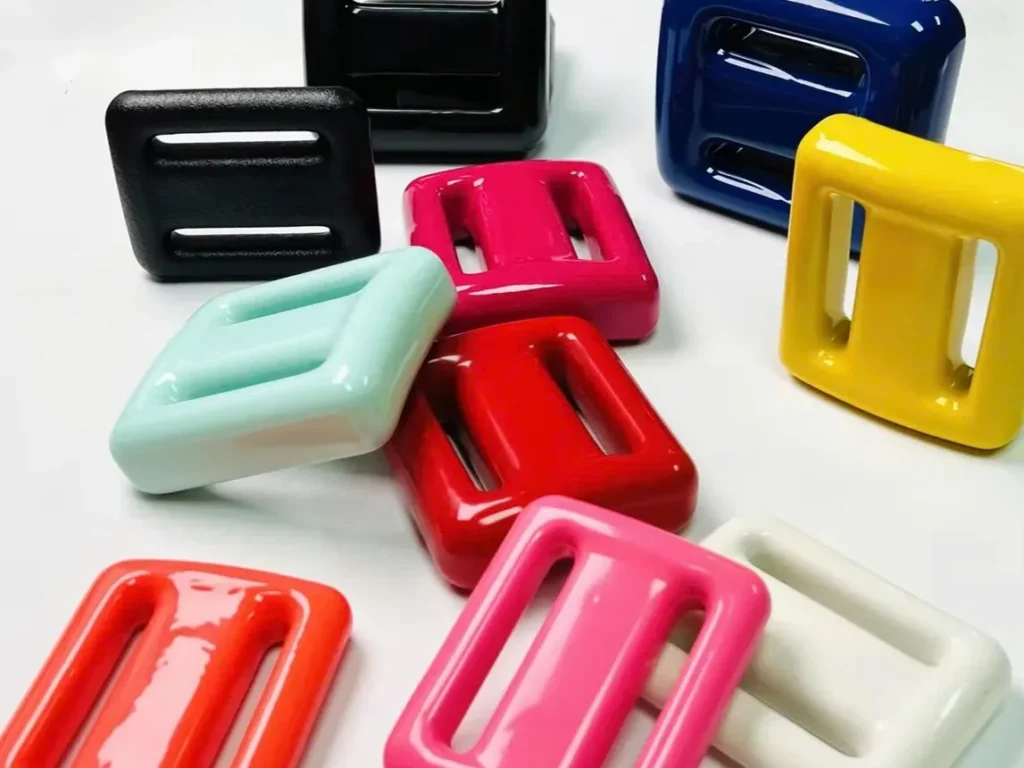
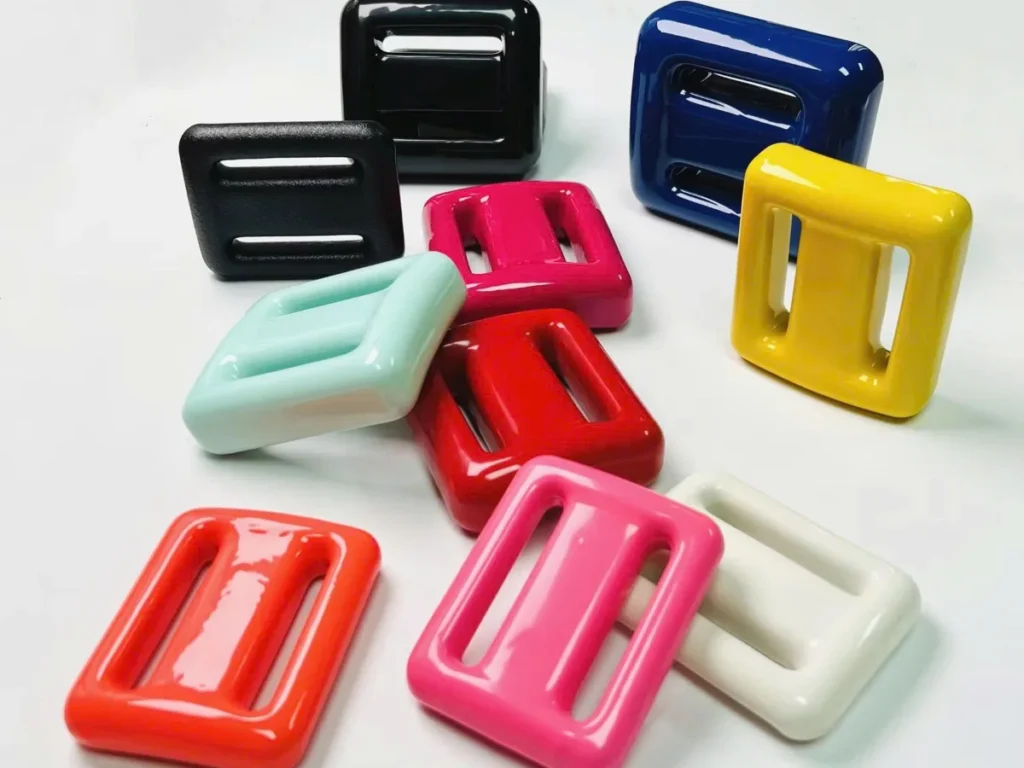
Vinyl coating does not change the weight much, but it does change the feel and look. If you sell at retail, coated weights look cleaner on the shelf. If you run a rental fleet that loses weights on dive boats, bare lead keeps replacement cost down.
Which sizes to stock
Divers add weight in small steps, so a full range from 1 to 5 lb lets every customer fine-tune. In kilograms, 1 lb is about 0.45 kg and 5 lb about 2.3 kg; see our weight chart for exact conversions.
Belt fit
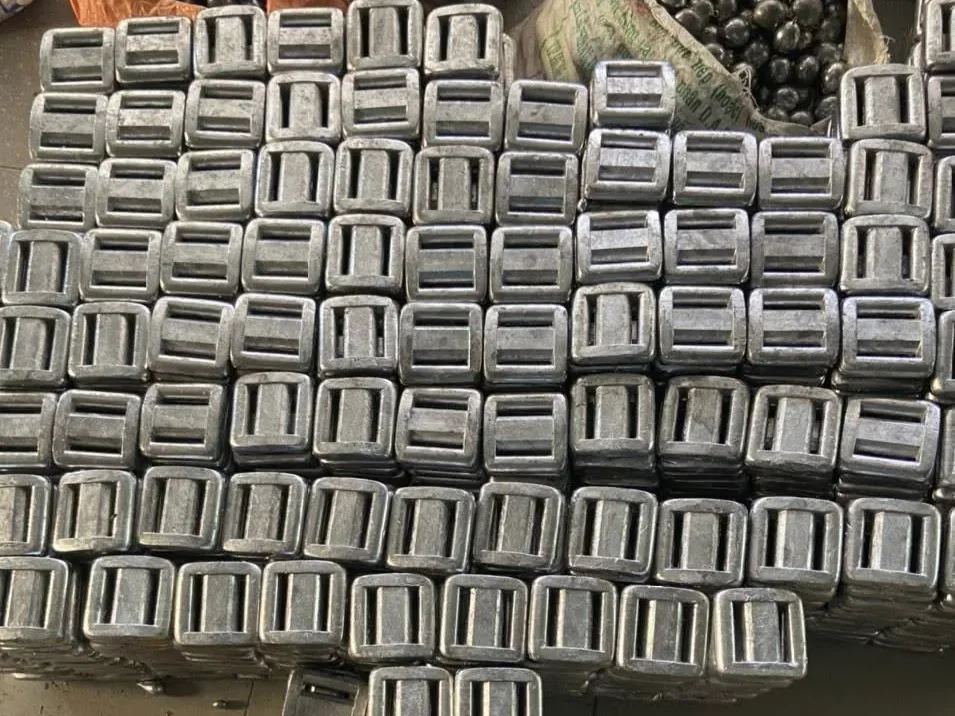
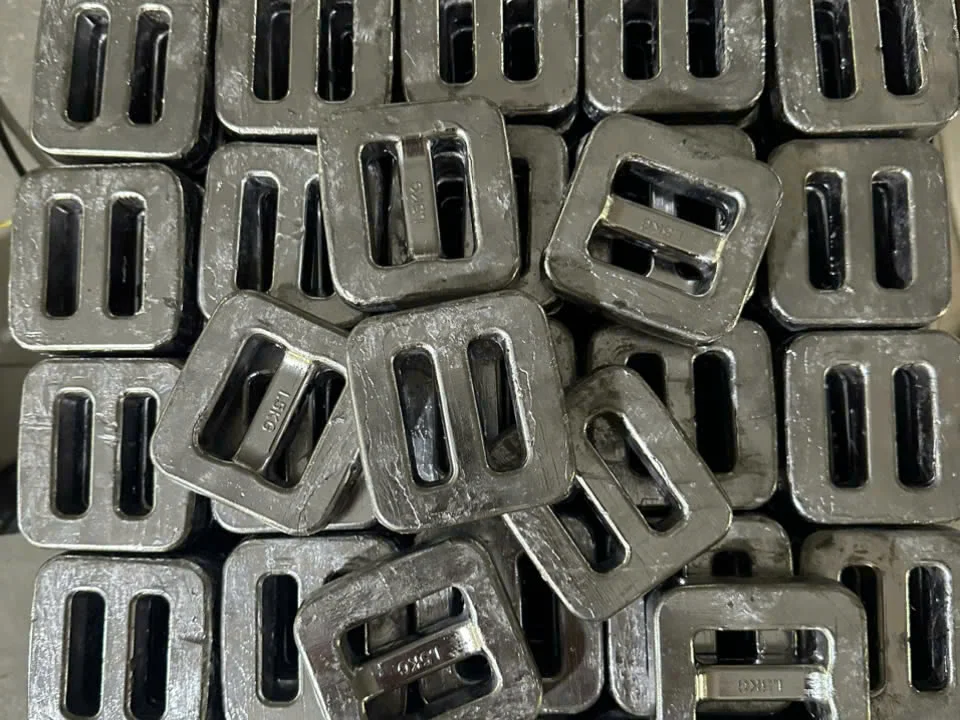
Our dive weights are smooth-edged belt weights that thread onto standard weight belts. If your belts use a non-standard webbing width, send us a belt or the slot size and we will confirm fit before production.
Branding and packing
For dive brands, the weight itself can carry your look: choose vinyl colors to match your brand, and we pack into your own cartons with your labels. Weights are packed by size so your warehouse does not have to sort them.
Ordering dive weights from Fides Fishing
- MOQ: 2,500 pcs
- Finish: bare lead or vinyl-dipped (no paint)
- Samples: about 10 days
- Production: about 30 days
- Documents: commercial invoice, packing list, Certificate of Origin on request
- Markets: United States, Canada, Mexico, Australia, New Zealand
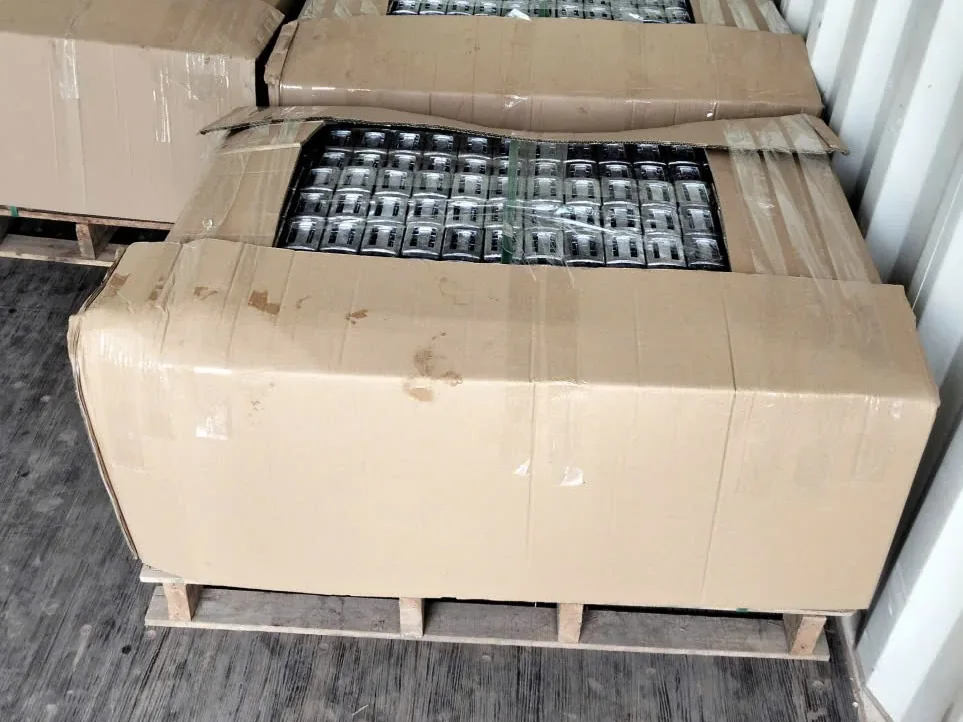
Dive weights can ship in the same container as fishing sinkers, which helps tackle distributors that also supply dive shops. The full import process is explained in how to import from Vietnam.
Care tips you can pass on to customers
- Rinse weights in fresh water after salt-water dives and let them dry.
- Store coated weights away from sharp edges to avoid cutting the vinyl.
- Wash hands after handling bare lead.
FAQ
Are vinyl-coated dive weights worth the extra cost?
For retail and boats, usually yes: they protect gear and decks, leave no lead marks and can be color-coded by size. For rental fleets on a tight budget, bare lead is often enough.
What sizes do lead dive weights come in?
We make belt weights from 1 lb to 5 lb (about 0.45–2.3 kg).
What is the minimum order for dive weights?
2,500 pcs.
Are the dive weights painted?
No. They are supplied as bare lead or vinyl-dipped, with no paint.
Can I mix dive weights and fishing sinkers in one shipment?
Yes. Many buyers combine both in one container.
Need prices by size and finish? Request a quote with the sizes and colors you want.
Types of Fishing Sinkers: A Wholesale Buyer’s Guide
Short answer: fishing sinkers fall into four groups by job. Holding sinkers (pyramid, sputnik, bank, coin, flat no-roll) keep bait in place on the bottom. Sliding sinkers (egg, bullet, drop shot) let the line move so fish feel less weight. Casting sinkers (bass casting, tear drop, ball) are shaped for distance. Trolling and deep-water weights (torpedo, downrigger, deep drop) take bait down to a set depth. A tackle range that covers all four groups serves most freshwater and saltwater anglers.
Below, each type is explained with the rigs it suits and the sizes we produce. All sinkers are lead, supplied raw or vinyl-dipped on request.
Fishing sinker types compared
| Sinker | Main job | Typical use | Sizes we make |
|---|---|---|---|
| Pyramid | Holding | Surf and sandy or muddy bottoms in current | 1.5–8 oz |
| Sputnik | Holding | Surf, pier and deep saltwater in strong current | 4, 5, 6, 7, 8 oz |
| Bank | Holding | Bottom fishing over rocks; resists snagging | 1–8 oz |
| Coin / disc | Holding | Rivers, tidal flats; does not roll | 1–8 oz |
| Flat no-roll | Holding | Bottom rigs in current; low profile | 1–8 oz |
| Egg | Sliding | Carolina and fish-finder rigs, fresh and salt | 1 oz to 6 oz+ |
| Bullet | Sliding | Texas and Carolina rigs for bass | 1/16–1 oz |
| Drop shot pencil | Sliding / finesse | Drop shot rigs; slides through structure | 1/16–10 oz |
| Split shot | Fine-tuning | Pinched on the line for float and light rigs | BB to 3/0 |
| Bass casting | Casting | Bottom and casting rigs for bass and catfish | 1/4 oz–10 lb |
| Tear drop | Casting | Long casts, drift and bottom fishing | 1/8–2 oz |
| Ball | Casting / depth | General purpose, fresh and salt | 1.5–8 oz |
| Torpedo trolling | Trolling | In-line trolling; rings at both ends | 1–16 oz |
| Downrigger ball | Trolling | Downrigger cable, stable depth | 4–12 lb |
| Downrigger fish | Trolling | Downriggers for salmon, trout, tuna | 4–15 lb |
| Deep drop | Deep water | Swordfish, tilefish, grouper in deep water | 3–15 lb |
| Cast net | Net weight | Sinks cast nets evenly | Custom |
Holding sinkers: keep bait on the bottom
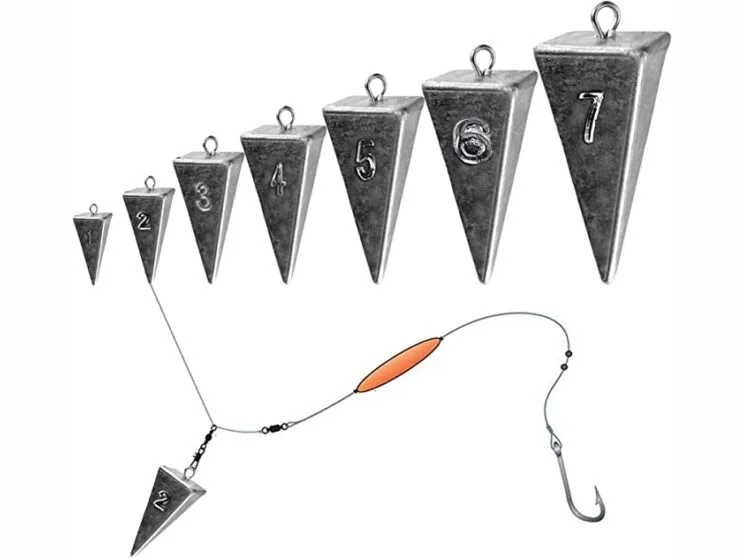
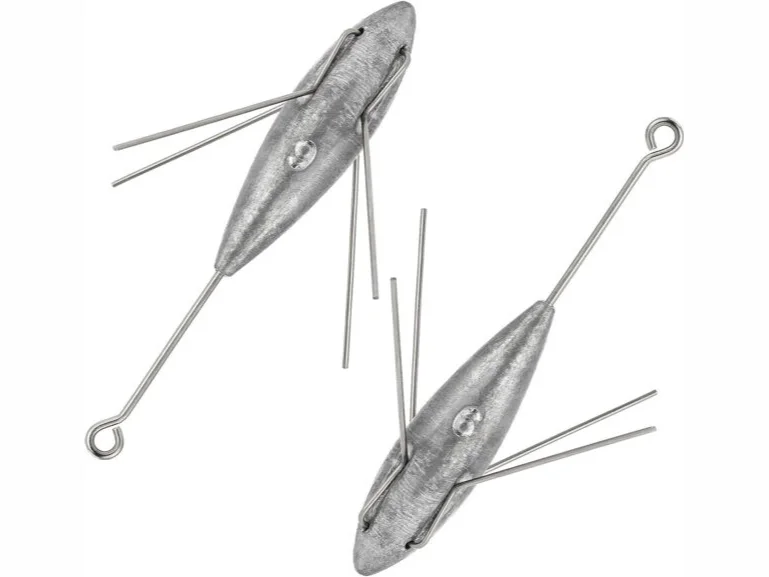
Pyramid sinkers dig into sand and mud, which makes them the standard surf weight in the US and Australia. Sputnik sinkers add wire arms that grip the seabed and fold back on the retrieve; they sell to surf and pier anglers fishing heavy current. Bank sinkers have a rounded, six-sided body that slides over rocks instead of wedging, so they are a staple for bottom fishing from boats and banks. Coin and flat no-roll sinkers have a low, flat profile that stays put in rivers and tidal water.
Sliding sinkers: let the line run
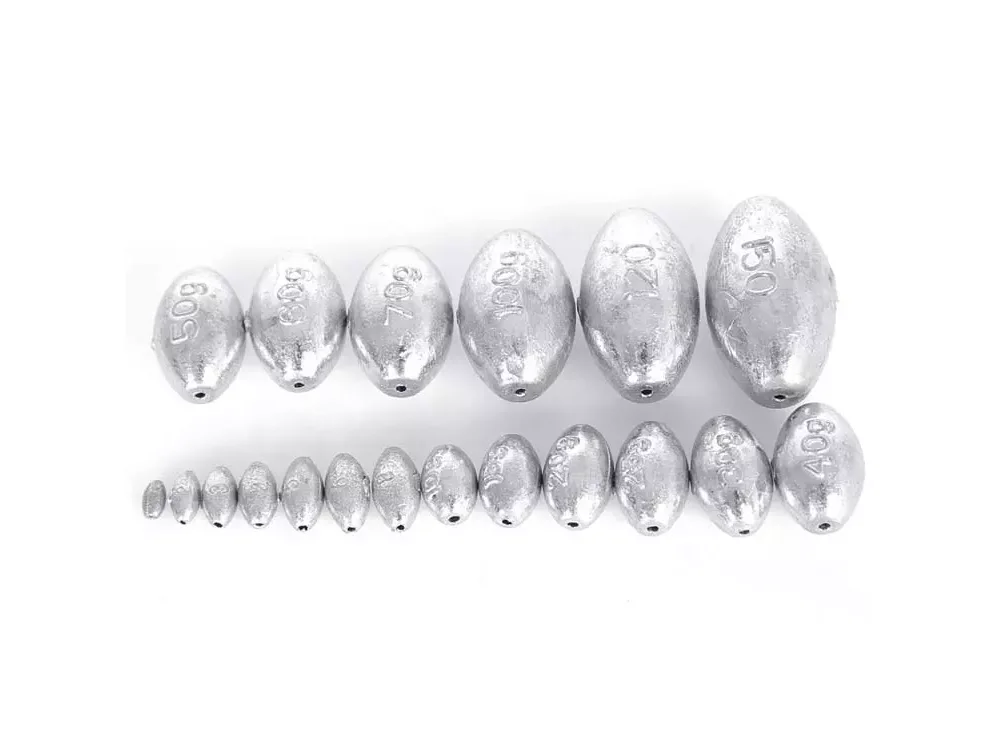
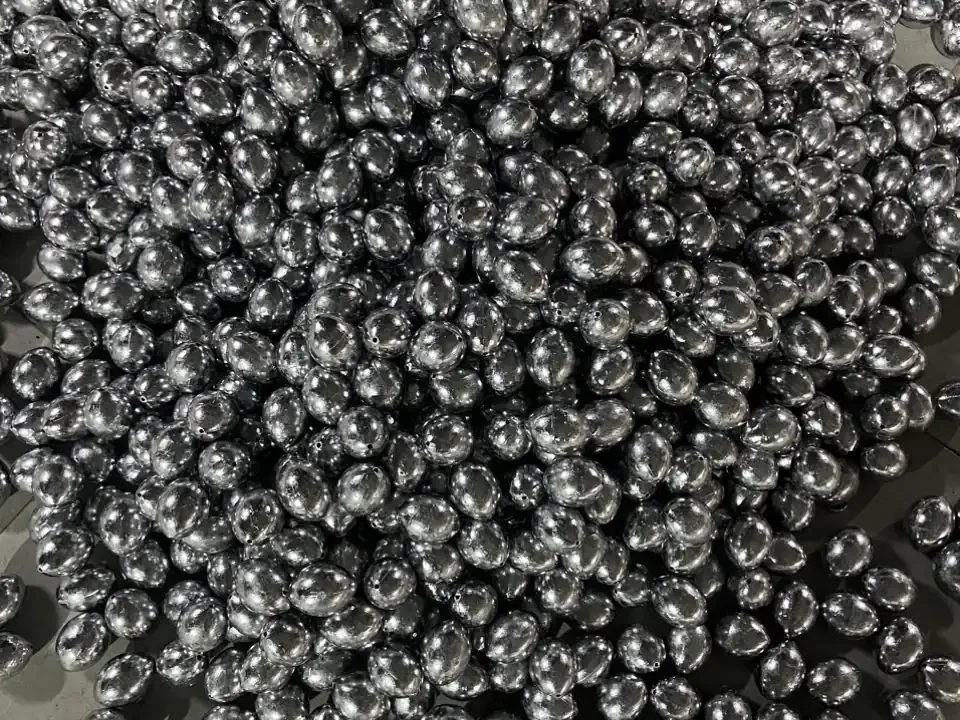
Egg sinkers have a hole through the middle, so the line passes freely and the fish feels little resistance. They are used on Carolina and fish-finder rigs in both fresh and salt water. Bullet sinkers are the bass angler’s weight for Texas and Carolina rigs; the pointed nose comes through weeds and cover. Drop shot pencil sinkers sit at the end of a drop shot rig and slip through rocks without snagging.
For a side-by-side comparison of the two most common sliders, see egg sinkers vs. bullet sinkers.
Casting sinkers: built for distance
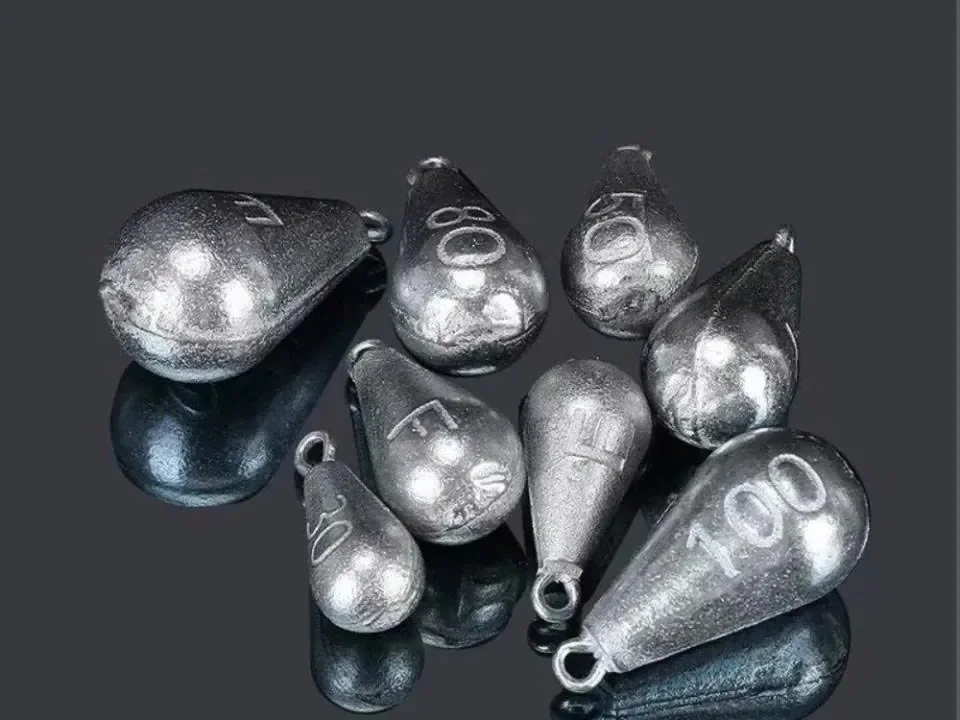
Bass casting, tear drop and ball sinkers have smooth, compact shapes that fly well and sink fast. They cover a wide weight range and suit general bottom and casting rigs, which makes them reliable volume sellers.
Trolling and deep-water weights
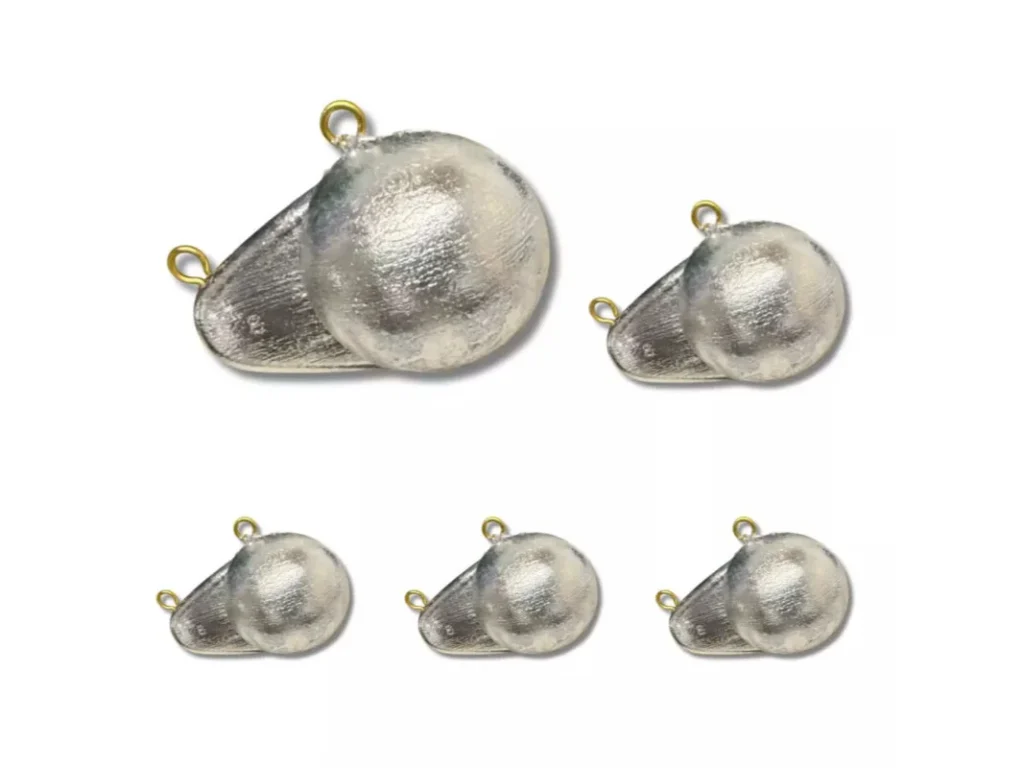
Torpedo sinkers run in-line behind the boat. Downrigger ball and fish-shaped downrigger weights clip onto a downrigger cable to hold lures at an exact depth for salmon, trout and tuna. Deep drop weights (3–15 lb) get baits down to deep-water species such as swordfish and tilefish. These heavy weights are often packed individually with a barcode.
Split shot and cast net sinkers
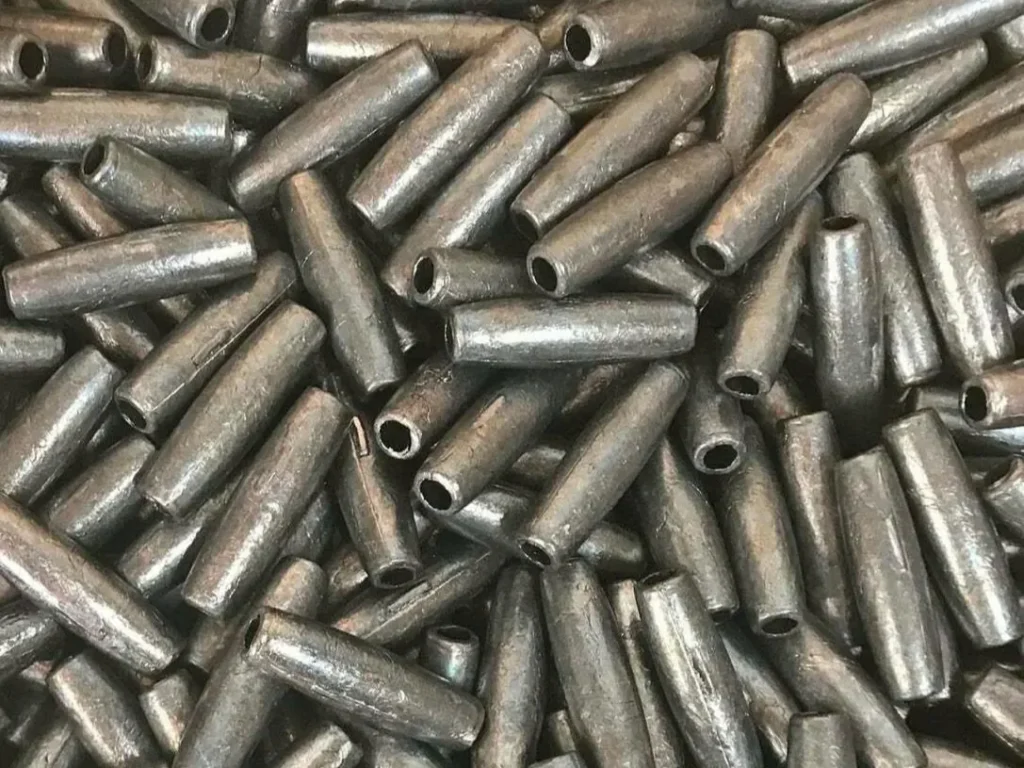
Split shot pinches onto the line by hand for fine weight adjustments under a float. Cast net sinkers are made to the size and spacing of your net.
How to choose a sinker range for your market
- Surf and pier markets (US East and Gulf coasts, Australia, New Zealand): pyramid, sputnik, bank and egg sinkers in 2–8 oz.
- Freshwater bass markets (US, Canada, Mexico): bullet, drop shot and split shot in 1/16–1 oz.
- Trolling markets (Great Lakes, Pacific Northwest, Canada): downrigger and torpedo weights.
- Offshore: deep drop weights and heavy bank sinkers.
Most buyers start with a few fast-selling shapes and add more on reorder. Because our minimum is set by weight (3,000 lbs for sinkers), you can build the first order around your bestsellers. Each sinker has its size stamped on it, and we can pack under your brand.
Raw lead or vinyl-dipped?
All shapes are available in raw lead. Vinyl dip adds color and a softer surface that is kinder to boats and gear. It is popular for retail packs and for color-coded sizes.
Every shape on this list is cast, size-stamped and weight-checked the same way. See how fishing sinkers are made for the full process with factory photos.
FAQ
What is the most common type of fishing sinker?
For saltwater bottom fishing, pyramid, bank and egg sinkers sell in the highest volume. For freshwater bass, bullet sinkers and split shot lead.
Which sinker holds best in strong current?
Sputnik sinkers hold best because their wire arms grip the bottom. Pyramid sinkers are the next choice on sand and mud.
What is the difference between a bank sinker and a pyramid sinker?
A pyramid sinker digs into sand to hold position. A bank sinker has a rounded six-sided body that slides over rocks without snagging.
Can I order sinkers in sizes not listed?
Yes. Send a sample, photo or drawing with the weight you need and we will confirm in the quote.
Are your sinkers made of lead?
Yes. All Fides Fishing sinkers are lead, supplied raw or vinyl-dipped on request.
Browse all fishing sinkers or request a quote for your size list.
Types of Metal Jigs & Jig Mold Customization
Short answer: the main types of metal jigs are vertical speed jigs (fast drop for deep water), slow pitch jigs (flat, fluttering fall), S-shape jigs (baitfish swimming action), sand eel jigs (slim and fast-sinking) and luminous jigs (glow for night and deep water). Our jigs are made of lead, from 15 g to 920 g (0.5–32 oz). A custom shape is made from your sample or drawing; the mold is built and kept at our factory for your production, and we sell finished jigs, not molds.
Metal jig types compared
| Jig type | Action | Typical use | Weights we make |
|---|---|---|---|
| Vertical speed | Fast, straight drop; quick retrieve | Deep water, tuna, amberjack | 60–920 g |
| Slow pitch (mini) | Flat, fluttering fall | Light tackle, snapper, grouper, trout | 15–60 g |
| S-shape | Wobbling baitfish action | Tuna, mackerel, snapper | 40–200 g |
| Sand eel | Slim, fast-sinking | Sandy and muddy bottoms | 60–400 g |
| Luminous | Glows; head-down flutter | Night and deep-water fishing | 100–800 g |
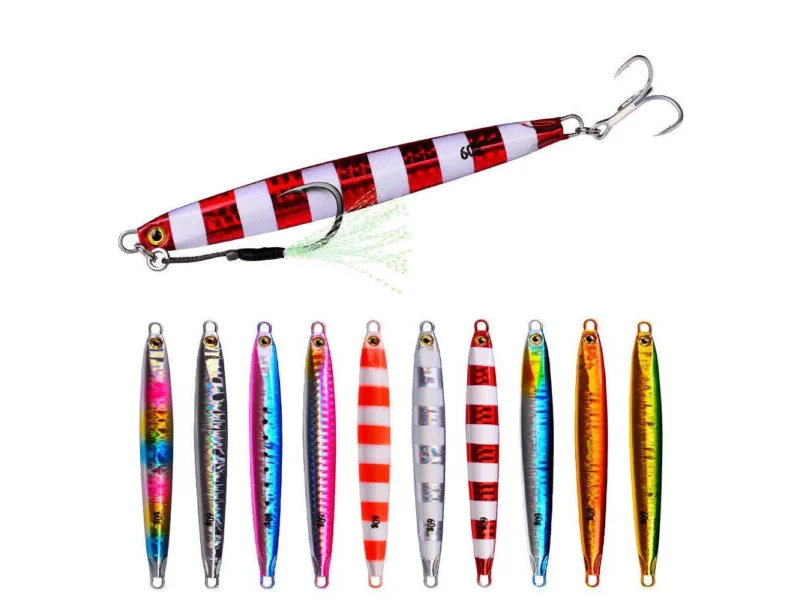
How to pick a jig type
- Depth and current: deeper water and stronger current need heavier, more compact jigs such as vertical speed jigs.
- Technique: slow pitch anglers want a flat, fluttering fall; speed jigging needs a slim jig that drops fast.
- Light: luminous jigs help at night and below the depth where daylight fades.
- Bait in the area: sand eel jigs match slim baitfish; S-shapes imitate wider baitfish.
For a deeper guide by fishing style, see how to choose the right metal jigs.
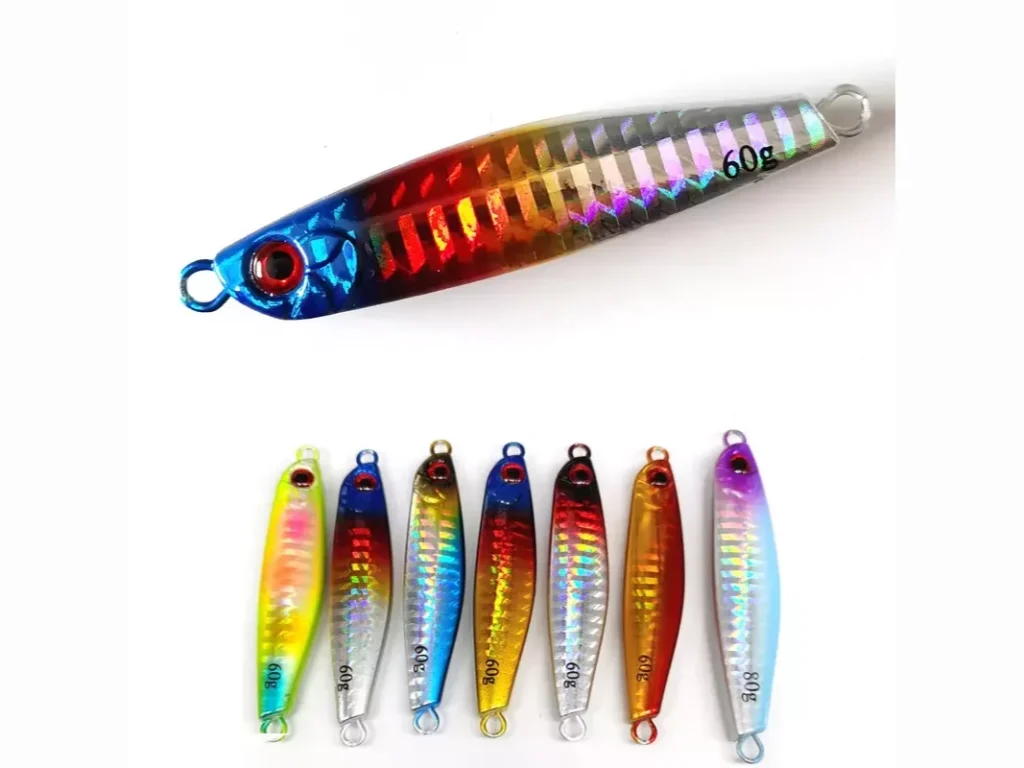
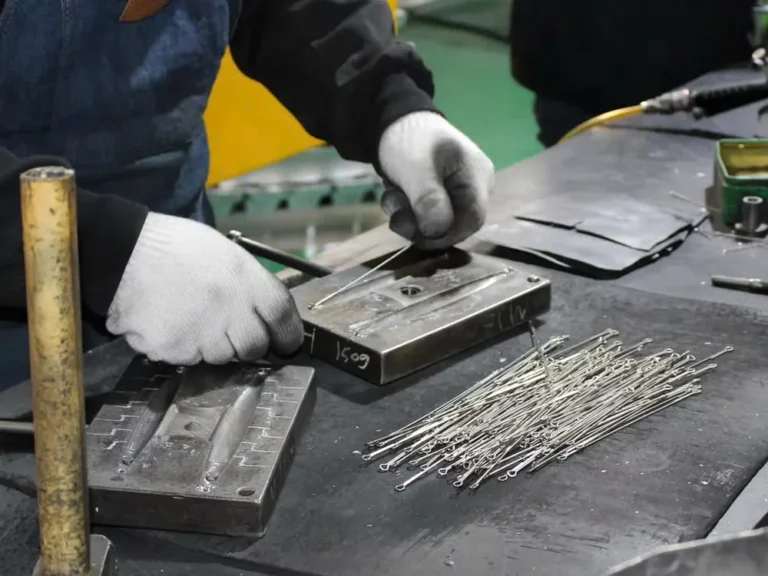
Custom jig shapes: how it works
- Brief: send a sample, photos or a drawing with the weights you need.
- Mold: we make the mold in-house. Timing and any tooling cost are stated in the quote. The mold stays at our factory for your orders.
- Samples: cast in lead, painted or coated in your colors, with the agreed hooks.
- Approval and production: about 2 months for painting, hooks and packing.
What you can customize
- Shape and weight (15–920 g)
- Colors and finish: paint, laser/reflective, luminous
- Hooks and rings
- Packing under your brand
MOQ is 3,000 pcs. See the full custom lead jig OEM process.
FAQ
What are metal jigs made of?
Ours are made of lead, which is dense and sinks fast.
What is the difference between speed jigs and slow pitch jigs?
Speed jigs are slim and drop fast for quick, aggressive retrieves. Slow pitch jigs are flatter and flutter on the fall.
Do you sell jig molds?
No. We make molds in-house for production and sell finished jigs only.
What weights can you make?
15 g to 920 g (0.5–32 oz).
What is the MOQ for custom jigs?
3,000 pcs, with production of about 2 months.
Have a jig in mind? Send us your sample or drawing.
How to Choose the Right Fishing Weight for Saltwater vs. Freshwater
Short answer: saltwater fishing usually needs heavier sinkers that hold the bottom in current and surf, such as pyramid, sputnik, bank and egg sinkers from about 2 to 8 oz, plus multi-pound weights for trolling and deep drops. Freshwater fishing mostly uses light weights, such as bullet sinkers, split shot, drop shot and small egg sinkers from 1/16 to 1 oz, where a natural bait presentation matters more than holding power.
Saltwater vs freshwater sinkers at a glance
| Saltwater | Freshwater | |
|---|---|---|
| Main challenge | Current, waves, depth | Light bites, cover, clear water |
| Typical weights | 2–8 oz; trolling and deep drop 3–15 lb | 1/16–1 oz |
| Common shapes | Pyramid, sputnik, bank, egg, torpedo, deep drop | Bullet, split shot, drop shot, small egg, tear drop |
| Finish | Raw lead or vinyl-dipped | Raw lead or vinyl-dipped for color |
Choosing saltwater weights
- Surf and sand: pyramid and sputnik sinkers grip the bottom in waves and current.
- Rocky bottoms: bank sinkers slide over rocks instead of wedging.
- Sliding rigs: egg sinkers on fish-finder rigs let fish take bait without feeling weight.
- Trolling and deep water: torpedo, downrigger and deep drop weights.
Rule of thumb: use the lightest weight that still holds bottom in the current. More detail in how to choose sinkers for saltwater fishing.
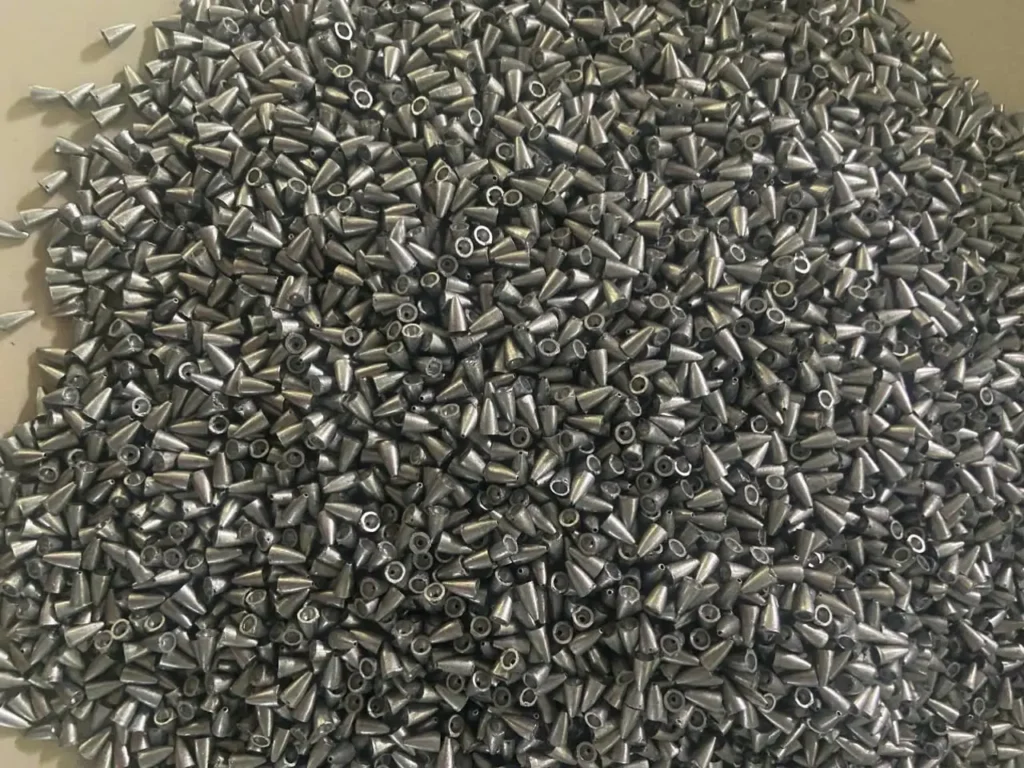
Choosing freshwater weights
- Bass rigs: bullet sinkers for Texas and Carolina rigs come through weeds and wood.
- Finesse: drop shot sinkers keep bait just off the bottom.
- Float fishing: split shot pinches on to fine-tune depth and balance.
- Catfish and carp: egg and tear drop sinkers from 1/2 to 2 oz.
Rules on lead in some waters
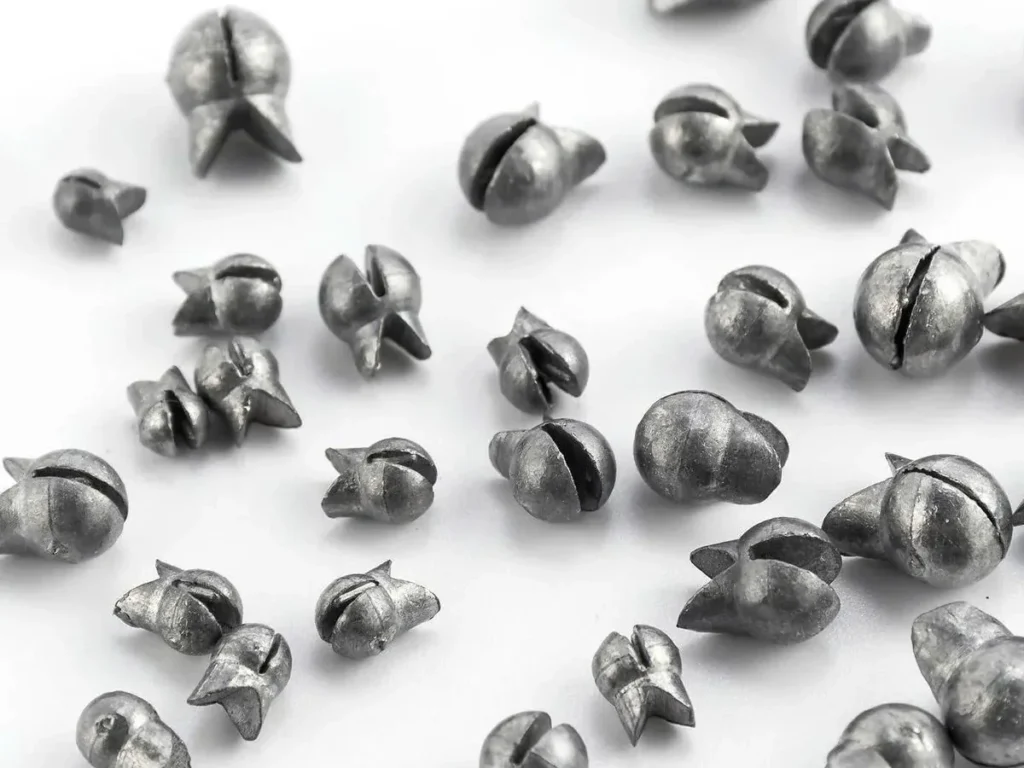
Some US states and some parks in Canada restrict small lead sinkers in certain fresh waters. If you sell into those areas, check the local rules for the sizes you stock. Our products are lead, and we can print any required wording on your packaging.
Stocking tip for retailers
Most coastal stores need both ranges: heavy holding weights for salt water and light weights for nearby lakes and rivers. Use our sinker weight chart to convert oz to grams for packaging, and see all shapes in types of fishing sinkers.
FAQ
Why are saltwater sinkers heavier?
Tides, waves and deeper water push bait around, so you need more weight to hold the bottom.
What is the best all-round saltwater sinker?
Pyramid sinkers on sand and bank sinkers over rocks cover most bottom fishing.
What sinker size is common for freshwater bass?
Bullet sinkers from 1/8 to 1/2 oz cover most Texas and Carolina rigs.
Can I use freshwater sinkers in salt water?
Yes, but light weights may not hold in current; size up as conditions require.
Building a saltwater and freshwater range? Request a quote for both in one container.
Egg Sinkers vs. Bullet Sinkers: What’s the Difference?
Short answer: both egg and bullet sinkers slide on the line. Egg sinkers are oval and are used on Carolina and fish-finder rigs for bottom fishing in fresh and salt water, usually from about 1 oz up to several ounces. Bullet sinkers have a pointed nose and are used on Texas and Carolina rigs for bass, usually 1/16–1 oz, because the point slips through weeds and cover.
Egg vs bullet sinkers compared
| Egg sinker | Bullet sinker | |
|---|---|---|
| Shape | Oval, hole through the middle | Cone with pointed nose |
| Main rigs | Carolina, fish-finder, sliding bottom rigs | Texas rig, Carolina rig |
| Typical sizes | 1–2 oz light, 3–5 oz medium, 6 oz+ deep | 1/16–1 oz |
| Water | Fresh and salt | Mostly fresh |
| Strength | Rolls less on open bottoms, lets line slide freely | Comes through weeds, wood and rocks |
| Typical species | Catfish, redfish, flounder, snapper | Bass |
When to use egg sinkers
Use an egg sinker when you want bait on the bottom and the fish to take it without feeling the weight. On a fish-finder or Carolina rig, the line slides through the sinker, then a swivel stops it above the leader. Egg sinkers work from piers, boats and banks in both salt and fresh water.
When to use bullet sinkers
Use a bullet sinker for soft-plastic bass rigs. On a Texas rig the point leads the bait through grass, brush and rocks with fewer snags. Lighter sizes (1/8–1/4 oz) suit shallow water; heavier sizes (1/2–1 oz) punch through thick cover or reach deeper fish.
What wholesale buyers should stock
- Coastal stores: egg sinkers 1–4 oz in volume, a few heavy sizes for deep water.
- Bass markets: bullet sinkers 1/8–1/2 oz as core sizes, plus 3/4 and 1 oz.
- Retail packs: vinyl-dipped colors help anglers tell sizes apart.
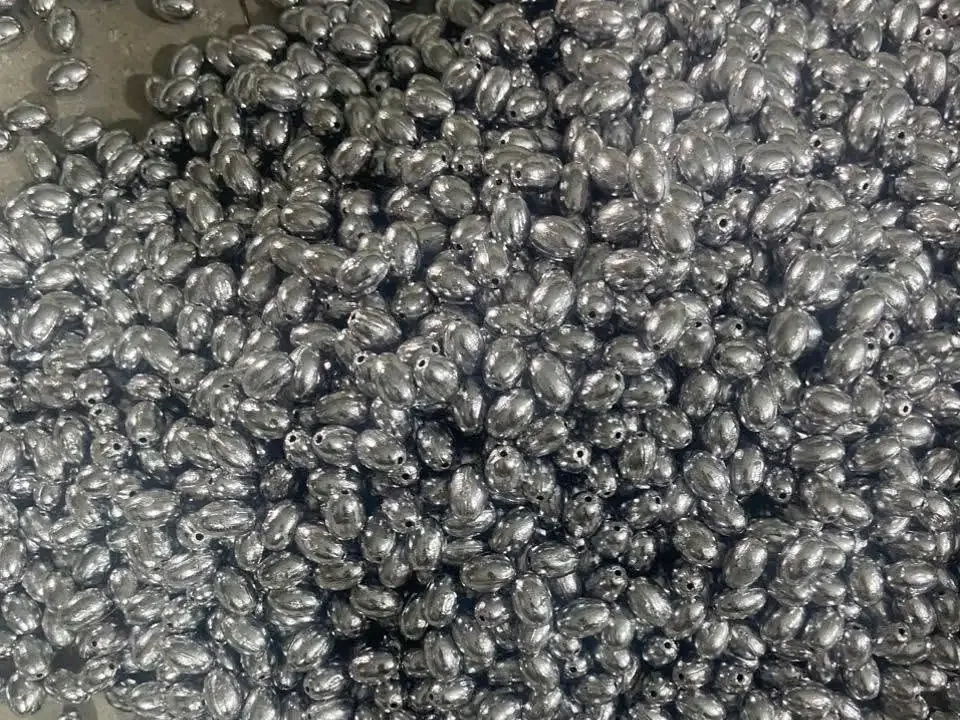
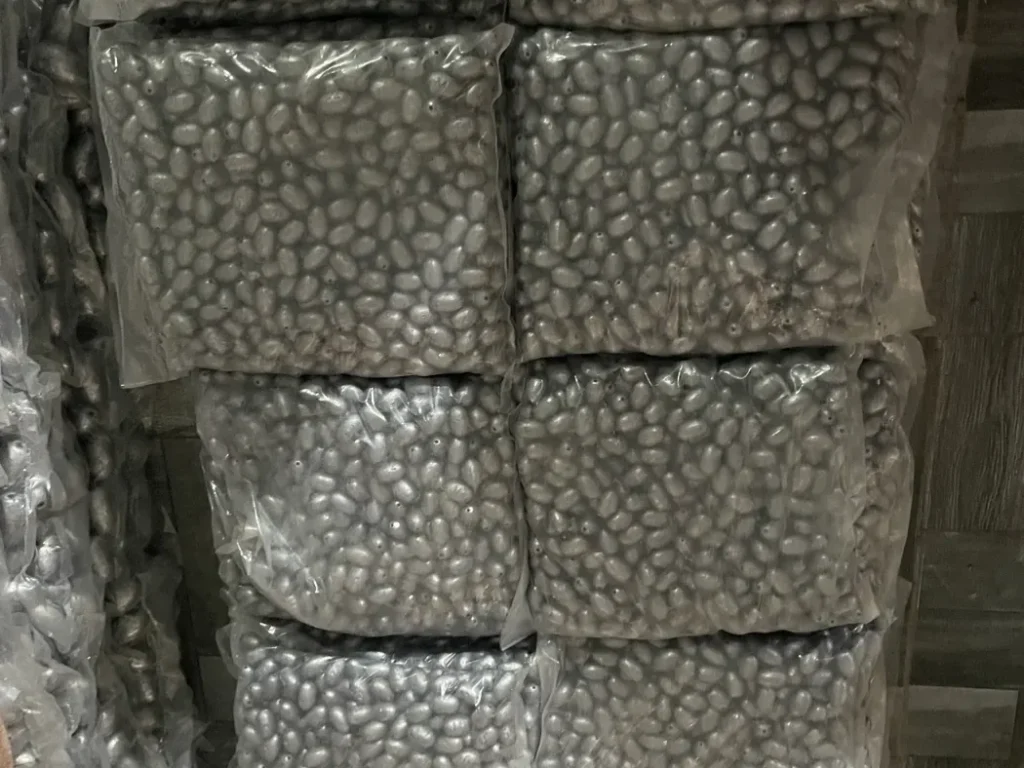
Both shapes are cast in lead at our factory with the size stamped on each piece. Minimum order is 3,000 lbs across your sinker mix. See all shapes in types of fishing sinkers.
FAQ
Can I use an egg sinker on a Texas rig?
You can, but a bullet sinker comes through cover better because of its pointed nose.
Which is better for catfish?
Egg sinkers on a sliding rig are a common choice for catfish.
What sizes do you make?
Egg sinkers from 1 oz to 6 oz and heavier; bullet sinkers from 1/16 oz to 1 oz.
Are they available coated?
Yes, vinyl dip on request.
Request a quote for egg and bullet sinkers in your sizes.
How to Choose the Right Metal Jigs for Specific Fishing Types
Short answer: choose a metal jig by fishing type first, then weight and color. For speed jigging use slim, heavy vertical jigs; for slow pitch use flatter jigs that flutter; for casting from shore or boat use compact jigs such as S-shape or sand eel; for night or very deep water use luminous jigs. As a starting point, many anglers pick about 1 g of jig per metre of depth and go heavier in strong current.
Jig choice by fishing type
| Fishing type | Jig shape | Typical weights | Our jig |
|---|---|---|---|
| Speed / vertical jigging | Long, slim, fast-sinking | 100–400 g+ | Vertical speed jigs (60–920 g) |
| Slow pitch | Flat, wide, flutters | 15–60 g (light) and up | Mini slow pitch (15–60 g) |
| Casting | Compact, swims on retrieve | 40–200 g | S-shape (40–200 g) |
| Sandy bottoms | Slim baitfish profile | 60–400 g | Sand eel (60–400 g) |
| Night / deep | Glow finish | 100–800 g | Luminous (100–800 g) |
Choosing weight
- Depth: a common starting rule is about 1 g per metre of depth (for example 100 g in 100 m).
- Current and drift: go heavier when the line angles away from the boat.
- Tackle: stay within the rod’s rated jig weight.
Grams to ounces: see our weight chart.
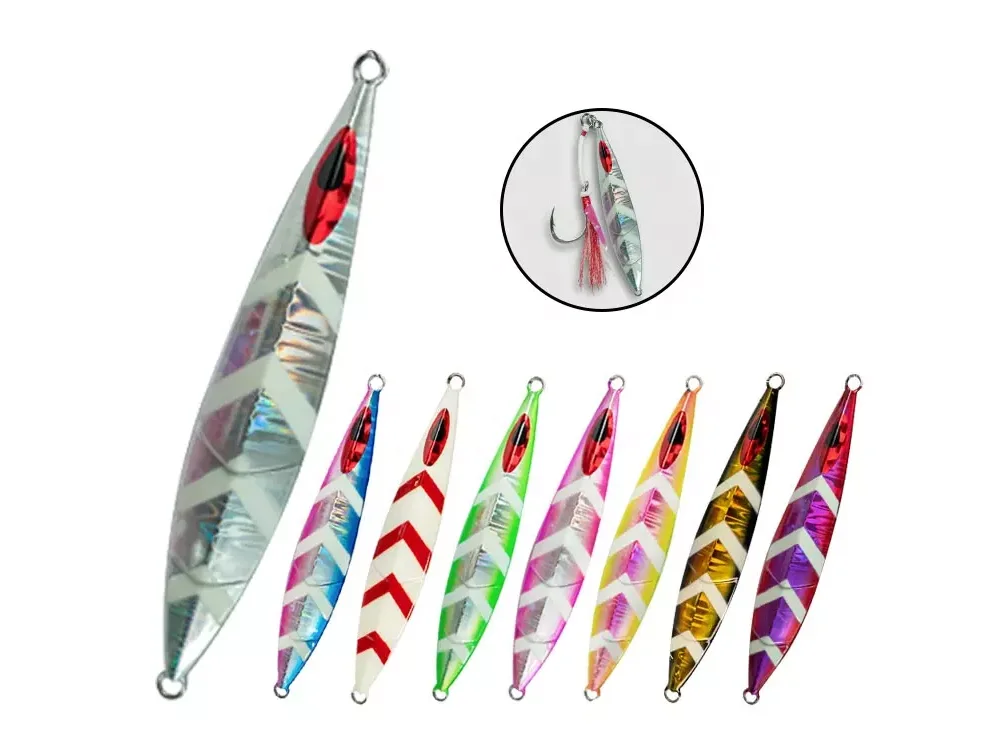
Choosing color and finish
- Clear water and bright days: natural silver and baitfish colors.
- Deep or murky water: bright colors and laser/reflective finishes.
- Night or very deep: luminous (glow) jigs.
For retailers and brands
Stock each popular shape in 3–5 weights and a few colors, including glow. If you want your own line, we make lead jigs from 15 to 920 g in your shapes and colors, MOQ 3,000 pcs, about 2 months production. See custom lead jigs: the OEM process.
FAQ
What size jig should I use?
Start around 1 g per metre of depth, then adjust for current and tackle.
What is the difference between speed jigs and slow pitch jigs?
Speed jigs are slim and drop fast; slow pitch jigs are flatter and flutter as they fall.
When should I use a glow jig?
At night, at dawn and dusk, and in deep water where light fades.
Are your jigs lead?
Yes, all our jigs are lead.
Request a quote for a jig range.
How to Choose Sinkers for Saltwater Fishing
Short answer: choose a saltwater sinker by three things: the bottom (sand, rock or mud), the current, and the technique. On sand and in surf use pyramid or sputnik sinkers; over rocks use bank sinkers; for sliding bait rigs use egg sinkers; for trolling use torpedo or downrigger weights; in very deep water use deep drop weights. Use the lightest weight that still holds the bottom, typically 2–8 oz from shore and heavier offshore.
Saltwater sinker chooser
| Situation | Best sinker | Typical weight |
|---|---|---|
| Surf, sandy beach | Pyramid or sputnik | 2–8 oz |
| Rocky bottom, jetty | Bank | 1–8 oz |
| Pier or boat, sliding rig | Egg | 1–6 oz |
| Tidal flats, river mouths | Coin or flat no-roll | 1–8 oz |
| Trolling | Torpedo or downrigger | 1–16 oz; 4–12 lb |
| Deep drop offshore | Deep drop | 3–15 lb |
Step 1: Read the bottom
- Sand and mud: pyramid points dig in; sputnik wires grip and fold back on the retrieve.
- Rock and reef: rounded bank sinkers snag less.
- Flat, current-swept bottoms: coin and flat sinkers resist rolling.
Step 2: Match the current
If your bait drifts, go up in weight in small steps. In strong current or big surf, a sputnik holds where a pyramid of the same weight would roll.
Step 3: Match the technique
- Fish-finder and Carolina rigs: egg sinkers let line slide.
- High-low bottom rigs: bank or pyramid sinkers at the end of the rig.
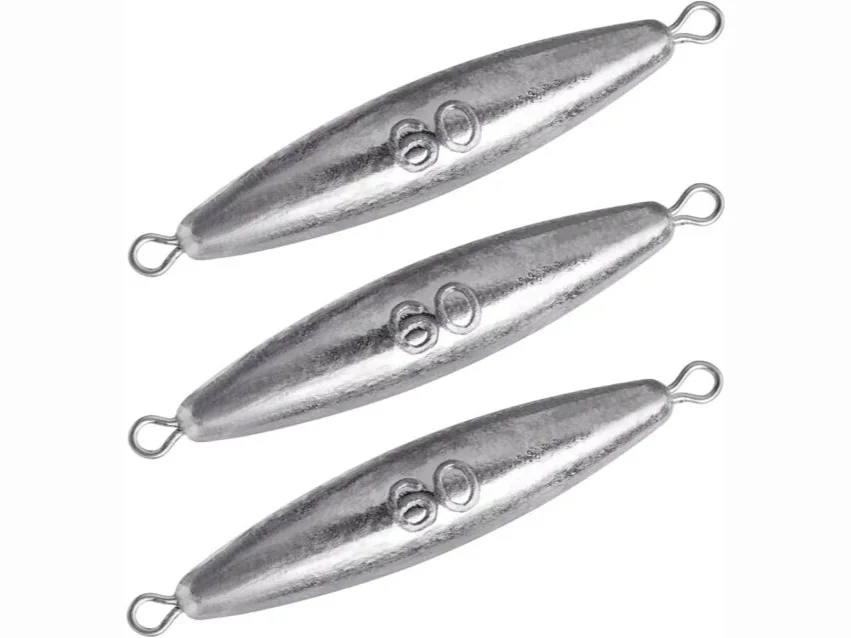
- Trolling: torpedo sinkers in-line, or downrigger weights on a cable.
- Deep dropping: 3–15 lb deep drop weights.
Raw or coated?
Raw lead is the standard and lowest cost. Vinyl-dipped sinkers add color, are kinder to boats and hands, and let you color-code sizes. See coated lead weights.
For retailers
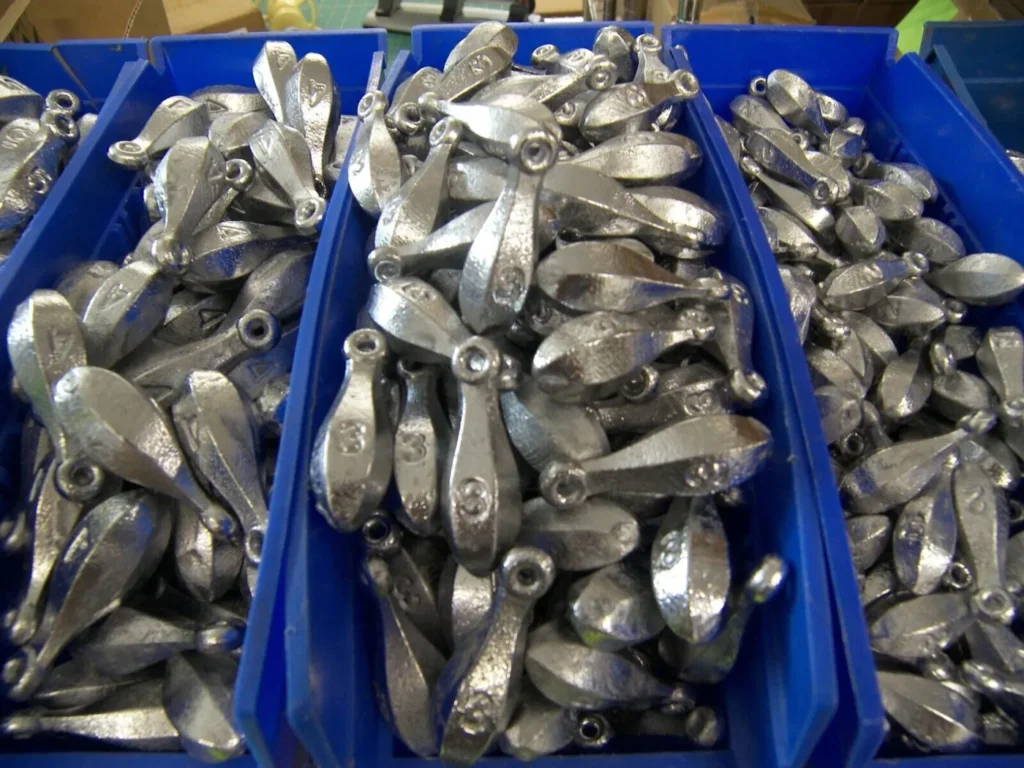
Coastal stores usually need pyramid, bank and egg sinkers in 1–8 oz as the core range, plus sputnik, torpedo and deep drop weights for specialist anglers. Compare with fresh water in saltwater vs freshwater weights, and see surf picks in 5 best sinkers for surf fishing.
FAQ
What is the best sinker for saltwater bottom fishing?
Pyramid sinkers on sand and bank sinkers over rocks.
How heavy should a saltwater sinker be?
Usually 2–8 oz from shore; heavier offshore and in strong current.
Do lead sinkers rust in salt water?
Lead does not rust like steel, but it dulls over time; vinyl coating keeps the look.
Can I buy these in bulk?
Yes. Our minimum is 3,000 lbs across your sinker mix.
Request a quote for a saltwater sinker range.
5 Best Weights and Sinkers for Surf Fishing
Short answer: the five best sinkers for surf fishing are the pyramid (all-round holding on sand), the sputnik (best grip in big surf and strong current), the bank (rocky areas and jetties), the egg (sliding fish-finder rigs) and the coin (flat bottoms where sinkers roll). Most surf anglers use 2–8 oz, going heavier as waves and current build.
Best surf sinkers compared
| Sinker | Holding power | Best conditions | Sizes we make |
|---|---|---|---|
| Pyramid | High on sand | Most beaches | 1.5–8 oz |
| Sputnik | Highest | Big surf, strong current | 4–8 oz |
| Bank | Medium | Rocks, jetties, rubble | 1–8 oz |
| Egg | Low–medium | Calm surf, sliding rigs | 1–6 oz+ |
| Coin | Medium | Flat, current-swept bottoms | 1–8 oz |
1. Pyramid sinker
The edges and point dig into sand, so the rig stays put in moderate surf. It is the volume seller in most coastal stores.
2. Sputnik sinker
Wire arms anchor in the sand and fold back when you reel in. It holds where a pyramid rolls, so surf casters use it in heavy waves and side current.
3. Bank sinker
A rounded body that slides over rocks rather than wedging. Choose it near jetties, groynes and rubble.
4. Egg sinker
Used on fish-finder rigs so the line slides and fish feel little resistance. Best in calmer surf.
5. Coin sinker
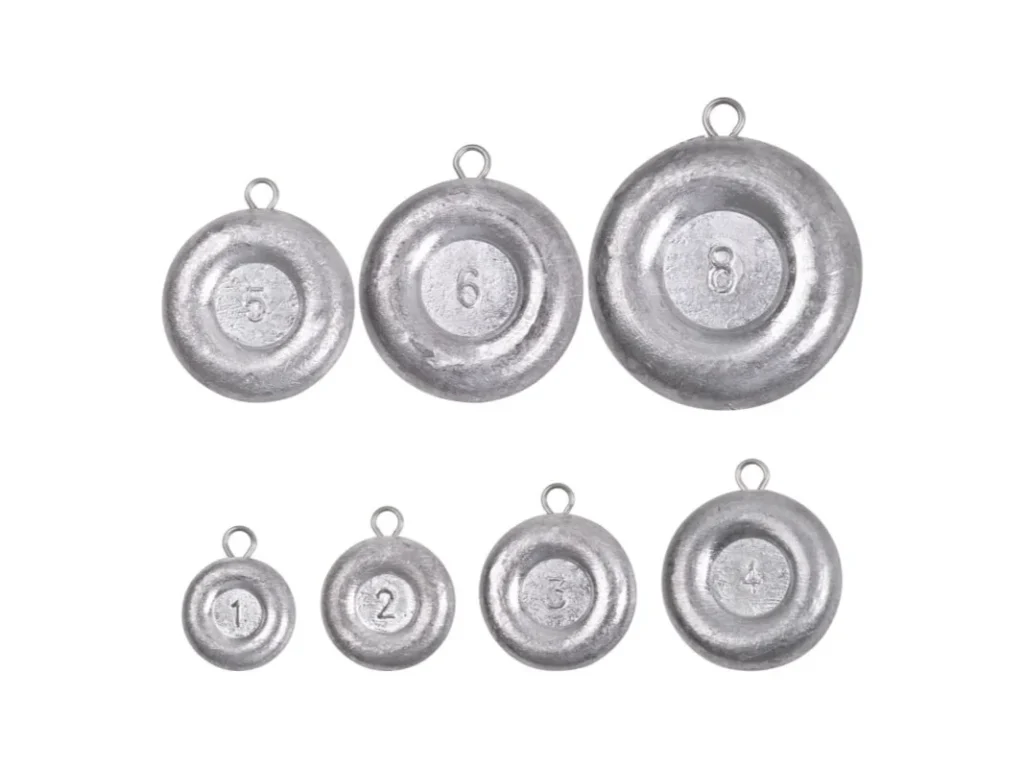
Flat and wide, with raised edges that stop it rolling. Good on flat bottoms with steady current.
How heavy for surf fishing?
- Calm surf: 2–3 oz
- Moderate surf: 3–5 oz
- Heavy surf or strong current: 5–8 oz, often sputnik
Grams conversions are in our sinker weight chart. For other saltwater situations, read how to choose sinkers for saltwater fishing.
For retailers in surf markets
Core stock: pyramid 2–6 oz and bank 2–6 oz, plus sputnik 4–8 oz and egg sinkers. All are cast in lead with the size stamped on each piece; vinyl dip available. Minimum order is 3,000 lbs across shapes and sizes.
FAQ
What is the best sinker for surf fishing?
The pyramid for most beaches; the sputnik when surf and current are strong.
What size sinker for surf fishing?
Usually 2–8 oz, depending on waves and current.
Why use a sputnik instead of a pyramid?
Its wire arms grip the sand and hold in conditions where a pyramid rolls.
Can I order these in bulk?
Yes. MOQ is 3,000 lbs across your sinker mix.
Request a quote for a surf sinker range.